Four Seasons Plans Denver Residential Development
It's the partners' first hotel-branded project in the metro.
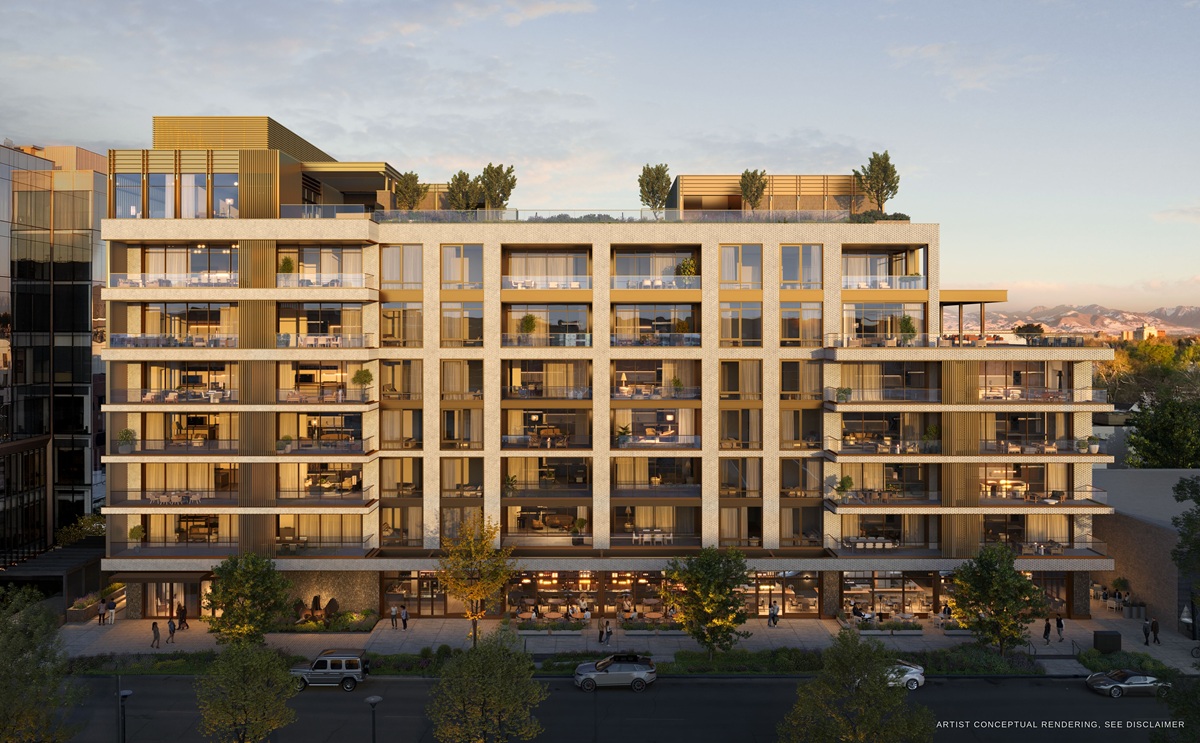
Image courtesy of Binyan Studios
A partnership between Four Seasons and Wexford Real Estate Investors unveiled plans to develop a 42-unit luxury residential community in Denver, Colo. The project marks Four Seasons’ first branded multifamily property in the metro.
Stillwater Capital, Zabel Investment and Brue Baukol are also part of the development consortium.
Four Seasons across eight stories
Designed by architecture firm 10 Design and featuring interiors by Tihany Design, the project will rise eight stories, including one-, two- and three-bedroom apartments ranging from 1,260 to 6,000 square feet. Amenities will include 24-hour concierge services, in-residence dining, housekeeping, a steam spa, sauna, hydrotherapy and treatment rooms, an outdoor pool with a sun deck, a library and private dining room.
READ ALSO: How to Win the Multifamily Amenities Race in 2026
Located a 215 Detroit St., in Denver’s Cherry Creek neighborhood, the development will stand across the road from Cherry Creek Shopping Center, which includes retailers such as Chanel, Foot Locker, Levi’s Store, H&M and Macy’s. Downtown is 3.2 miles northwest, along Cheesman Park.
Additionally, the Four Seasons-braded project is surrounded by several mixed-use developments, each featuring multifamily components and currently under construction, according to Yardi Matrix information. The list includes BMC Investments’ The Oasis, as well as its Cherry Lane Phases I and II, East West Partners’ Cherry Creek West Phase II and Mill Creek Residential’s Modera Second Avenue.
In the first seven months of 2026, Denver’s multifamily pipeline saw 4,700 units come online, with another 18,000 units under construction, according last month’s Yardi Matrix report on the metro. Faced with substantial volume of new supply, the city registered pressure in terms of rent growth, placing Denver behind most major U.S. markets in year-over-year performance.