Fed Keeps Rates Put, Hints at Post-Midterm Hike
Another increase could put multifamily investors in an even tougher spot.
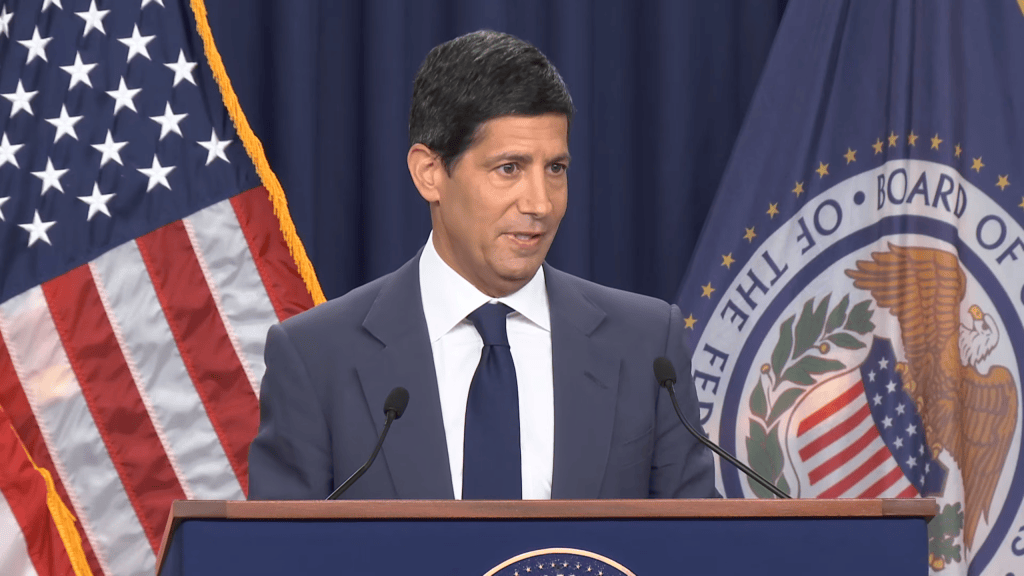
In its penultimate meeting of the year, the Federal Open Market Committee has once again decided to stay put on interest rates, leaving the Federal Funds rate at 3.75 to 4 percent.
The decision to pause happened amid stubbornly high inflation alongside imminent midterm elections. Ahead of the official data release tomorrow, economists widely project the core Personal Consumption Expenditures index to rise by 0.3 percent month-over-month and by 3.1 percent year-over-year, the fastest rate since the start of the war in Iran.
The decision on part of the FOMC was split 10 to 2 for the pause, with governors Lisa Cook and Beth Hammack dissenting in favor of a 25-basis-point increase.
What will happen next?
Federal Reserve Chairman Kevin Warsh discussed these headwinds at the Oct. 28 press conference following the announcement, stating that inflation had been running above the Fed’s target for six years. “That’s the reason the FOMC’s discussion over the last couple of days focused mainly on the price stability side of our remit.”
While he didn’t explicitly say what the Fed’s next move will be, Warsh hinted that it’s likely that there could be another 25-basis-point increase in December if these trends don’t show a meaningful improvement.
Warsh also highlighted a change to the Fed’s meeting strategy, with one of the eight FOMC meetings to take place next year to focus entirely on broad monetary policy strategy, without any vote on interest rates. “It’s an institutional choice, affecting the nature and quality of our deliberations, and ultimately, the wisdom of our decisions.”
A tough spot across the board
Despite another hike presenting being a headache for multifamily stakeholders, an uptick in borrowing costs has largely been baked in. In fact, some experts warn that pushing deals off in hopes of a future rate decrease could damage investment prospects.
READ ALSO: Waiting for Lower Rates Could Cost Multifamily Borrowers
“The decision gives the residential sector a few weeks of stability before the Fed meets again in December,” said James Godman, a partner at the Herbert Smith Freehills Kramer law firm who focuses on real estate transactions. “Construction financing will remain costly, and sales activity will track long-term rates more than any single Fed meeting.”
Others are predicting some more dramatic impacts, in part due to the sector’s latent financing headwinds. “Another rate hike would add pressure to a multifamily sector already facing elevated borrowing costs and softer rental conditions,” said Danny Fishman, co-founder & CEO of GAIA Real Estate. “Higher financing and refinancing costs could make it harder for owners to meet debt obligations, pushing more properties into distress.”