MHN Executive Council: Where to Draw the Line With AI (Part 1)
Sometimes you just need the human touch.
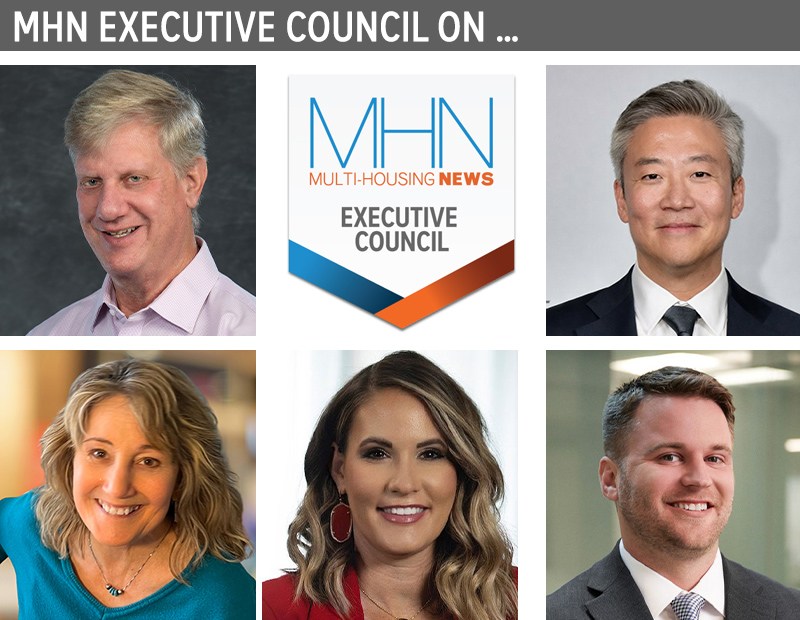
AI could be a great tool to help you be more productive at work. However, it’s very easy to fall into the trap of using AI for everything, which could lead you open to errors. Where do you draw the line? This month, the MHN Executive Council shares what they use the technology for, and where they rely on the human touch.

Verify and Confirm
We have developed a proprietary AI Agent to do underwriting of new acquisition opportunities using various assumptions including the Broker’s OM, Rent Roll and T-12 financials and a comparable property rent analysis. It is amazingly quick and accurate and easily adjustable; however, we need to verify and confirm each assumption and conclusion before relying on the conclusions of anticipated cash flow and returns. (It’s) an amazing tool that is scarily smarter than the best analyst, but still makes errors that requires a qualified human to confirm and verify. —Michael Zaransky, Founder & Managing Partner, MZ Capital Partners

A Tool Not a Crutch
Michael’s experience matches what we see across the industry: the models have gotten startlingly good, and the bottleneck has moved from producing the analysis to verifying it.
That’s where I’d draw the line. AI is a productivity tool when it makes verification cheaper—when every number traces back to a source: a page of the OM, a line of the T-12, a comp you can inspect. It becomes a crutch when answers arrive faster than your ability to check them, and you start accepting outputs because auditing them costs too much. The real risk isn’t using AI too much; it’s losing the ability to explain your own underwriting without it.
Let the machine do the work between question and answer, but never sign a number you can’t trace. —Steven Song, Founder & CEO, Diald

Own the Responsibility
AI will own the workflow, but AI will never own the responsibility.
At The REMM Group, we use AI to analyze data, organize information, follow up, schedule, remind and help clarify the next step. It can make the process faster and more efficient, but it cannot create the human connection that successful business relationships depend on.
People connect through shared experiences. Maybe we support the same team, attended the same college, grew up in similar towns, or simply recognize something familiar in one another. Those common threads create trust and give relationships a place to begin. AI can identify the information, but it has not lived the experience.
That is where we draw the line. AI can support the relationship, but it cannot be responsible for it. We still have to listen, use judgment, protect trust, and take ownership when something goes wrong. “My AI did it” will never be an acceptable excuse for damaging a client relationship or betraying someone’s confidence. The workflow may belong to AI, but the connection—and the responsibility—will always belong to us. —Susan McPeak, Corporate Ambassador, The REMM Group

Accelerate Expertise
The best use of AI is to accelerate human expertise, not replace it. I use AI to eliminate repetitive work, organize information, identify patterns and help me get to a stronger first draft faster. But the final judgment; the strategy, empathy, creativity and decision-making; still belongs to people.
The line is crossed when AI starts making decisions without enough context or when people stop questioning its output. AI doesn’t understand company culture, resident relationships, or the nuances behind a business challenge. It predicts based on patterns; it doesn’t apply wisdom or lived experience.
In multifamily, the organizations that will benefit most from AI won’t be the ones that automate everything. —Stephanie Anderson, Senior Director, Grace Hill

Build Relationships
AI tools offer efficiency gains in many back-office operations but do not replace the importance of building relationships and gathering boots-on-the-ground insights of a market.
In the back office, AI is a great tool for assisting with data-heavy workflows and analysis tasks. Things that used to be done by hand, like extracting a rent roll from PDF, can be done much more efficiently with the help of AI. Tools like Claude can accelerate analysis work by drafting Excel documents and writing formulas. This is particularly helpful with repetitive tasks where the end results can be verified. These tools are also very helpful for understanding and summarizing long and complex documents like a new city ordinance or extensive mortgage documents
There are many areas where AI is not the right answer. It cannot build the critical relationships with other real estate professionals or provide day-to-day market insights that can only be gathered through talking with owners, lenders, brokers and people who are out in the field every day. Additionally, AI is not yet able to assess the physical quality of an asset and weigh that against similar properties in a market. This still requires showing up and understanding a market in a way that can only be done in person. —Jack Pearson, Associate, Interra Realty
Interested in joining the MHN Executive Council and sharing your insights? Email Jessica Fiur.