HUD Expands Its Role in Multifamily Finance
Walker & Dunlop's latest report shows that HUD is deepening its presence in the workforce and middle-income housing sectors.
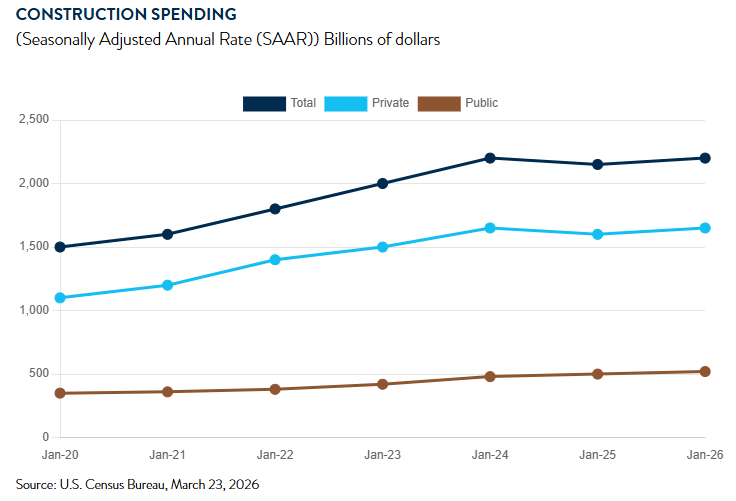
HUD financing is in a stronger position in 2026 than in recent years, which have been marked by volatility and elevated interest rates, as well as constraints on development, according to a report on the subject by Walker & Dunlop, “2026 HUD Outlook, Modernization, Competitiveness, and Strategic Opportunity.”
The agency, according to the report, is being transformed “from a perceived niche solution into a core component of sophisticated capital strategies.” A convergence of factors is responsible: policy changes, improvements in execution, and “a capital markets environment that increasingly rewards stability.”
A changing landscape
The current multifamily development and capital markets environment support a greater role for HUD financing, according to the report. Owners and developers are prioritizing long-term certainty and protection from future interest rate volatility. As existing loans mature and owners edge away from short-term structures, refinancing demand is growing.
“Development remains constrained, but targeted policy changes, particularly around middle-income housing, are helping many deals pencil again,” the report says.
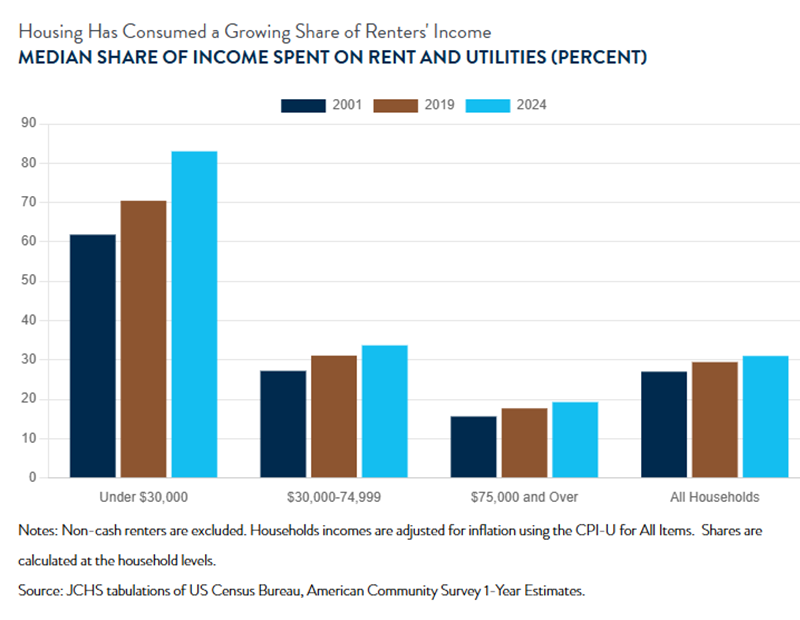
Middle-income housing is a particularly important part of the overall housing finance puzzle, with the most significant pressure point not at the lower end of the market, but in the middle. Many renters earn too much to qualify for traditional affordable housing yet cannot sustainably afford market-rate rents. HUD is expanding directly into workforce and middle-income housing to address the shortfall.
Now HUD supports units at up to 120 percent of the area median income, meaning that the agency is no longer confined to a narrow affordability band. Rather, according to Walker & Dunlop, HUD is now aligned with one of the largest and fastest-growing demand segments in the multifamily market.
The change in focus comes at a time when construction costs remain elevated and labor is in relatively short supply. Many projects still require higher equity contributions than in prior development cycles, which has been putting a crimp on new starts, which is one reason supply–especially in the middle market–isn’t keeping up with demand.
READ ALSO: How HUD’s ‘Simplifying’ Multifamily Investment
Thus middle-income households, like lower-income households, are now spending more of their incomes (as a percentage) than ever before, according to data from Harvard’s Joint Center for Housing Studies cited by the report. For households making $45,000 to $75,000, for instance, nearly half (48.7 percent) are cost-burdened, up from 39.2 percent in 2019 and 24.4 percent in 2001.
Policy changes at HUD
The key change, the report notes, is operations within HUD, explaining that processing timelines have compressed and internal workflows are improving. Also, underwriting is moving toward a more efficient, risk-focused approach. These changes are fundamental, removing some of the barriers that previously limited HUD adoption.
More specifically, HUD has scaled back several environmental policies to increase certainty of execution for FHA multifamily financing, as well as reduce transaction costs and improve processing timelines.
“By aligning environmental diligence more closely with actual loan risk, the new guidelines create a more predictable and efficient path for borrowers seeking FHA-insured capital while supporting the delivery of housing,” the report asserts.
Prior guidance on buried pipelines and fall hazards has been reinstated, noise analysis has been limited to relevant property uses, and requirements related to high-voltage transmission lines and vibration have been reduced. These changes eliminate some third-party reports, lower costs, and improve deal certainty. They also better align HUD’s environmental review with other financing sources, according to Walker & Dunlop.
Promoting modular construction is another area of policy change, “By encouraging construction methods that can reduce timelines and increase cost predictability, HUD is signaling support for innovation that will help builders meet affordability goals,” the report says. “Faster delivery and lower construction risk directly support feasibility in today’s cost environment.
HUD is further considering allowing both new construction and recently built–less than three years old– purpose-built rental projects to qualify under revised build-to-rent guidance.