MHN Executive Council: The Multifamily Industry Is Changing. Here’s How Professionals Need to Adapt.
Keep up—or risk being left behind.
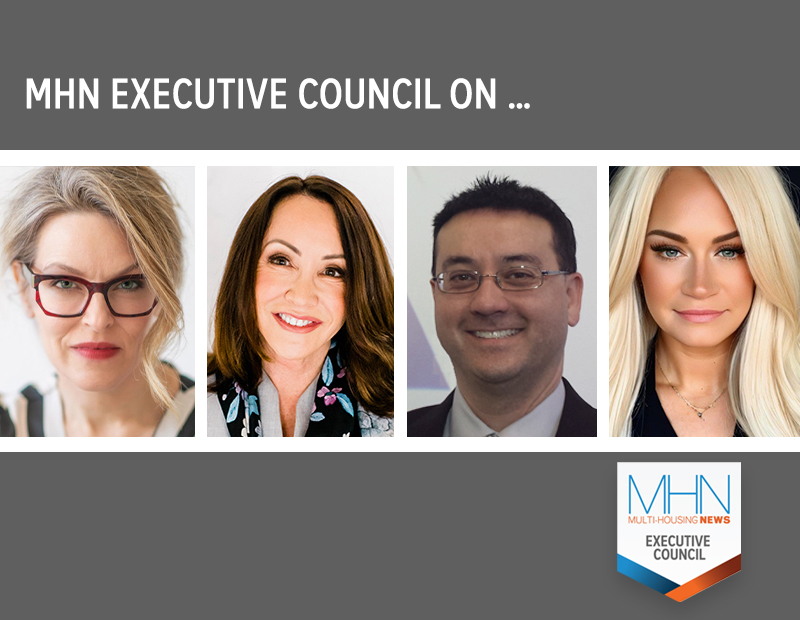
In general, people sometimes get stuck in a rut or set in their ways. But for multifamily, where things are constantly changing, it’s important for people to learn to adapt. This month, the MHN Executive Council shares areas where apartment professionals need to catch up—or risk being left behind.

Value the Experience
One change multifamily professionals need to adapt to faster is the shift from units to experience-led living. Renters now evaluate value through daily routine support like work, wellness, social connection and convenience, not just finishes. That requires amenities and services designed around behavior, measured by utilization and retention, and refined quickly based on real feedback rather than assumptions.
Experience led communities lease faster, retain longer and generate stronger word of mouth. The result is more durable revenue, better amenity ROI and a clearer competitive position in a crowded market. —Wendi Stallings, Principal, Private Label International

Tech Support
Multifamily professionals need to embrace more quickly is advanced technology adoption—not just adopting tools, but integrating them purposefully into operations, resident experience and strategic decision-making.
This goes well beyond basic online leasing. Several technological shifts that are rapidly becoming competitive necessities:
- AI & Predictive Analytics
- AI-driven tools for resident engagement, maintenance forecasting, leasing workflows, and renter qualification can vastly improve speed, accuracy, and NOI outcomes.
- Digital & Mobile First Experience
- Renters increasingly expect fully digital interactions — from virtual tours and e-signatures to app-based community engagement and smart home features.
- Data-Enabled Decision Making
- Using data to tailor amenity offerings, optimize pricing, and personalize communication keeps properties competitive and enhances retention.
Multifamily is transforming into a digital-first asset class—and teams that treat technology as an operational enabler, not an afterthought, outperform those that don’t. Professionals who accelerate their adoption, fluency and strategic use of these tools will be best positioned to deliver both resident satisfaction and financial performance. —Maria Pietroforte, President, Maria Pietroforte Consulting

Proactive Approach
Operations can no longer be reactive. Waiting for delinquency to spike, occupancy to dip, maintenance to backlog, or reviews to trend negative before taking action is too slow in today’s environment. With tighter margins, higher payroll costs, insurance increases and more rate-sensitive renters, small operational inefficiencies compound quickly.
Site teams and regional managers need to consistently monitor real-time KPIs—traffic-to-lease conversion, renewal pacing, delinquency trends, work order completion times, turn times and expense variance—then act before problems grow. This requires tighter reporting cadence, better use of property management software, and stronger accountability between ownership, asset management and onsite teams.
It also means embracing standardized processes. Leasing, collections, maintenance scheduling and vendor management should not vary wildly by property or manager. Clear playbooks, measurable expectations and consistent follow-up are critical to protecting NOI. —Michael Napovanice, President & Principal, Orion Property Group

Meet Them Where They Are
One of the biggest changes multifamily professionals need to adapt to faster is how dramatically consumer behavior has evolved. Today’s renter shops the way they buy everything else, digitally, quickly and with high expectations. They’re comparing communities across multiple tabs, reading reviews before they ever schedule a tour, watching video content and making decisions based on convenience, transparency and perceived value. Leasing is no longer just about the in-person tour. It starts with the first Google search, the website experience, response time to an inquiry, and how easy it is to apply online. Speed matters. Clarity matters. Friction kills conversions. If we’re not adapting our leasing strategy to that reality, we’re losing before the tour even starts. —Jess Carpentier, Regional Marketing Manager, CSM Corp.
Interested in joining the MHN Executive Council and sharing your insights? Email Jessica Fiur.