How to Train Your AI Chatbot
Starting small can ready AI for multifamily use.
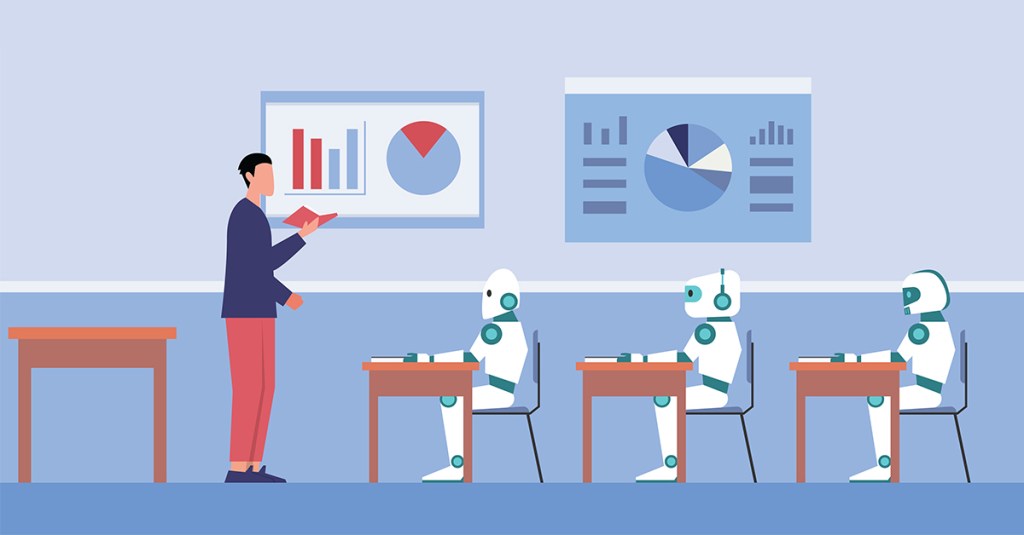
As AI continues to evolve and streamline processes, it’s making our daily lives easier in ways we never expected—especially at multifamily communities. Tools such as ChatGPT and Copilot are constantly learning how to answer prompts and improve. However, you can’t just install an AI bot and then forget about it. AI needs to be trained.
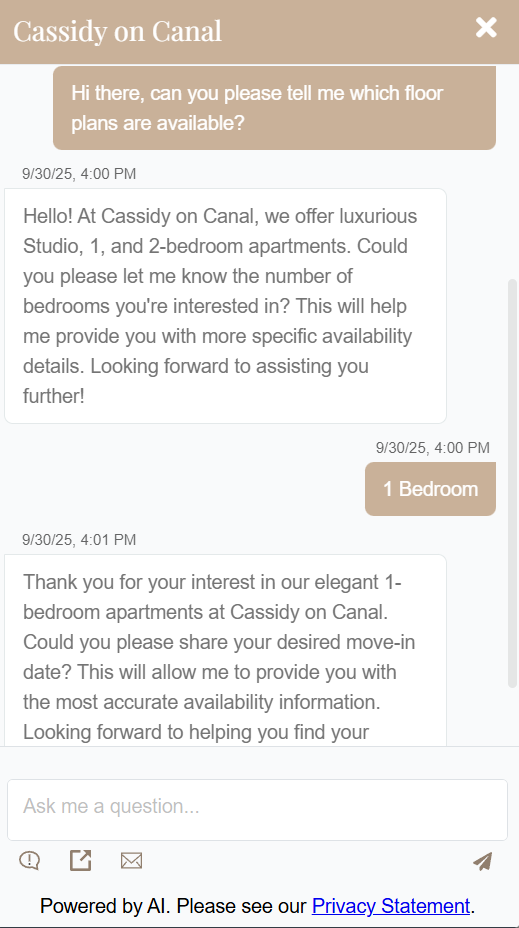
An area where AI is frequently used in multifamily is on an apartment website. When prospective renters are looking for an apartment community and perusing websites, many times a chat assistant will pop up to help navigate the site. These assistants can provide users with information on amenities, office hours and pet policies. They can also help with scheduling a property tour.
Potential renters expect the information they get from the chat assistant to be accurate. However, it’s not uncommon for AI to make mistakes. What happens if these bots give misinformation or say something inappropriate?
How can this be accomplished? Chatbots need to be trained and reviewed constantly to remain relevant. You should treat the chatbot as a new hire. it isn’t just a 24/7 customer service replacement; it’s a resource that needs care and attention if you want it to perform at its best. Provide it with the right tools, check in regularly and correct mistakes before they become habits.
“We spend so much (time) trying to train a human leasing agent, but then most companies just throw their onboarding strategy out the window when training an AI bot as if it’s not the same,” said Windell Mollenido, director of marketing at The REMM Group, said. “If you applied the same training program you did with the new hire, Bob, to the AI robot then you would find success.”
Feed it right

The REMM Group shared that part of its 2026 marketing budget will be dedicated to AI investment. “There are a lot of moving parts that go into a strong AI system,” explained Mollenido. His top tip: Review all the settings and policies you feed into your chatbot before launch. If the data it’s trained on isn’t up-to-date or accurate, the information it provides to the public won’t be either.
Jenn Quader, president & CEO of The Smart Agency, echoed the importance of feeding relevant data to AI tools for property managers and marketers. She also stressed the need for consistent monitoring.
“AI must be maintained as often as any other critical communications channel,” she said. “Just as websites and CRMs require updates, AI tools must be regularly reviewed and refined, especially in dynamic multifamily business environments.”
Testing also plays a big role. Running multiple trials, tracking performance and making adjustments along the way will help your chatbot learn faster and deliver better results. According to Mollenido, if you feed your AI bad data, you’ll end up with a “bad robot.”
Tips for Training and Testing AI Chatbots
Feed it good data: Your chatbot is only as reliable as the information it’s trained on. Keep content accurate and up to date.
Stay aligned with your brand: Define messaging and tone so your AI has a consistent, authentic voice.
Test widely and often: Involve not just your team, but also non-industry testers to simulate real resident interactions.
Start small: Launch with a pilot program in a few communities to refine the system before a wider rollout.
Expect mistakes: AI will make errors, especially in the early stages. Use them as opportunities to retrain and improve.
Keep optimizing: Regular monitoring and updates ensure your chatbot continues to perform well over time.
A small testing pool
As with any marketing strategy and new technology implementation, it is always a good strategy to roll these programs out slowly. Jessica Perri, director of marketing at Habitat, shared that her company used a pilot program and small-scale testing before opening its chatbot Holly on a wider scale.

“We believe in starting with a strong foundation—testing new tools within a few communities, identifying gaps, and refining along the way,” Perri said. “With AI, it’s especially important to continuously optimize responses based on real resident behaviors and feedback.”
This approach allowed Habitat to test Holly at select communities and make adjustments as needed. To start, the chatbot was given only essential information such as floor plans and availability, focusing on the questions prospective residents most often ask when visiting property websites. By narrowing the scope, Habitat ensured the technology was reliable in answering high-priority queries before expanding its knowledge base.
Quader emphasized that this type of careful rollout should be grounded in brand identity, acting as an extension of the company instead of a separate entity. “AI is only as strong as the brand messaging it’s built on,” she explained. “Anchor the tools in well-defined messaging and tone. Strong brand foundations give AI technology a consistent voice, maintaining authenticity while supporting increased efficiencies.”
Mollenido added that rigorous testing is essential, even after a pilot program feels ready. He recommended using friends and family outside the industry to capture a more authentic “user-friendly perspective on the technology.” After all, he said, “the people engaging with this agentic AI service daily are not property management professionals, but residents and prospects who need quick, accurate and user-friendly support.”
Growing pains
There will always be trial and error when you incorporate a new technology. Missteps are part of the process, and the key is knowing what to look out for as your chatbot learns. The key is patience.
One of the most common mistakes people make, according to Quader, is taking a “set-it-and-forget-it” approach. While chatbots can serve as valuable resources, they are not catch-all solutions. To be effective, they need to be built upon, refined and supported by a team.
Another challenge lies in recognizing when it’s time to move a conversation from the chatbot to on-site staff. While chatbots can handle many routine situations, there will always be questions or concerns that require the expertise of a person. Perri and Mollenido both noted that integration can be challenging, so resources are needed for the back end and the front of house, as there can be some initial discomfort.
Change can be daunting, but they’ve found that once teams see the benefits, the reception is positive.
Despite the learning curve, ultimately AI is a real positive for both the on-site team and for potential and current residents. People can get answers about a property, rent details, or neighborhood information on their own schedule, while staff can focus on higher-value tasks.
“Prospects appreciate quick, accurate responses at any time of day, while team members value the efficiency it brings to their workload,” added Perri. “Importantly, the chatbot complements—rather than replaces—the human connection.”