National Multifamily Report – August 2025
Seasonal ebb dampens rental uptick, according to Yardi Matrix.
The summer season has cooled the U.S. multifamily market, according to Yardi Matrix’s latest survey of 140 markets. The average advertised asking rent fell $1 to $1,755 in August, slowing its year-over-year growth rate by 10 basis points to 0.7 percent. Occupancy rates stood their ground at 94.7 percent in July, unmoved year-over-year. The advertised rates for single-family build-to-rent units reached a new record in August, climbing 0.6 percent year-over-year to $2,208.
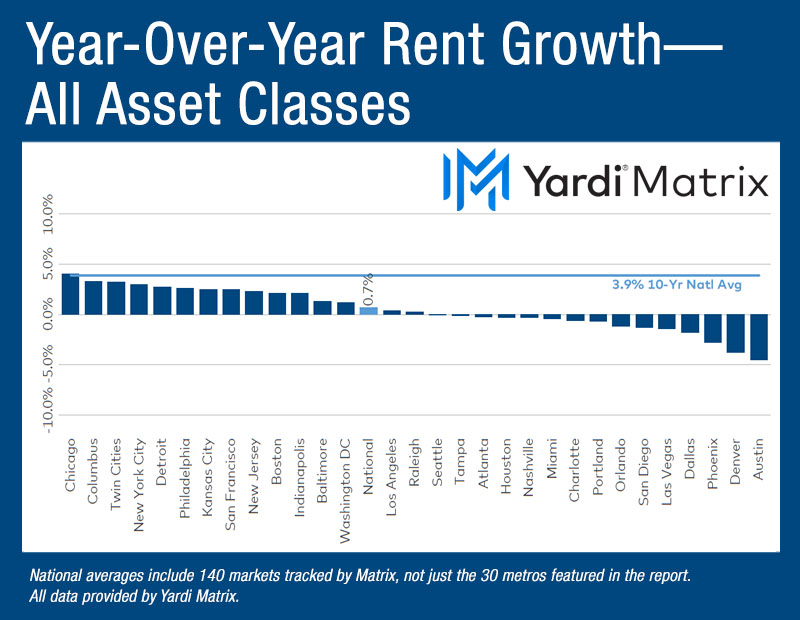
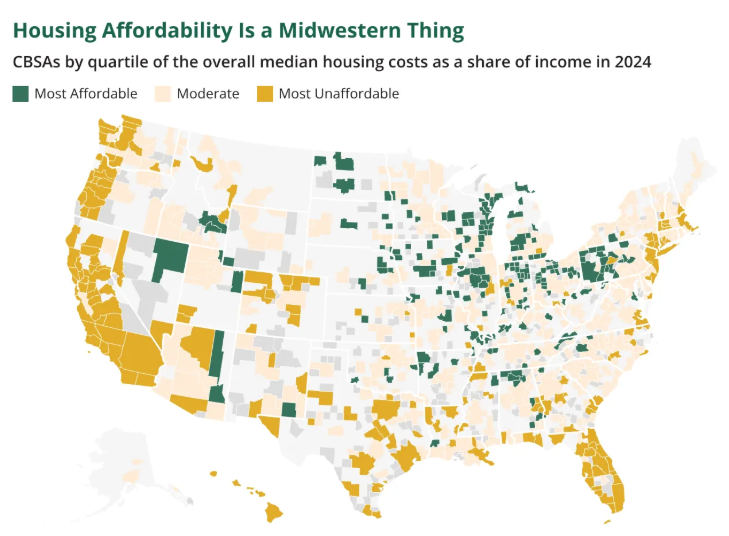
Yardi Matrix’s top 30 markets maintained a nearly equal split between metros exhibiting positive and negative rent growth. The Midwest and Northeast regions continued leading, with Chicago emerging as a clear outlier (4.0 percent), followed by Columbus (3.3 percent), Twin Cities (3.2 percent) and New York (3.0 percent). The same supply-burdened markets across the Sun Belt and Mountain West metros recorded negative rent movement, such as Austin (-4.5 percent), Denver (-3.8 percent), Phoenix (-2.8 percent) and Dallas (-1.8 percent). Resilient demand aided in maintaining steady occupancy across the nation, while also bolstering the rate throughout the Sun Belt, with increases in Atlanta (0.6 percent year-over-year in July), Charlotte (0.5 percent), Raleigh, Orlando, Miami and Phoenix (0.1 percent each).
Tight inventories drive divergent outcomes
Just eight of the top 30 Yardi Matrix markets posted monthly advertised asking rent gains in August, while the national figure fell 10 basis points. Limited-inventory markets posted mixed results, with Philadelphia taking the lead (0.7 percent), as opposed to lagging coastal and Midwest metros, such as Detroit (-0.6 percent), San Francisco and New York (-0.4 percent each). The Sun Belt settles as supply growth slows, but steady demand has yielded some rent rebounds in markets such as Atlanta and Charlotte (0.3 percent each) and Raleigh (0.1 percent).
Inventory expansion gained legislative traction as government officials seek to offset rising housing costs, though a tangible impact could be years away. State legislators introduced more than 400 pro-housing bills, with 70 already signed into law and 30 awaiting the governor’s signature, according to the National Council of State Housing Agencies. Examples include California, where an act was passed to streamline environmental reviews and increase capital availability, as well as Michigan, which expanded subsidies and incentives for workforce housing development, and Texas, where legislators are mulling over a zoning overhaul to allow residential development in commercial zones, ease lot sizes and construction restrictions.
The national advertised asking single-family build-to-rent rates reached a new record in August, climbing 0.6 percent year-over-year and settling at $2,208. Overperforming markets included Chicago (6.6 percent), Kansas City and Twin Cities (5.0 percent each), while Sun Belt metros such as Austin (-3.0 percent), Tampa (-2.7 percent) and Raleigh (-2.2 percent) posted negative growth. Several such metros fostered a highly competitive environment as previous homeowners chose to rent instead of selling amid high mortgage rates and sluggish demand. Meanwhile, the sector’s occupancy rate clocked in at 95.0 percent in July, marking a 0.2 percent decline over the year. Some of the tightest markets included Miami (97.7 percent), Chicago, Indianapolis and Las Vegas (96.9 percent each).
Read the full Yardi Matrix multifamily real estate report.