Why Multifamily Procurement Is Moving Back to American-Made Manufacturing
Developers and procurement teams are increasingly re-evaluating domestic cabinetry sourcing as supply-chain stability, procurement alignment, and predictable project execution become more critical in multifamily construction.
Multifamily procurement teams are increasingly rethinking one of the industry’s longest-standing assumptions: that imported cabinetry is automatically the safest and most cost-effective sourcing strategy for large-scale projects.
As supply-chain instability, freight volatility, scheduling pressure, and evolving domestic sourcing expectations continue affecting project execution, American-made manufacturing is re-entering the conversation—not as a branding preference, but increasingly as a matter of operational control and procurement stability.
Section 232 tariffs on imported cabinetry accelerated that shift, but tariffs are only one part of a broader trend already underway.
The larger conversation today is about predictability.
Multifamily projects operate on compressed timelines with little room for disruption. Cabinetry impacts scheduling, sequencing, inspections, punch-list completion, occupancy timelines, and coordination across multiple trades. When delays occur—or when adjustments are needed late in a project—the impact extends far beyond the cabinetry package itself.
As a result, many developers, contractors, and procurement teams are placing greater emphasis on manufacturing partners capable of supporting projects with more direct accountability and greater operational responsiveness.
American-made manufacturing provides something increasingly valuable in today’s construction environment:
• Greater lead-time stability
• Faster communication and coordination
• More direct production oversight
• Improved responsiveness when projects evolve
That flexibility becomes especially important during the realities of active construction.
Field conditions change. Schedules shift. Punch-list items emerge. Specifications evolve. Long overseas lead times and limited production flexibility can quickly create downstream coordination issues affecting multiple trades and turnover timelines.
At the same time, many large-scale developments are also facing increasing pressure around domestic procurement alignment. Publicly funded projects, federally influenced developments, and projects navigating evolving Made in America sourcing expectations are placing greater emphasis on domestic manufacturing partners capable of supporting large-scale execution.
Historically, imported stock programs were often viewed as the most cost-effective solution for multifamily projects. However, many procurement teams are beginning to reassess that equation once the true delivered cost of imported cabinetry is fully considered.
Freight exposure, tariffs, over-ordering, damages, delays, coordination costs, and schedule disruptions all contribute to the broader operational cost of import dependence.
That does not mean projects are looking for boutique custom shops or luxury pricing structures.
In fact, one of the largest misconceptions in the market is that built-to-spec domestic manufacturing automatically means significantly higher pricing or limited production capacity.
The domestic difference
Large-scale projects increasingly require manufacturing partners capable of delivering specification-driven cabinetry without sacrificing production volume, procurement efficiency, competitive pricing, or scheduling reliability.
As a result, domestic manufacturing is increasingly being evaluated not as a premium alternative, but as a procurement strategy designed to reduce uncertainty while maintaining flexibility and scale.
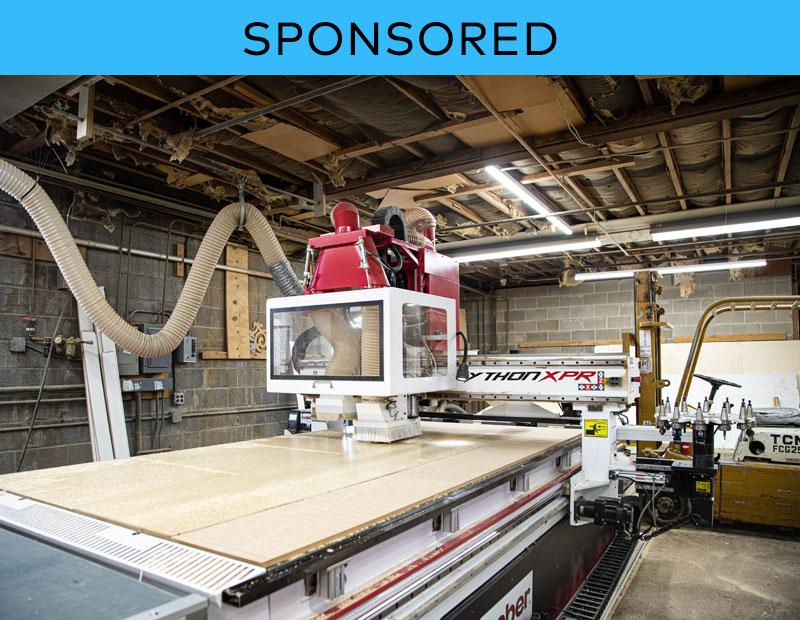
At Cober Cabinets, a New York-based, KCMA-certified manufacturer focused exclusively on large-scale multifamily projects, we’ve seen growing interest from developers, contractors, dealers, and procurement teams looking to reduce supply-chain exposure while maintaining scalable domestic production capability.
The companies best positioned moving forward may not simply be those offering the lowest initial number.
They may be the ones capable of delivering manufacturing accountability, built-to-spec flexibility, dependable execution, and real domestic production support at multifamily scale.
American-made manufacturing is no longer simply a marketing preference.
It is increasingly becoming a procurement and project execution decision.
To learn more about domestic manufacturing strategies for multifamily projects, visit us here.