The Right Zoning Can Solve the Workforce Housing Dilemma. Here’s How.
Policy reform is step one to boosting attainable supply.

While cities, regions and states lobby new industries to come and bring jobs and residents to their districts, leaders sometimes forget one aspect: the housing shortage. Workforce housing, which targets those earning 60 to 120 percent of the area median income, is particularly scarce.
In upstate New York near Syracuse, for example, Micron Technology has announced plans to build what will be the largest semiconductor facility in the U.S., but there isn’t enough attainable or workforce housing to accommodate the plant’s future employees, largely due to restrictive zoning.
READ ALSO: How to Make Workforce Work for You
“Zoning for 97 percent of the land allows single-family homes to be built by right, while only 4 percent allows multifamily buildings of more than three units,” said Sara Bronin, founder & CEO of the National Zoning Atlas, author of “Keys to the City: How Zoning Shapes Our World,” and a professor at the George Washington University Law School. “That means the region is likely to see more sprawl unless zoning reform is enacted.”

Fixing the missing middle
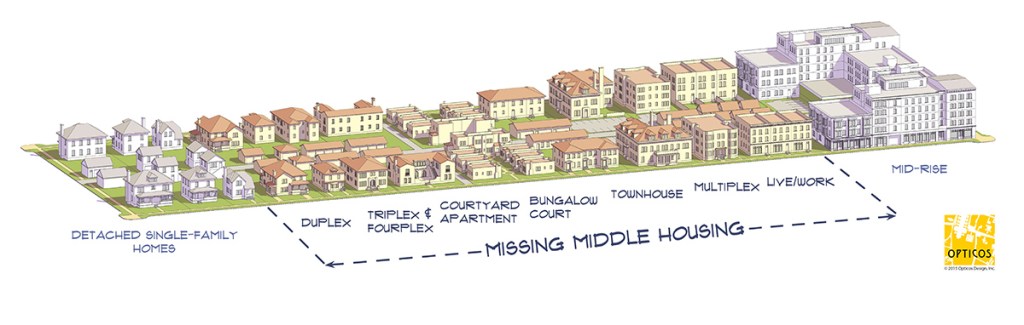
Many in the industry believe zoning reform would also help address the “missing middle” housing conundrum.
Missing middle housing can fit the affordability range of workforce housing, but the term generally refers to the scale of housing between single-family homes and large multifamily developments, according to Amy Tomasso, vice president of policy and partnerships for Ivory Innovations at the University of Utah in Salt Lake City and a former fellow at Harvard University’s Joint Center for Housing Studies.
Production of two-to-four-unit developments was just under 11 percent of all multifamily production from 2000 to 2010, and it has lagged even more since the Great Recession, according to the National Association of Home Builders. In the third quarter of 2025, it was just 3 percent of multifamily development in the U.S.
READ ALSO: Why Workforce Housing Works for Institutional Investors
Jay Parsons, an economic adviser with JPI, said he’s a fan of “all of the above” housing solutions for missing middle and workforce housing needs, including ADUs, duplexes, triplexes, quadplexes and apartments of all sizes.
“Cities need to address zoning to allow these solutions and make it easier for them to pencil out for developers by reducing or eliminating their requirements for parking and for amenities such as specific exterior finishes,” Parsons said. “Height restrictions can be an issue in some cities, since they make it difficult to get to scale on smaller parcels and infill lots.”
Some communities changed the rules, but no one came. Leaders need to talk to developers about the barriers to building, which can include things like parking minimums and building codes.
—Jeff Lubell, Senior Fellow, The ULI Terwilliger Center for Housing
Beyond a zoning green light, you also need an economic analysis to figure out how a new development can be cost effective, noted Jeff Lubell, senior fellow at the ULI Terwilliger Center for Housing.
Generally, Lubell said, it’s more expensive to build to a commercial code.
“It may not be necessary to build a quadplex like a commercial high-rise,” he pointed out. “Safety is important, but you need to evaluate whether the level of spending required is necessary for the size and scale of the development.”
Density, form-based zoning and other solutions
Local governments don’t have to abolish single-family homes to encourage a diversity of housing types, Bronin observed. “They just need to legalize other types of housing such as duplexes, ADUs and three- or four-unit buildings, the way Arlington and Alexandria did in Northern Virginia.”
One option is “form-based” zoning, which focuses on building design and placement rather than segregating uses, according to Drew Finke, a senior associate with Opticos Design.
READ ALSO: House Introduces Bill to Spur Development
“An advantage of form-based codes is that they’re compatible with existing types of housing, so that a new development will fit in with the physical form of the neighborhood,” highlighted Finke. “That reduces NIMBYism backlash against new development.”
When density is increased, that doesn’t necessarily mean you’re going to get a high-rise apartment building. You can build a single-family home with eight bedrooms or a fourplex that’s the same size, but that’s not possible if you limit zoning to a maximum of two units per lot.
—Drew Finke, Senior Associate, Opticos Design

For example, Vermont created a statewide set of plans for missing middle housing based on a variety of local architectural styles, according to Tomasso. “It helps them fit in and streamlines the building process without making them cookie cutter.”
A handful of zoning issues have the biggest impact on workforce housing development, according to Aaron Lubeck, a development principal with The Rocket Shop.
“Fixing these issues locally instead of with broad-brush statewide mandates provides more opportunities for smaller, local builders to have input into what’s actually desirable in their area,” Lubeck said. “If you can address these core zoning issues and provide flexibility, you can get an increase in workforce housing, like Durham has been able to achieve.”
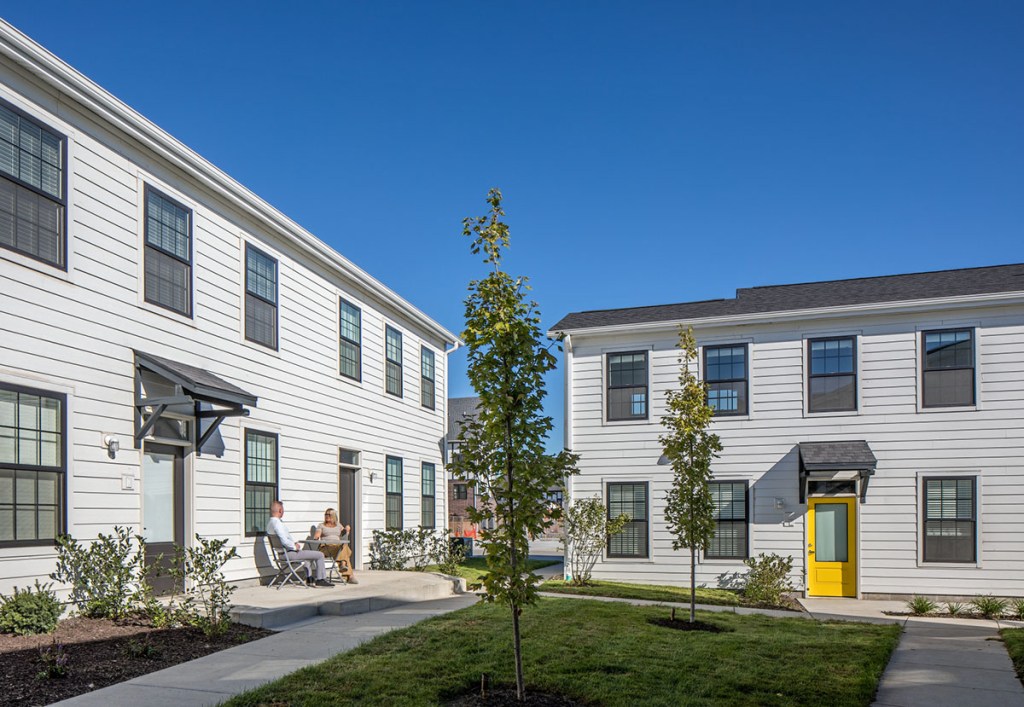
Those issues include:
Eliminating single-family-only zoning. Duplexes and small-scale multifamily buildings have been illegal in most cities since post-World War II, pushing suburbanization of cities and car-centric development, Tomasso noted.
Decreasing or eliminating parking minimums. Parking minimums can destroy site plans and aren’t necessary in places with street parking, Lubeck pointed out. Research shows that new multifamily developments may not have the traffic impact people expect, Bronin reasoned.
Reducing minimum lot sizes. Smaller lots allow for greater density and a variety of housing to be built, instead of just large single-family homes. For example, Durham reduced minimum lot sizes by 60 percent in 2019 and allowed duplexes and ADUs, which meant you could get three houses per lot instead of one.
Streamlining permitting. For example, Austin, Texas, eliminated site-plan review requirements for developments of up to 16 units, Tomasso said, which lowers costs and speeds up construction.
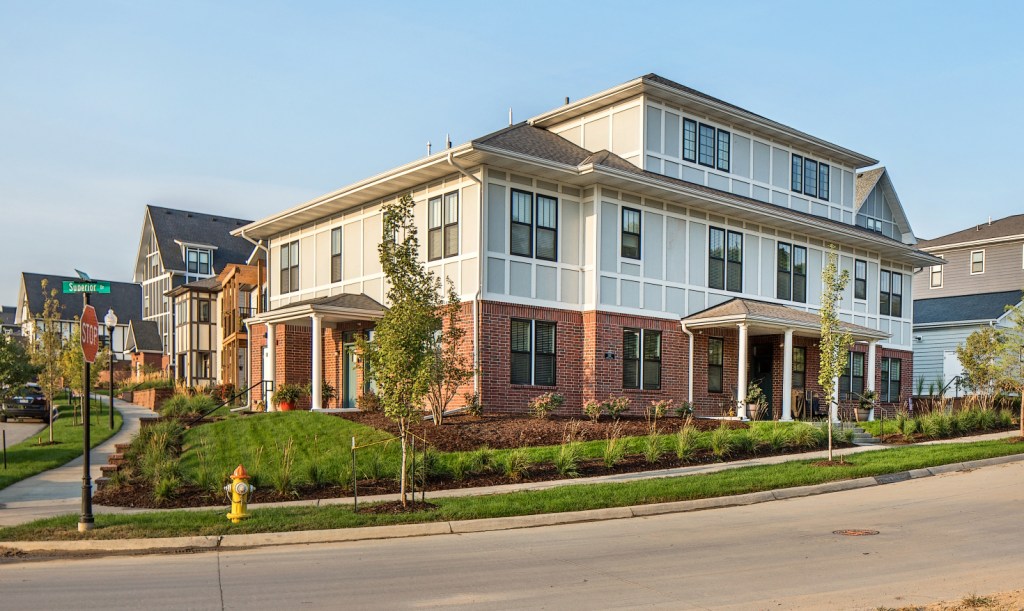
Local input for maximum impact
It’s important to recognize that zoning reform isn’t a one-size-fits-all proposition, since different areas have different priorities, needs and housing styles.

“Our National Zoning Atlas can be a tool for builders and developers to assess the effectiveness of zoning changes in other locations,” Bronin said. “In Connecticut, for example, parking requirements were eliminated for buildings with 16 units or fewer. That doesn’t mean parking won’t be included, but it allows developers to determine how much parking is needed based on their location.”
In South Bend, Ind., the city worked with developers to create a set of preapproved plans to streamline the process of approvals, Finke said.
Multifamily investors and developers can help jurisdictions evaluate the types of housing that may be the most desirable and beneficial in various neighborhoods.
READ ALSO: Workforce Housing Finance: It Takes a Village
“What’s palatable for the public and local officials depends on the area,” Parsons commented. “In a mature neighborhood of single-family homes, it may be acceptable to allow duplexes, while in a neighborhood with corner retail, it may work to have ground-floor retail with three or four levels of housing above.”
Other options include rezoning for mixed-use development in CBDs, he added.
“Ultimately, the role of developers is to tell leaders what the obstacles are to give them a clear sense of local needs and which reforms are most valuable,” Lubell said.