The Split-Incentive Barrier to Multifamily Solar
How regulation, risk and misaligned economics complicate rooftop adoption.
Rooftop solar looks like an obvious win for apartment communities: lower energy costs, a stronger sustainability story and, in some cases, incentives that can improve project economics. Yet adoption across rental housing remains uneven and often limited to systems that serve common areas rather than individual units.
The barrier is not technology. It’s alignment. In many multifamily properties, residents pay their own electric bills, while owners fund the solar installation. That disconnect, commonly referred to as the “split-incentive problem,” can stall projects before they reach the roof.
“The split incentive for investments, in either efficiency or renewables, is that capital costs accrue to the owner but most savings over time accrue to the residents,” said Casius Pealer, director of market development at the Institute for Market Transformation. There are also “significant technical challenges and costs to distribute power from a single solar array directly to multiple individual meters,” he added, challenges that can be even more acute in rentals.
Why solar often stops at common areas
Given these constraints, many owners frequently default to a simpler approach: installing systems sized to offset electricity they already pay for: corridor lighting, amenity spaces or central systems.
Regulatory limitations often reinforce that decision. After consulting an internal expert, Nuveen Green Capital noted that in certain jurisdictions, owners “cannot legally bill tenants for electricity,” meaning “their only incentive is to size a system for common area electric use.”
For implementation partners, those rules are a primary constraint. Kelly Jiang, director of strategic initiatives at Bright Power, believes the regulatory issue is often decisive. In many states, if a building owner installs solar and bills residents for usage, the owner could be considered a public utility—an outcome Jiang describes as untenable for most landlords.
As a result, systems are frequently designed around what owner can control. While this approach may not maximize rooftop potential, it delivers something owners value: predictability. By tying solar production directly to owner-paid loads, the investment functions as an operating expense reduction tool, without the complexity of having to navigate resident meters or inconsistent credit structures.
“When direct resident billing is not allowed, the most straightforward path is to focus on offsetting common area electricity use,” said Chris Gray, CEO of EcoSmart Solution, Taurus Investment Holdings’ strategic energy affiliate. “Properties with sizable common loads can absorb most or all rooftop production.”
Beyond the split incentive: Operational and portfolio risk
Even when regulations allow more creativity, owners still face a second layer of considerations that extend beyond the split-incentive problem: Will the system perform as modeled? What happens when equipment fails? Who monitors it? And what happens when the roof needs work?
Physical risk and maintenance are key concerns, according to Gray. Owners may be reluctant to install systems that penetrate or alter building envelopes, particularly in stabilized assets where predictability matters.
READ ALSO: Top Multifamily Amenities
Roof condition also plays a role because a roof that is mid-cycle or nearing the end of its life can introduce decommissioning and reinstallation costs that erode returns.
Even when installations go smoothly, performance risk can quietly undercut returns. “The risk is not having proper monitoring to ensure you are actually getting the production you paid for,” Gray said. If systems underperform and output isn’t tracked against expectations, returns can quietly decline.
To mitigate that uncertainty, investors increasingly look for contractual safeguards. Bright Power sees demand for “savings guarantees” from solar providers to reduce financial risk tied to underperformance, according to Jiang. Power purchase agreements often include minimum production threshold over long terms, with providers reimbursing owners if output falls short.
At the portfolio level, inconsistency can also be challenging. When rules vary widely across markets, scaling solar as a repeatable strategy becomes difficult. “This is further complicated by utility and interconnection variables,” said Gray. “Some utilities allow master-meter configurations or owner-level metering. Others resist any structure that places an owner between the utility and the end customer.”
Making resident value visible
Solving the solar split-incentive problem ultimately requires more than installing panels. It requires a workable way to deliver value to residents and communicate it clearly, without creating billing confusion, complaint risk or compliance problems.
Virtual net metering, also known as community solar, is one potential solution. This model allows building owners to allocate both solar production and utility credits across individual units. But they must operate within tenant-protection frameworks. Many jurisdictions limit or prohibit submetering “to protect tenants from unfair billing,” Pealer noted, citing NREL data showing 24 states and the District of Columbia have policies that support community solar, with 20 including specific provisions to ensure benefits reach low- and moderate-income households.
Where programs are effective, consumer protections are central. According to Pealer, successful programs typically credit residents at retail rates, cap administrative fees and avoid “minimum bills” or expiring credits, while allowing subscribers to transfer within the same utility service territory.
California’s Solar on Multifamily Affordable Housing program is one example of a model with explicit resident protection. The program requires that at least 51 percent of system output be allocated to resident meters and prohibits charging residents for that power. Jiang noted that in some cases, the impact can be significant, citing an example where a typical one-bedroom resident’s bill could fall from roughly $80–$120 per month to about $15.
Solar as an amenity
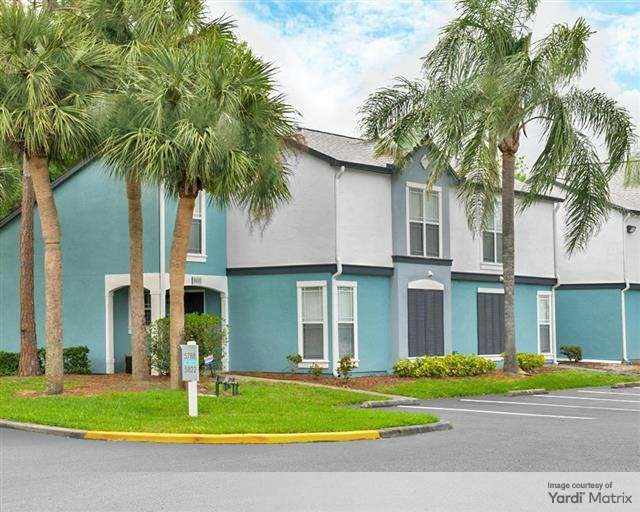
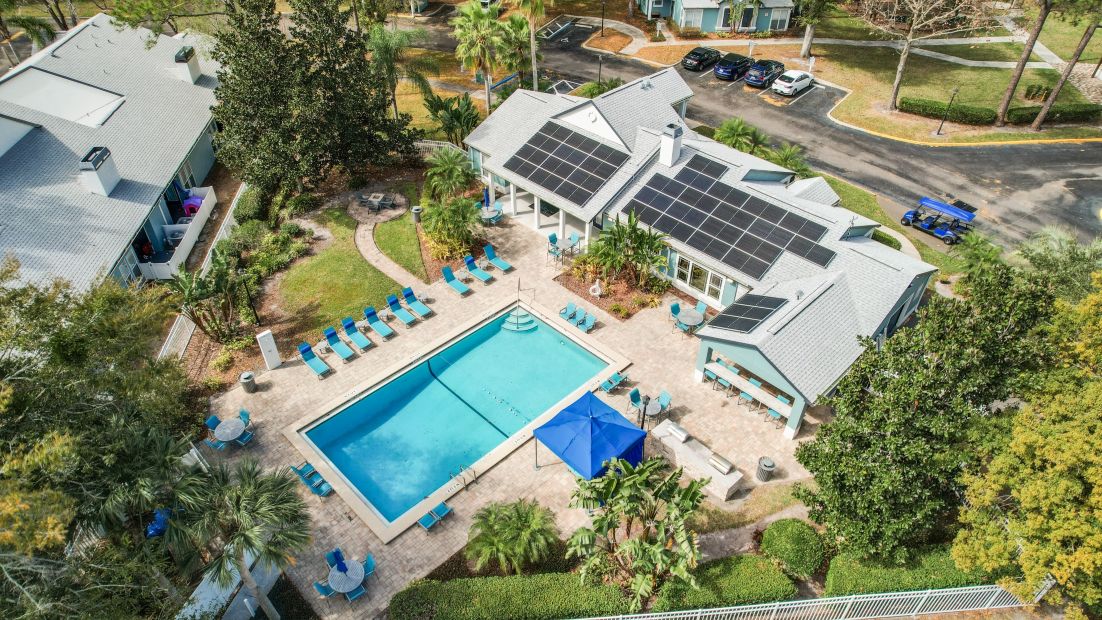
Canopy Apartment Villas is a 296-unit, garden-style community built in 1981 in Orlando, Fla. All images courtesy of Yardi Matrix 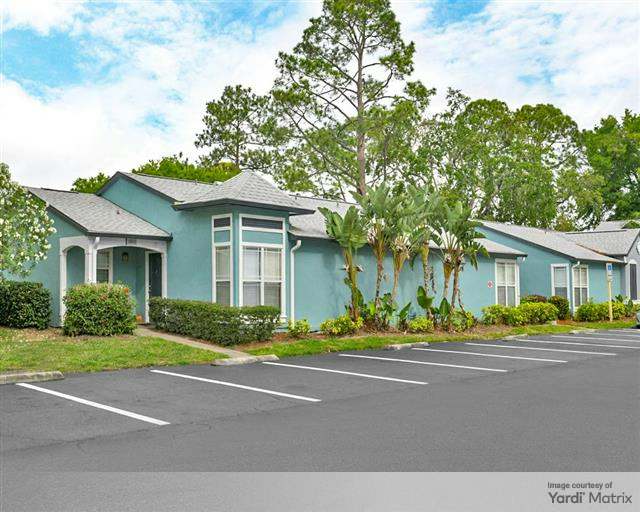
The 2024 retrofit scope at the property included high-efficiency heat pumps, roof and insulation work, and an energy monitoring platform designed to strengthen savings beyond solar alone. 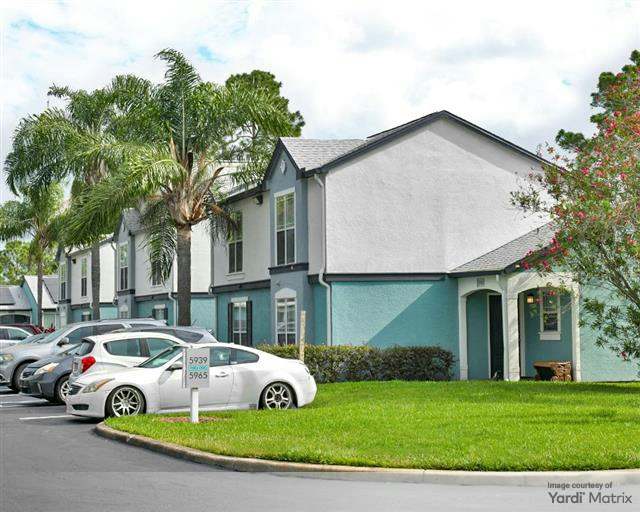
Water system upgrades reduced water use by roughly 40 percent, while the solar component totaled about 260 kilowatts of rooftop capacity, according to Taurus’ energy affiliate EcoSmart Solution. 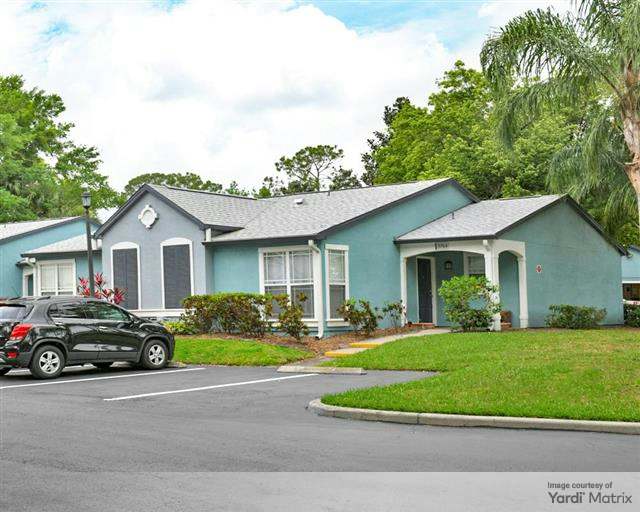
Taurus reported annual solar generation of about 3,780 megawatt-hours, contributing to roughly 55 percent annual energy savings and avoiding more than 900 tons of carbon dioxide per year. Gray said the project boosted net operating income through rebates, lower energy costs and solar generation.
In markets where direct billing remains difficult, owners are experimenting with alternative ways to capture value.
Gray pointed out that rooftop capacity is often insufficient to meaningfully serve every unit. So instead of distributing marginal savings across all residents, some owners are designating specific units or areas as solar-served and market them as a premium offering, similar to upgraded finishes or preferred views. The goal is to help residents see a lower total cost of living through reduced utility spend, while the owner recovers capital through higher net operating income.
But even this strategy relies on consistent execution. It requires predictable utility rules, reliable system performance and an operating model that can be replicated across assets.
The path forward
Across the multifamily sector, a consistent theme is emerging: Multifamily solar can work, but it works best when incentives are aligned and the delivery mechanism is simple enough to scale.
In practice, that often leads to one of three approaches: systems sized to offset owner-paid common loads, policy-supported allocation models with strong consumer protection, or targeted leasing strategies that make resident value visible.
For owners and investors, the decision ultimately comes down to execution risk: In this market, with these rules, on this building, can solar be executed predictably? This question is increasingly shaping how they evaluate solar installations at their apartment communities.