The Importance of Multichannel Marketing
Strategies to meet your prospective renters where they are.
Remember how simple apartment marketing used to be? You’d run an ad in the newspaper or use on-site signage when you had a vacancy. Then, you’d wait for the phone to ring or for a prospective renter to walk into the leasing office. It was a very analog approach.
But digital marketing changed everything. Today, prospects may find your communities via search engines, internet listing services, social media or apartment review websites. And you, as an apartment marketer, need to be prepared to meet those prospects wherever they are.

Enter multichannel marketing, the process of engaging prospects via content posted across multiple independent channels. Think of it as throwing spaghetti against the wall and seeing what sticks. Or, to use a sports analogy: “You can play baseball with two outfielders, and you’ll catch a lot of pop-ups, but you’ll miss some that you would have caught with three,” said Kyle Jones, search manager at REACH by RentCafe. “Multichannel marketing is like playing baseball with all three outfielders—you’re going to catch all the pop-ups you possibly can.”
Why multichannel marketing should be part of your marketing strategy
According to Jones, some of your prospective renters might be searching on social media, while others just look at email. “It’s all about meeting the customer where they want to be met,” he said. “We live in a very digitally fragmented world today. By covering as many bases as possible, you’ll get the best results.”
Jeff Klotz, CEO of The Klotz Group of Cos., said that different demographic segments respond to different channels. Gen Z renters, for example, may start their apartment search on Instagram, while Millennial professionals start on Google. “If you rely on a single pipeline, you effectively narrow your leasing velocity,” he said. “In multifamily, that directly impacts occupancy, pricing power and, ultimately, NOI.”
You can play baseball with two outfielders, and you’ll catch a lot of pop-ups, but you’ll miss some that you would have caught with three. Multichannel marketing is like playing baseball with all three outfielders—you’re going to catch all the pop-ups you possibly can.
—Kyle Jones, Search Manager, REACH by RentCafe
Klotz said that at his company’s Surf A1A Apartments in Atlantic Beach, Fla., the occupancy rate was in the mid-80s when the asset was acquired, and the property was heavily dependent on Apartments.com for lead generation. But there were two problems: The lead quality was inconsistent and the cost per lease was running around $1,200.
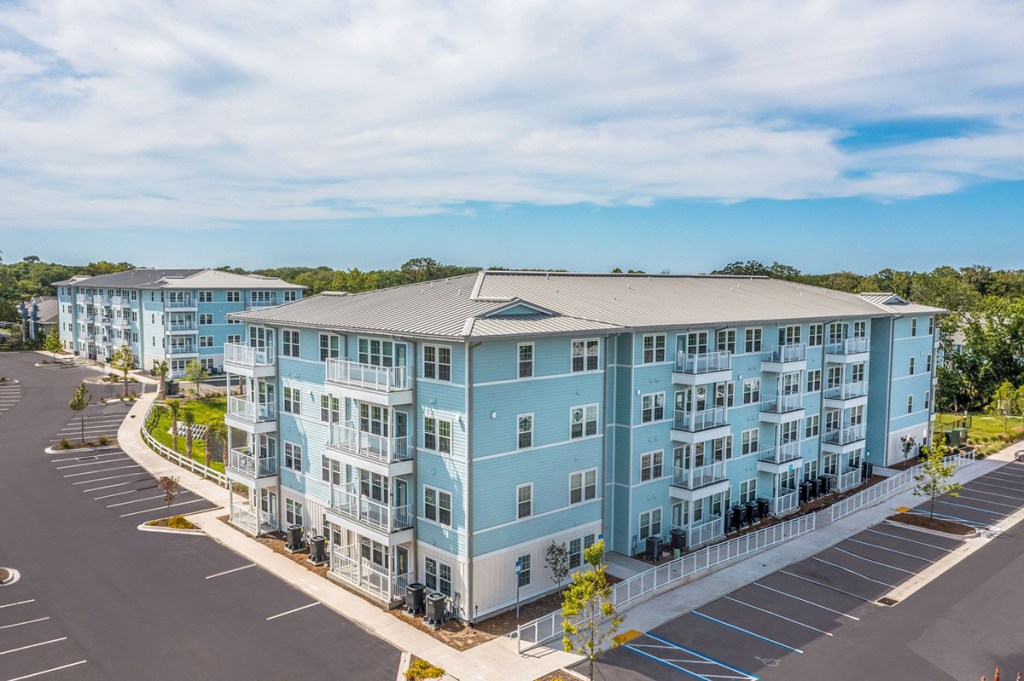
So, the company implemented a new strategy. It maintained its ILS presence but improved the quality of the listings, through better photos, dynamic pricing updates and faster response times. It also added paid search, targeting “Atlantic Beach apartments.”
The result: Within 12 months, occupancy increased to 96 percent, the cost per lease went down to $580 and concessions declined from one month free to $500 flat.
Know your best-performing channels

Just like with any other form of marketing, you need to measure the results of your multichannel strategy. Otherwise, you have no idea if it’s working. Klotz tracks cost per lease, the lead-to-tour conversion rate and tour-to-lease conversions across every channel, every week. If a channel doesn’t produce quality traffic at an acceptable cost, he tweaks the strategy immediately.
Jeremy Brown, vice president of marketing for ZRS Management, said his core mix of channels includes Google Ads, SEO, ILS, reputation management, email, text, paid social media and local outreach, including signage, resident referrals, brokers and events. Brown added that a channel’s success depends on the property stage and key performance indicators. “For high-intent demand capture, Google Ads consistently performs best. For top-of-funnel awareness, paid social tends to be strongest,” he noted.
Marketplaces and paid search consistently deliver strong results because they capture high-intent prospects actively searching for apartments. “We then layer in social and display, based on asset-specific needs—whether we’re driving awareness for a lease-up property or maintaining occupancy at a stabilized community,” detailed Valentin Campeanu, vice president of marketing at AvalonBay Communities.
Humans are tangible animals—we like touch. You have to have something that has some staying power because the world is moving so fast.
—Christine Gustafson, Vice President of Marketing and Public Relations, The Breeden Co.
Indeed, the channels you use depend on the goal you are trying to achieve. “If you’re a lease-up property where you need as many leases as possible and you don’t really care about the cost, then you should be doing a ton of paid advertising on Google Ads, SEO and ILS,” Jones explained. “But if you’re stabilized, and you care about reducing costs while attracting super high-quality, high-intent leads because you only need to fill five apartments, then you might want to focus on a channel that won’t drive lead volume but will drive lead quality.”
Don’t forget the importance of old-school marketing channels, such as paper collateral. “Humans are tangible animals—we like touch,” commented Christine Gustafson, vice president of marketing and public relations at The Breeden Co. “You have to have something that has some staying power because the world is moving so fast. There’s longevity to paper.”
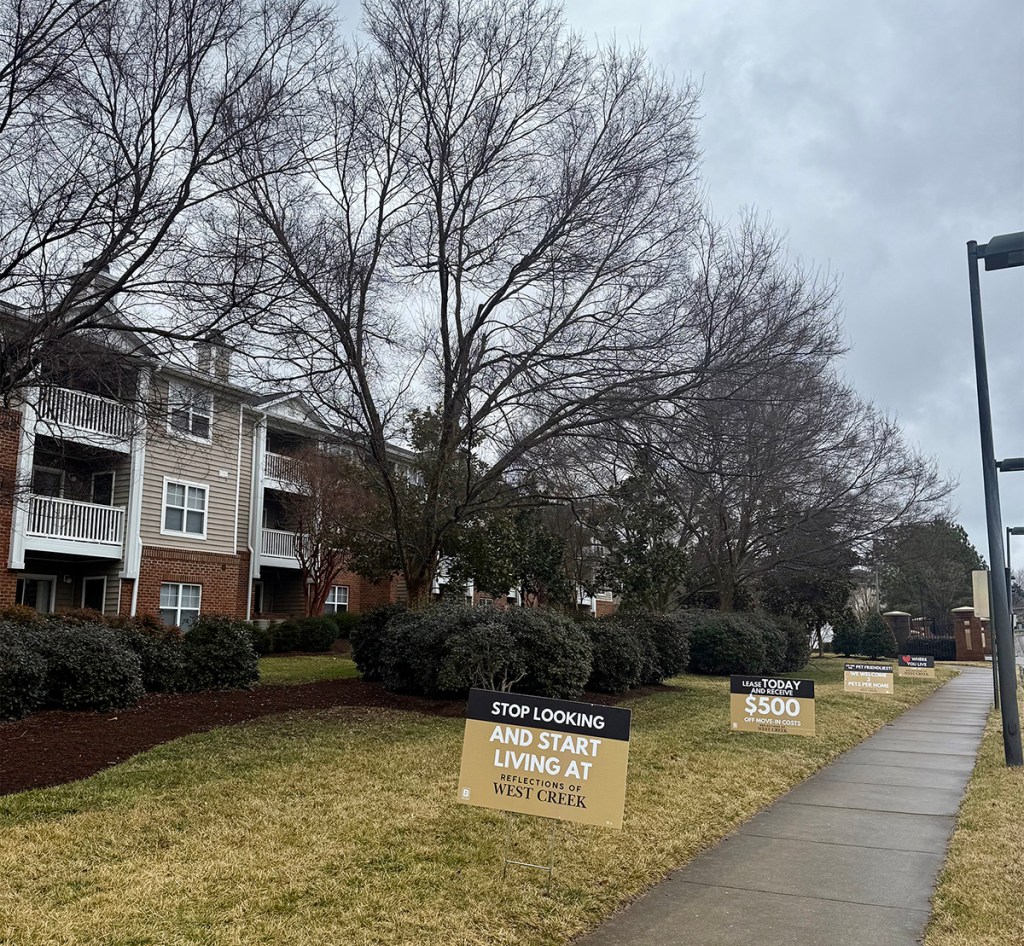
Gustafson said Breeden uses brochures, flyers and business cards for that purpose—they are simple, yet effective. Another old-school method is posting bandit signs, which are placed on the curb near an apartment community to attract the attention of passers-by.
The company is doing that now for its Reflections of West Creek property in Richmond, Va. The community is located on a busy corner, so Gustafson placed signs with bold lettering to grab motorists driving by. The signs say: “We love pets,” “Three bedrooms available” or something similar. As a result of the signage, according to Gustafson, traffic at Reflections is trending up.
We live in a very digitally fragmented world today, so some people are only going to be on Instagram and not look at Google, while others are only going to look at their email. By covering as many bases as possible, you’ll get the best results.
—Kyle Jones, Search Manager, REACH by RentCafe
Bristol Development Group also includes paper collateral in its multichannel approach, using drink coasters in nearby breweries to promote Mural at Stovehouse, its midrise community in Huntsville, Ala., which opened last fall. “It’s a great way to eat out or grab a drink and also learn about our community,” said Meg Evans, Bristol’s associate asset manager. The coasters have a QR code on the back so it’s easy for prospective renters to get information.
“Take into consideration the market you’re in, what other people are doing and how you can stand out,” Evans explained. “If you’re seeing a lot of internet advertising, maybe try a coaster or increase the signage on your building to stand out a little more.”