
Special Report: The Apartment Shortfall
What’s behind multifamily’s supply-demand disconnect—and how to resolve it.
Like the entire economy, the multifamily sector is in transition. Rent growth is moderating at last after a record run. Higher capital costs are making lenders more circumspect and deals less abundant. Development is harder to pencil out, owing to inflated construction prices. The likelihood of a recession looms over the industry no less than it does over every corner of the economy.
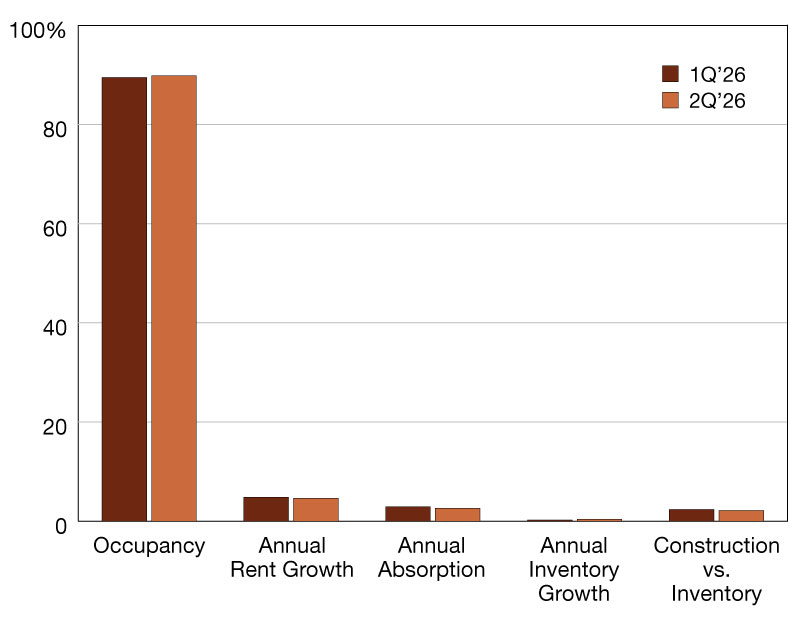
Yet in this problematic climate, it is often difficult to keep a daunting longer-term challenge in sight: the widening gap between supply and demand. Occupancy levels demonstrate how close the nation’s multifamily inventory is to capacity. Despite small declines through 2022, occupancy in both the Lifestyle and Renter-by-Necessity categories remained at 95 percent or higher, according to Yardi Matrix research.
For millions of multifamily residents, this supply squeeze is a root cause of financial hardship. According to a recent estimate by the U.S. Census Bureau, from 2017 to 2021 more than 40 percent of renter households met the definition of cost-burdened: They spent at least 30 percent of their income on rent and related expenses. These renters under pressure tend to be geographically concentrated; nearly one-third of cost-burdened households lived in counties where at least half of all households are cost-burdened. And increases in median incomes were not enough to offset the problem, the Census Bureau noted.
A landmark study commissioned jointly by the National Multifamily Housing Council and the National Apartment Association identifies the sobering scale of the shortfall. By 2035, the industry will need to add 4.3 million new units. At the current pace of production, the industry is 600,000 units behind. Because of underproduction, 4.7 million affordable units—with rents under $1,000—were lost to the market from 2015 to 2020.

It is important to emphasize that the supply-demand imbalance in no way diminishes the multifamily sector’s standout performance over the past few years. In a recent report on property values, Cushman & Wakefield pins the sector’s total unlevered returns on a five-year hold (on assets bought in 2018) at 53 percent.
At the same time, recent metrics also signal a market softening. In November 2022, average rents declined $9 from October, according to Yardi Matrix data. It was the largest such decline in more than a decade. And though rents in November still rose 7 percent year-over-year, the increase was the smallest in 17 months. Occupancy dipped 60 basis points year-over-year to 95.6 percent, and nearly half of the top 30 metros tracked by Yardi Matrix recorded a decline of at least 1 percent.
While demand may be moderating, it does not reduce the long-term challenge. “We still have about a 600,000-unit shortfall,” reported Caitlin Sugrue Walter, NMHC’s vice president of research. Filling that gap, the report states, would normalize vacancy rates and allow for “a more frictionless transaction market with more moderate rental rate increases.” Since 2016, rates have increased 7.5 percent annually.
The difference between the average rental payment of all market-rate stock vs. what a typical affordable renter pays is around $700.
—Robert Likes, KeyBank
Also contributing to demand is that homeownership is often out of reach, especially for first-time buyers. By December 2022, average home mortgage rates had soared to 6.5 percent. While “rental prices have gone up a lot, sale prices have been insane,” noted Paula Munger, assistant vice president of industry research and analysis for NAA. She observed that homeownership before the pandemic cost $280 more per month on average than renting. At the end of 2020, that had risen to $375 per month. During the past several years, the monthly cost of owning a home has become dramatically more expensive than renting. The current differential is hovering around $1,000, according to Marcus & Millichap. The inevitable result is to increase the divide between the haves and have-nots.
Notwithstanding some softening, the upshot is that “the demand for rental housing won’t disappear,” observed Dustin Read, who directs the master of real estate development program at Clemson University. He noted that the lack of affordable homeownership opportunities is driving consumers into already hot multifamily rental markets, making rental housing at some price points extremely difficult to find.
Compounding the issue, the divide on the pricing spectrum between luxury and affordable housing is widening. “The difference between the average rental payment of all market-rate stock vs. what a typical affordable renter pays is around $700,” estimated Robert Likes, president of community development lending and investments at KeyBank. Lenders are weighing recessionary threats in their decisions: “We’re in the risk business, and we need to mitigate those risks,” Likes reported. But, he added, “we’re committed to all things housing, even as things ebb and flow.”
Demographic delineation
Income is a determining demographic factor in the decision to rent or own, but far from the only one. Some 35 percent of renters are younger than 35 and another 20 percent are between 35 and 44. Those numbers skew down sharply for homeowners, to 10 percent for the under-35 cohort and 16 percent between 35 and 44.

A 2021 study from Pew Research correlates these findings. “Homeownership across all income segments increases with age. Homeownership also increases with family formation (married or not). All else equal, the aging population would cause the homeownership rate to increase by 3.8% over the forecast horizon.”
Demographic changes will impact demand in complex ways. Immigration is one such factor that bears attention, since recent arrivals are far more likely to rent than own their homes.
From July 2015 through June 2016, net international migration totaled 1 million people, according to the Census Bureau. That number dropped to 477,000 in 2019-2020 and 247,000 in 2020-2021. In the years to come, immigration flow is projected to recover only partly to pre-pandemic levels, reaching 562,000 annually through 2035.
But while immigration is slowing, stateside out-migration from major metropolitan areas seems to be on the upswing. While first-tier cities such as New York, Boston and Los Angeles—with their typically higher barriers to entry—will feel the exodus most, those with plentiful job opportunities and lower price tags stand to gain.
Supply and demand are out of whack for many of the inputs that go into multifamily housing units, and those imbalances are driving up the cost of bringing new units to market.
—Dustin Read, Clemson University
From 2020 to 2021, Arizona, Texas and Florida were the main beneficiaries of domestic migration; metropolitan areas in those states accounted for seven of the top destinations for transplants, led by Phoenix at nearly 67,000, according to an analysis by William Frey, a senior fellow at the Brookings Institution.
“We saw a lot of people moving during the pandemic to places relatively more affordable than New York or Washington, D.C.,” noted Munger. Attracted by the prospect of a business-friendly climate and job growth, Munger noted, “numerous companies, and their employees, have moved from California to Texas in recent years”—upward of 2,000, according to some estimates.
Going forward, three states will be the focus of new demand: Florida, Texas and California. Between them, the states account for 27 percent of the U.S. population. More than 1.5 million new rental units will be needed in these states alone, accounting for 40 percent of U.S. demand by 2035.
Bifurcated supply
On the supply side, the inventory of available rentals is also an uneven playing field. In a much-noted trend, the demand from affluent residents and renters by choice tends to focus construction on more upscale communities. As rental rates leapfrog income growth, especially among the Renter-by-Necessity cohort, inventory at lower price points has been reduced.

Meanwhile, inflation and supply-chain dislocation continue to affect development costs. By November 2022, prices for construction products and services had jumped 10.1 percent year-over-year, even after a slight dip from October to November, according to an analysis of government data by Associated General Contractors of America. Roofing contractors were charging 20.8 percent more year-over-year, plumbing services cost 13.8 percent more, and the price of concrete work jumped 10.9 percent.
The price surge is hardly limited to lumber, steel and labor. Dustin Read of Clemson points out that a contractor shopping for a washer-dryer unit in 2020 would pay around $600; that same product now typically costs $1,000. “Supply and demand are out of whack for many of the inputs that go into multifamily housing units, and those imbalances are driving up the cost of bringing new units to market,” he said.
Adding to the challenge is that no matter the product category, construction costs are essentially the same. What’s driving price increases is the need “to make deals pencil,” KeyBank’s Rob Likes observed. “That’s fueling the need to charge as much as you can for the rents.”
Lawmakers at all levels of government must prioritize removing barriers to housing development.
—Paula Munger, NAA
Factor into those costs the regulatory burden that affects multifamily development in all categories, and the costs pile on. Add such must-haves as zoning (3.2 percent), site work fees and studies (8.5 percent), changes to building codes (11.1 percent) and affordability mandates (2.7 percent), and the total equates to more than 40 percent of the development price tag.
These regulatory mandates can inhibit development in the locations that need it most. The NMHC-NAA study cites the 48 percent of multifamily developers who say they avoid jurisdictions with inclusionary zoning mandates. Moreover, 87.5 percent will not break ground in jurisdictions with rent control policies.
Finding solutions
For some sponsors, such as those in the affordable sector, strategies for easing the supply shortfall are well-known, if nonetheless complex. “There are only about 100,000 new affordable units created or preserved every year,” Likes noted. “You have to fill your capital stack with multiple sources in order to drive down the permanent debt that the project can support.”

Help is available from sources such as low-income housing tax credits, but it is not a bottomless well, and in some jurisdictions, this capital constraint means “you need to apply multiple years in a row until you get selected,” Likes said. As with other multifamily-related policy issues, industry groups are dedicating considerable advocacy efforts to improving LIHTC capital flow.
Closing that projected 600,000-unit shortfall is a challenge that ultimately falls to the professionals on the ground, but they cannot do it alone. As Munger put it, “Lawmakers at all levels of government must prioritize removing barriers to housing development.” She advocates for cutting the bureaucratic red tape and fostering “innovative and collaborative partnerships” to grow the nation’s housing supply.
Partnering with legislators at all levels is crucial to the solution. It is, as Read pointed out, a question of scale and scope. Developers “need to collaborate with the municipal governments in the markets where they do business to find ways to accelerate entitlement processes, increase development densities when appropriate, and remove unintended regulatory barriers to affordable housing production.”
He acknowledged that government has a legitimate role in addressing the issue. “But those interventions should be made with a clear understanding of the likely impacts on the supply of affordable housing options.”
We saw a lot of people moving during the pandemic to places relatively more affordable than New York or Washington, D.C.
—Paula Munger, National Apartment Association
Industry organizations are working to address that gap in understanding. A key proposal awaiting action by Congress is the Choice in Affordable Housing Act, a bipartisan measure introduced in 2021. The legislation would create a $500 million housing fund to increase the private sector’s participation in the Section 8 Housing Choice Voucher program and alleviate red tape. Supporters say that the measure would improve results for qualifying households, enhance incentives for housing providers and help stabilize funding.
One proposal in the pipeline would step up production by expanding the low-income housing tax credit program. By the end of 2022, more than a third of House and Senate lawmakers had signed on as cosponsors to the Affordable Housing Credit Improvement Act. Highlights include raising the credit’s per-capita dollar amount, increasing its ceiling amount and boosting state allocations. Over the next 10 years, the legislation would help create 1.5 million new affordable units, according to the Affordable Housing Tax Credit Coalition.
These initiatives from the public and private sector are welcome, yet the multifamily industry will clearly be playing catch-up for some years. Powerful economic, policy and financial challenges are at work. A recession—whenever it occurs—will raise additional hurdles, and the larger problem won’t be resolved during the recovery that follows.
Meanwhile, efforts to meet the shortfall of new multifamily product are subject to continued dislocation in the capital markets. For all stakeholders, the challenges call for creativity, innovation and leadership.
Download the pdf “Special Report: The Apartment Shortfall”