PropertyCon Special Report: Navigating a Changing Industry
Insights into how property managers can deal with the rapid transformation of their field.
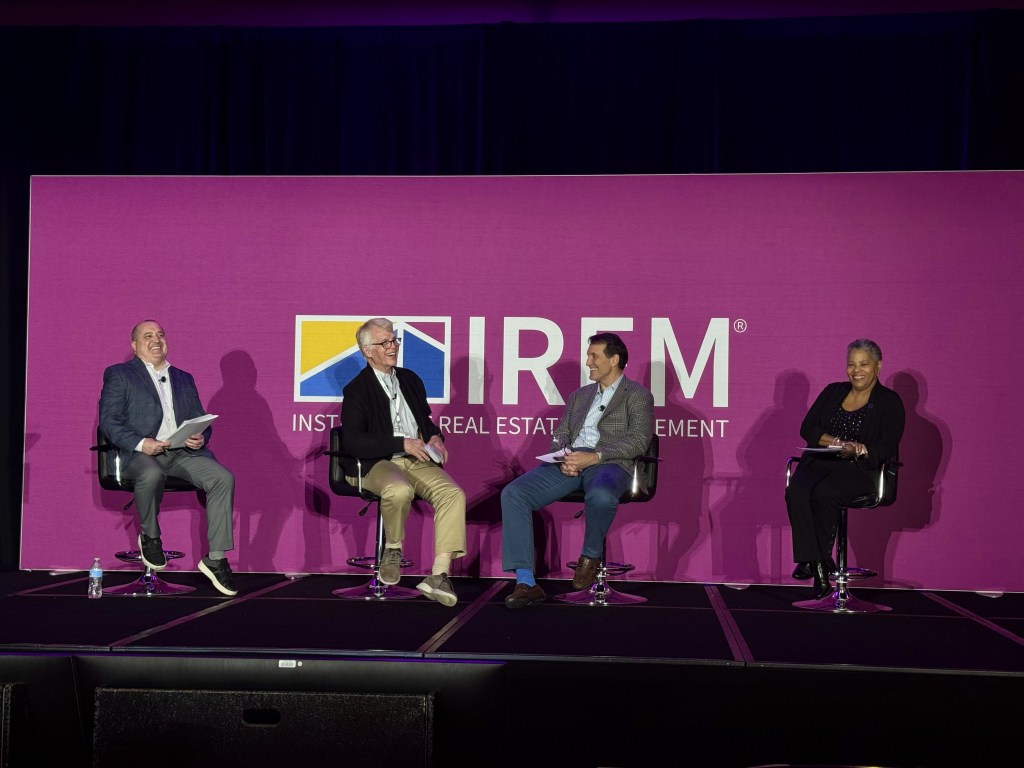
At day one of the Institute of Real Estate Management’s PropertyCon conference in Austin, Texas, speakers and panelists offered insights into how dramatic changes in technology and policy are impacting the property management field, along with tips and how to chart a course through the complicated future.
Multiple sessions focused on AI in multifamily—and not just how to use chatbots to write emails. James Robert Scott, lead researcher at Massachusetts Real Innovation Lab, gave a talk on agentic AI, the next major wave of the technology, which will increase automation and lead to greater efficiency.
Agentic AI can act independently, without human intervention, allowing it to make data-based decisions to complete a series of tasks on its own. While the concept shows promise, adoption so far is limited, Scott said.
READ ALSO: Is a Distressed Sales Wave on the Horizon?
“Very few organizations have crossed the threshold into that true agentic territory,” the researcher told the audience. “That means that the competitive window is very much open at this point in time.”
One current application of agentic AI in multifamily is marketing, where AI leasing agents can interact with prospects, answer questions and schedule property tours—all without human intervention.
Scott noted that prospects today expect near-instant responses to apartment queries, meaning a property without some sort of bot to answer questions could be at a major disadvantage. He offered data showing that the probability of a conversion drops by close to 80 percent if a response takes longer than five minutes.
A shifting regulatory environment
In addition to the rapidly evolving technology landscape, property managers are also dealing with changing regulations at the local, state and federal levels. In a session on “advocacy in action,” panelists discussed some of the challenges facing property managers today and how to mitigate them.
William Cannon, a managing principal at the law firm Offit Kurman who represents property owners and managers, brought up the legal burdens caused by regulations like rent control and restrictions on tenant screening. Due to the ongoing housing affordability crisis, policymakers often want to point fingers at landlords, he said.
“I think it’s reasonable to think that (the regulatory environment) will stay challenging at least for a little while,” Cannon said.
While changes in presidential administrations often come with different Housing and Urban Development regulations and interpretations, the key, Cannon noted, is to remember that the core statute—the Fair Housing Act—has not changed.
“We need to continue to do what we do every day and make sure that we’re abiding by what the statute says,” he said.
And for a resident perspective, Sharón M. Turner, senior development equity manager at Enterprise Community Asset Management, reminded the crowd of the struggles facing low- and middle-income household because of rising costs. She recommended developing strategies of incentivizing timely rent payments and engaging compassionately with residents.
“It’s not just about collections,” Turner noted, “it’s also about protection and affordability as well, and about preserving the asset in the long term.”
Scaling in the face of a changing world
Change does not just occur in the broader economy and outside world, noted Sunrise Management CEO Joe Greenblatt in a talk on growing and scaling a property management company. When developing a portfolio, Greenblatt recommended taking stock of your internal processes and evaluating how successful, or even necessary, they are.
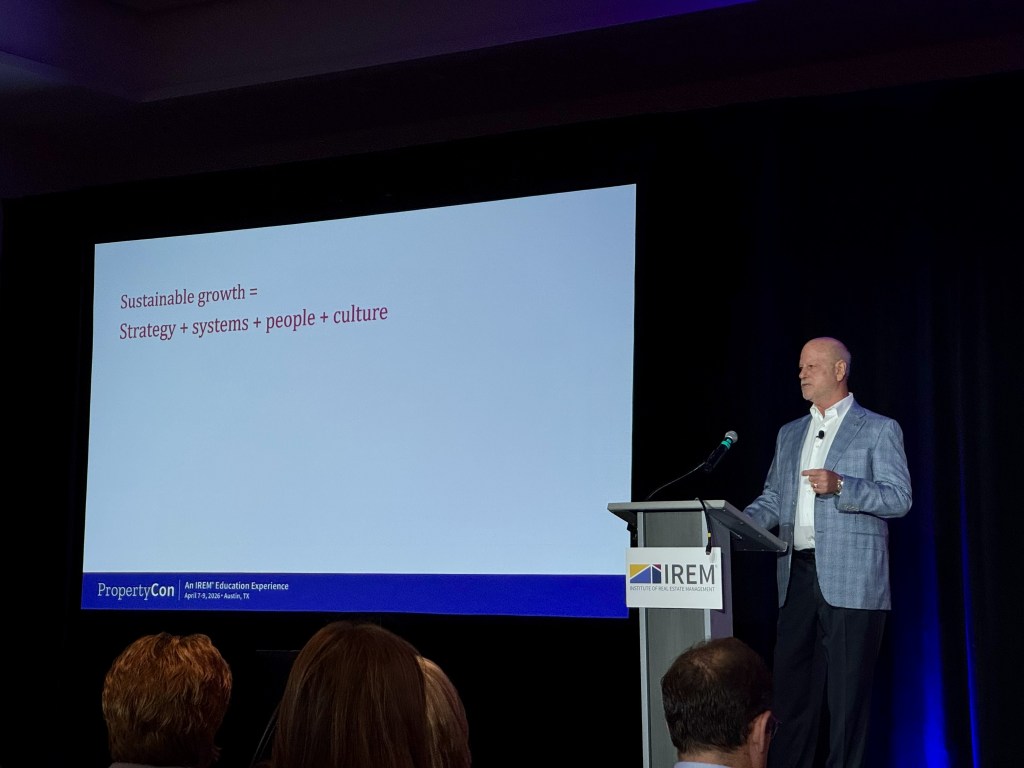
“We need to recognize that all the great routines that we’ve developed, along with the policies and procedures that we may have done for a good reason at one time, are perishable,” the executive said. “They all have on them—and maybe we don’t look often enough—a ‘best by’ date, and after that you need to discard them.”
And while investing in new tech tools can help to streamline processes and improve efficiency, Greenblatt reminded the audience of the importance of having quality data for your tools to take advantage of. Inputting low-quality data into an AI system, for example, will only lead the system to output even worse data.
Additionally, not every software offering is right for every company. Greenblatt offered a simple test to evaluate if a new tech offering is worth the time and money required for its adoption.
“Every new platform should either impact NOI, improve occupancy, address inefficiencies or improve response times,” he said. “If it doesn’t, then maybe it’s not the right platform for you.”