New Generation, Same Mission: PRC’s Next Phase in Affordable Housing
Principal & CEO Matthew Linde on leadership transition and how the firm is aligning mission and market realities as it expands beyond New York City.
The affordable housing sector continues to navigate familiar challenges, including limited inventory, regulatory complexity and tight capital markets. In that environment, some developers are reassessing their strategies, doubling down on mission-driven housing while refining their operating models for long-term growth.

People Restoring Communities is among those firms. Founded in 1971 and recently rebranded from Property Resources Corp. after brothers Matthew and Benjamin Linde assumed full ownership, the New York-based company has developed, preserved or repositioned more than 20,000 affordable and market-rate apartments.
Under the Lindes’ leadership, PRC has sharpened its focus on affordable housing while strengthening its internal infrastructure to support expansion beyond its traditional footprint. The firm is exploring new opportunities in markets such as Richmond, Va., Trenton, N.J., and Boston.
Multi-Housing News spoke with Principal & CEO Matthew Linde about formalizing PRC’s operating model and evaluating new markets amid evolving policy and capital market conditions.
READ ALSO: Affordable Housing Industry Trends
When you and your brother took full ownership of the company, what guiding principles or values did you agree would define this new era?
Linde: When Ben and I took full ownership of PRC, we chose to focus on the part of the business that felt the most rewarding to us: affordable housing. Renaming Property Resources Corp. to People Restoring Communities honored our history in affordable housing preservation while signaling our renewed purpose.
We carried forward the business ethics and entrepreneurial spirit taught by our dad, uncle and grandfather, while narrowing our focus entirely to housing that helps improve people’s lives and strengthens neighborhoods across all income levels. As part of the transition, we introduced a new company motto, ‘Everyone deserves a home,’ which captures the heart of our mission.
You are the third generation in the family to lead the company. What practices did you retain from the previous owners, and what changes did you introduce to support its growth?
Linde: Like many family businesses, we had to evolve to keep pace with how the industry operates today. Historically, the company ran on a flat structure, with everyone contributing to the same handful of deals at a time. To scale nationally and create more structure without losing collaboration, we built dedicated deal teams and clarified roles across divisions and responsibilities at different levels of seniority.
Our goal now is for every project to have a development, management, construction and architectural lead guiding it from inception to completion in a vertically integrated fashion. We have also brought in new talent with experience at larger organizations and in executing affordable housing projects nationally to strengthen our team. Throughout this process, we have held onto our grandfather’s legacy of treating people with respect, ensuring that employees and tenants alike feel like part of our extended family.
What specific criteria do you apply when deciding where to expand next? And how do you adapt your community-first philosophy to cities with very different socio-economic conditions or political climates?
Linde: The first question we ask when looking at a new project is whether it truly helps people. We focus on communities where our experience can make a meaningful difference and where our skill set can be used to improve lives.
Once that is established, we make sure the project works both operationally and financially, in the short and long term. In the short term, that often comes down to scale. We typically target developments in the 100- to 400-unit range so our in-house architecture, construction and management teams can all contribute. In the long term, we look for markets with steady housing demand and growth potential, as our goal is to remain involved for at least 10 to 15 years, if not longer.
Many of our opportunities in new markets come through local requests for proposals, where municipalities or local housing authorities outline their goals for a specific site or existing building, and we respond with a tailored presentation explaining our approach and why PRC is well-suited for the project. That process allows us to craft solutions that meet each community’s unique needs while staying true to our mission.
Speaking of community needs, can you share a specific example of how they shaped one of your recent projects?
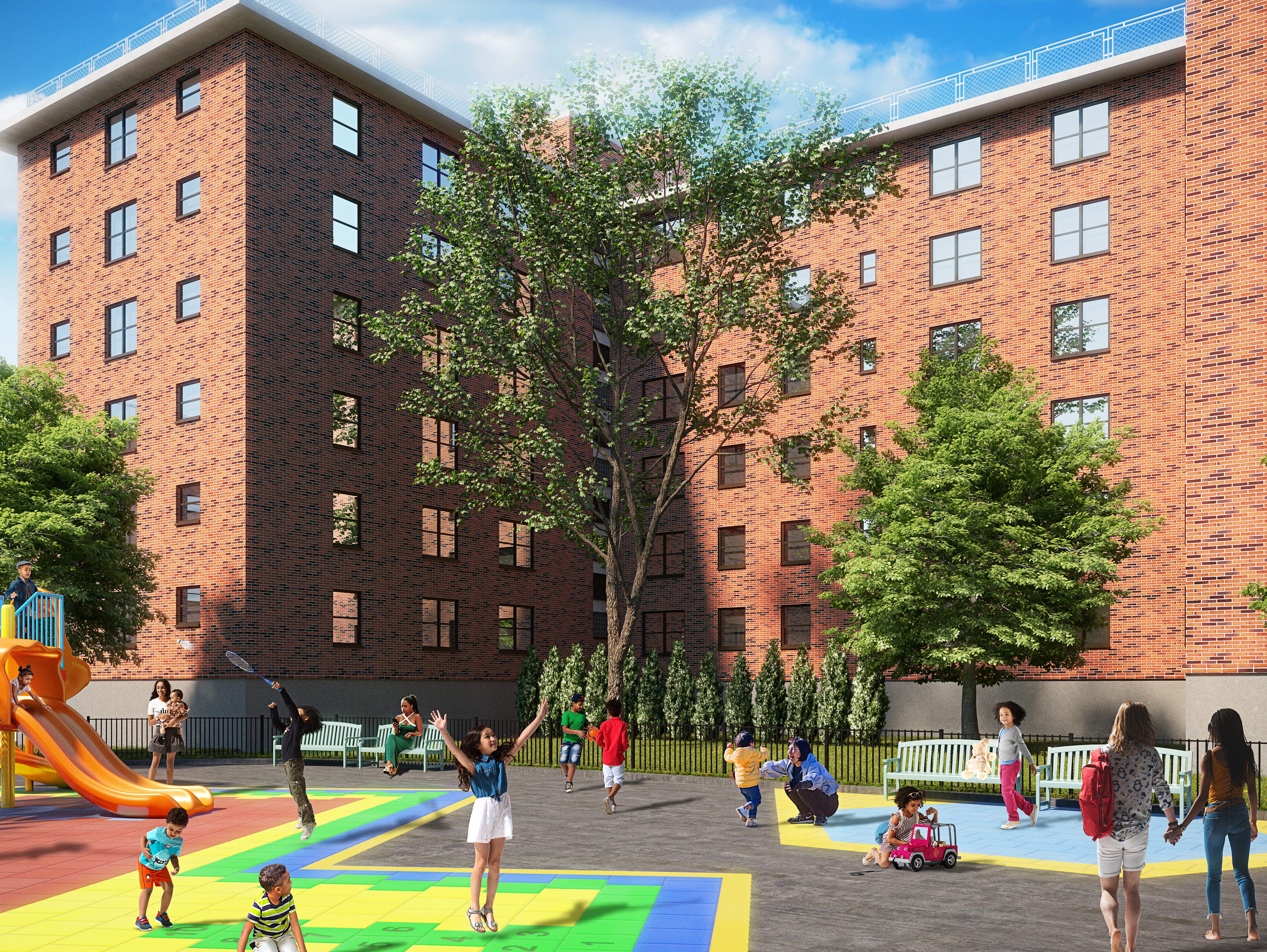
Linde: While we track some resident satisfaction metrics—like work order response time and outstanding violations to evaluate how residents are feeling about a project—it is not easy to quantify community impact. I believe the most effective way to gauge it and keep our mission thriving is by maintaining open lines of communication with residents. Regular tenant meetings give people a voice in shaping where they live.
A great example of this was at our PACT project in East New York. We stood in front of a room filled with our future tenants and presented apartment renderings we were super proud of, only to have the tenants immediately push back. They did not like the cabinet colors, the choice of flooring and the rendering omitted a window, so the tenants thought we were removing it. We listened to their feedback, made adjustments and ultimately decided that the best path forward would be to give the residents multiple options and a chance to vote on the final design.
By including the community in the design process and repeatedly showing up to meetings and listening to tenants’ concerns, we set the tone for what we would be like to work with. Now, we try to replicate that inclusive approach wherever we can on all our new projects.
READ ALSO: Affordable Housing Design That Works in NYC
As you build a portfolio outside New York, what indicators do you use to assess whether the expansion strategy is working?
Linde: When Ben and I first took over, we worried about keeping momentum as our active projects neared completion. Today, we are proud to have a growing pipeline that includes several deals in different stages of predevelopment.
Over the next year or two, our focus is on execution with the goal of closing between three to five construction loans in 2026 and another three to five in 2027. If we can maintain that pace while delivering high-quality, resident-centered projects, it will set the stage for what we are trying to accomplish over the next decade and beyond.
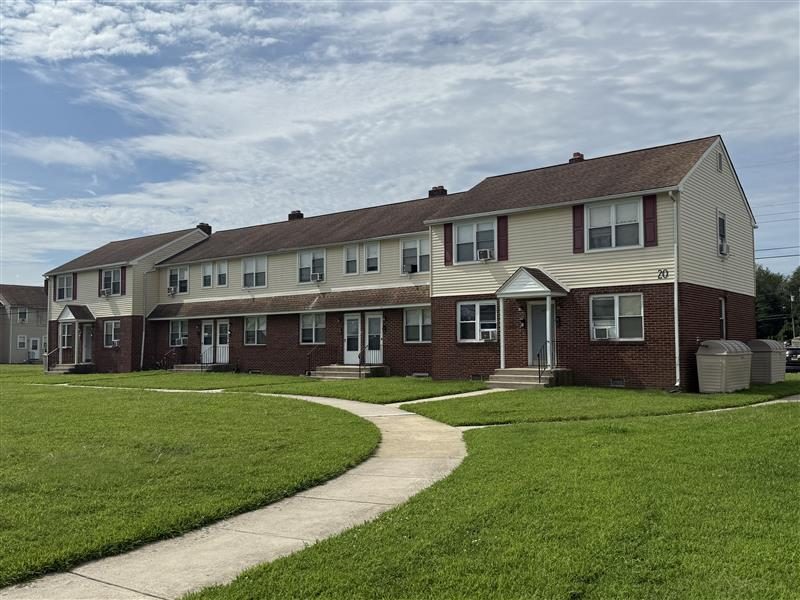
As our first acquisition outside of New York, Paulsboro Gardens was the first stride in that strategy, and we were excited to bring our vertically integrated approach to creating a thriving community in a new market for us.
When entering new jurisdictions with different regulatory, labor and stakeholder environments, what pre-closing diligence or early-stage practices have you found most important for managing risk?
Linde: We have learned that managing risk starts well before closing. Hiring a head of risk management and formalizing our vendor onboarding process has made a huge difference.
When our grandfather ran the company, a handshake and trust were all that were needed to move a deal forward. There is a famous story in our family about outlining the economics of a high-rise condo joint venture on a paper tablecloth at Patsy’s in Manhattan.
Those values of mutual trust still matter, but today everything needs executed contracts, insurance verification and clear scopes of work. We now do very little without fully executed contracts and a careful review of the fine print in our counterparties’ policies.
With new city leadership in New York, what’s next for affordable housing development? How are mission-driven companies like PRC impacted by public policies?
Linde: There is definitely a lot of buzz in the industry right now around what the new administration will prioritize, but not a lot of detail yet. We are encouraged by the Mayor’s early statements about increasing housing supply and properly staffing the agencies that make that possible, as well as who he has chosen to surround himself with as part of his transition team, so we are choosing to be cautiously optimistic.
Public policy is the lifeblood of affordable housing, as it dictates what can be built, how projects are financed and what programs we can access. We spend a tremendous amount of time analyzing the policies set by the local municipality, the state or federal government and adapting our work accordingly.
The affordable housing regulations impact each division of our company, from the design to the construction, development, financing and management. We are almost always aligned with the public policy goals for what best serves residents and the city’s housing needs, but it is not always easy to check every box you need to check to get to the closing table.
Looking further ahead, which policy shifts or capital-market dynamics do you believe will most influence PRC’s ability to expand?
Linde: We are closely monitoring how the shift from the 50 percent test to the 25 percent test will affect the availability of volume cap in bond financing. Projects now only need 25 percent of their costs financed with tax-exempt bonds to qualify for tax credits, making financing more accessible and hopefully allowing for more affordable housing to be created or preserved.
In New York City, there is a pressing need for policy changes that would make preservation projects more competitive for funding, not just new construction. Nationally, we are encouraged to see more states introducing their own state low-income housing tax credits, which we believe will be a significant driver of new affordable housing production.
Rising insurance costs were initially a localized issue in New York and Florida, but have become a major concern across markets. We are monitoring how that plays into project feasibility, and at the federal level, we are hopeful that HUD’s policy updates will continue to support the industry and that the bipartisan backing of LIHTC remains strong.
Affordable housing depends on stable, supportive programs, and we remain optimistic that policymakers will continue to push for more housing, with housing affordability a mainstay of the national dialogue.
READ ALSO: Multifamily Predictions for 2026
If you were to revisit PRC five years from now, what would you hope would be different and what would you hope hasn’t changed?
Linde: In five years, the hope is that PRC has fully transitioned from the concept stage through the execution phase and into the expansion phase. By that point, we will likely have grown to a size where some of the things we value now, like regular all-staff in-person meetings, will be harder to maintain. What I want to hold onto is the ethos that we are one vertically integrated firm, all working toward the same mission of providing housing for people who truly need it.
Growth will bring new challenges, but as long as we keep that shared sense of purpose and collaboration, we will be the kind of company we set out to build. My father’s simple rule was to always be kind, and that philosophy still guides us. If we can keep that humanity at the center of what we do, I will consider everything else a success.