JV Breaks Ground on $167M NYC Conversion Project
The property is a former women’s correctional facility.
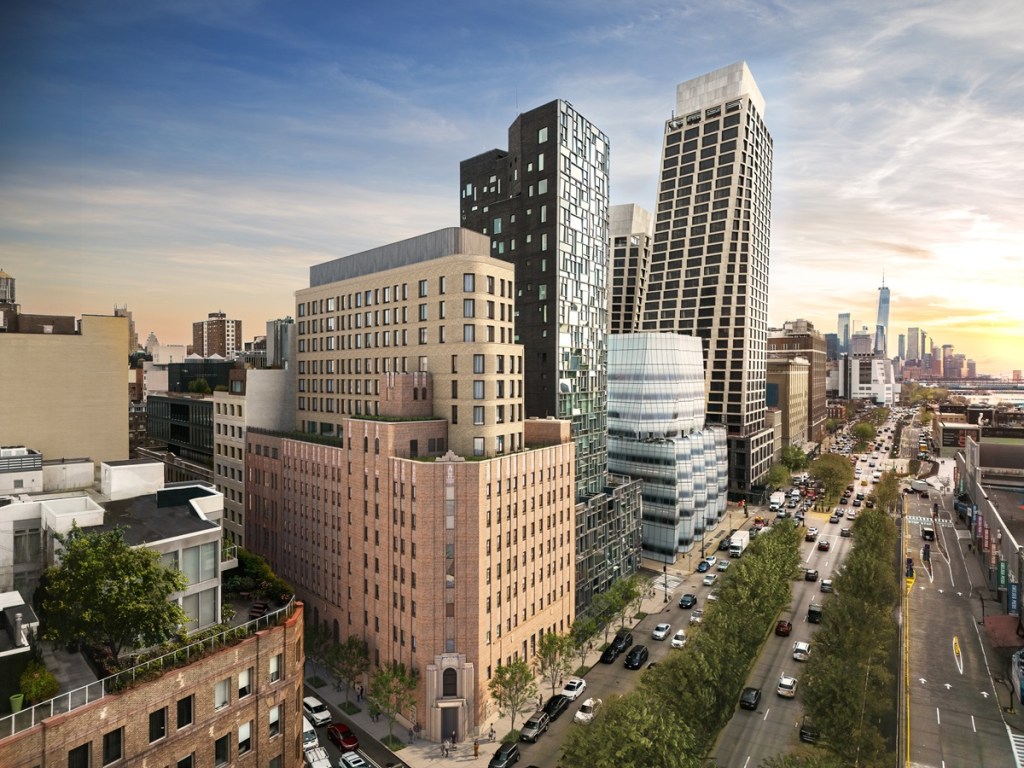
A joint venture between Camber Property Group and the Osbourne Association has broken ground on Chelsea Beacon, a $167 million conversion project in Manhattan’s West Chelsea neighborhood.
The vacant former women’s correctional facility will be redeveloped into a 131-unit permanently affordable and supportive housing community for households earning up to 80 percent of the area median income. Delivery is slated for 2029.
Empire State Development submitted a proposal for purchasing and redeveloping the property in September 2023. In July, 2024, Governor Kathy Hochul announced the firm won the conversion project for the 100,000-square-foot, state-owned property.
Chelsea Beacon obtained a mix of public and private investments from the Federal and State Low-Income Housing Tax Credits from NYS Homes and Community Renewal, which are expected to originate $77 million in equity and $25 million in HCR subsidies. Additionally, Empire State Development has issued $20 million from its NY RUSH program. The NYS Office of Mental Health has contributed to the redevelopment with an additional $13.9 million.
The century-long, multifunctional Chelsea Beacon
Located in the Flatiron District, at 55 W. 20th St., Chelsea Beacon will stand two blocks south of the Flatiron Building and the PATH subway station on 23rd Street. Out of the total number of units, seven will be fully accessible for residents with mobility impairments, and three will be designated for renters with hearing and visual disabilities. Upon completion, Chelsea Beacon will also include 15 short-term transitional apartments and 9,300 square feet of community space.
The conversion project will preserve and adaptively reuse the property’s main buildings and annex, while also developing another structure within the interior courtyard. Plans also involve restoring and repurposing the historic interior chapel.
READ ALSO: Affordable Housing in 2026: A Year of Pressure and Possibility
Originally, the 1932-completed property designed by Shreve, Lamb and Harmon Architects in the Art Deco style served as the Seamen’s House YMCA. The building was then acquired by New York State in 1967 and used as a drug-treatment center. In 1974, it became the Bayview medium-security correctional facility for women, but it was closed in 2012 due to flooding from Hurricane Sandy. It has since remained vacant.
New York City residential conversions continue to remain increasingly attractive for both developers and investors, with projects mainly concentrated on office-to-residential redevelopments, especially in the Financial District. At the start of this year, the Big Apple had 16,358 apartments waiting to be converted, according to a recent report by RentCafe. That figure measure out to by far the largest across the U.S.