Is This Multifamily’s Year for Change?
Will this year be a repeat of last year, like in the movie “Groundhog Day”? Or will cyclicality take a positive turn?

Will this year be a repeat of last year—are we in an endless loop like in the movie “Groundhog Day”? It may feel that way. LaSalle Investment Management Global Head of Research and Strategy Brian Klinksiek suggested this during a recent media lunch where he discussed the company’s ISA Global Outlook for 2026. But he thinks real estate will break the cycle this year, even if recovery is shallower than expected.
“Cyclicality is taking a positive turn,” he noted.
What will remain challenging, though, is new construction. “Rents need to rise to justify new development,” Klinksiek cautioned. For that reason, LaSalle predicts a dearth of development until the math makes better sense.
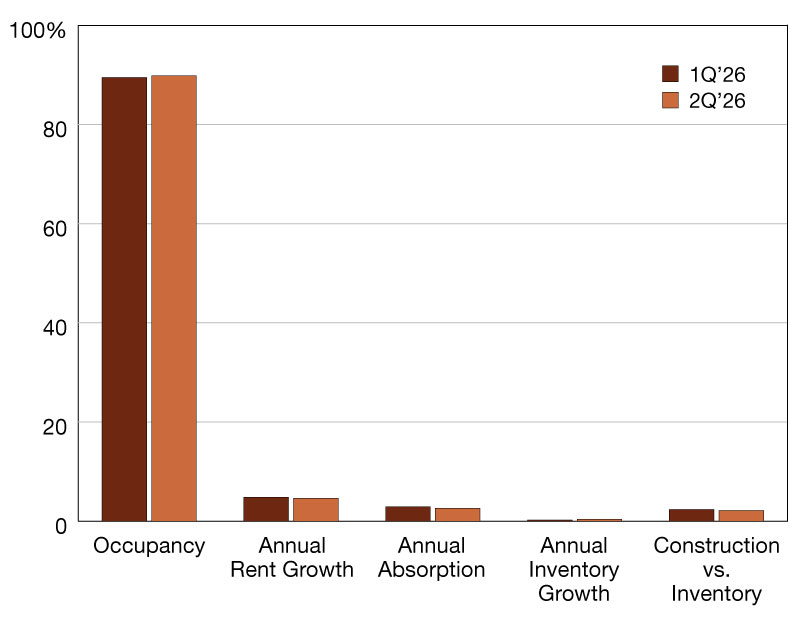
For multifamily, there’s something of a paradox: To reduce the huge housing shortage that’s been plaguing the marketplace, continuous new development is sorely needed—with 4.3 million units required by 2035 to meet demand, according to the National Multifamily Housing Council. And more housing is needed to make it more affordable. However, in the short term, last year brought a glut that outpaced demand, as LaSalle noted in its report.
The result has been a softening in multifamily rents—not enough to improve affordability, of course, but enough to deter construction. The average advertised rent dropped $5 in December, according to Yardi Matrix. And year-over-year growth was flat, which last happened in the first pandemic year and before that during the global financial crisis recovery.
Such performance of fundamentals combined with higher costs of capital and development have impacted equity availability for both development and value-add investment transactions, making it more critical to think outside the box to move deals forward, which Jeffrey Steele discusses in this month’s feature, “Creative Underwriting.” In fact, he argues, such capital stacking is becoming the norm.
“The less accommodating the conventional market is, the more essential structured and creative capital becomes,” Mark Green of Cottonwood Group told him.
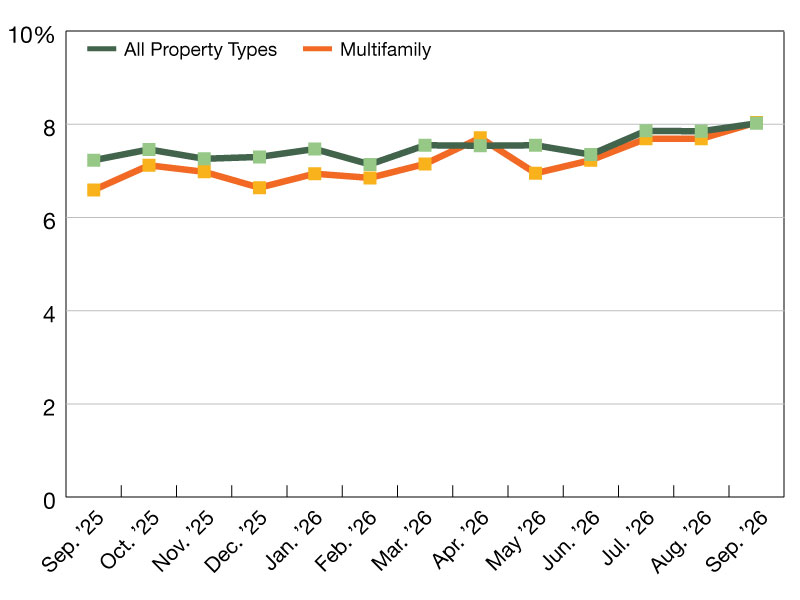
That capital will help fan the embers of investment transactions, which increased only slightly in 2025, according to Yardi Matrix, but which are showing signs of loosening in the new year. “Barring construction, we will see momentum in the capital markets,” predicted Rich Kleinman, LaSalle’s Americas head of research and strategy, though for apartments that will be on a more selective, market-specific basis.
The leading finance providers have certainly continued to step up. The top three companies on our annual ranking of the Top Multifamily Finance Firms—Newmark, CBRE and Walker & Dunlop—all recorded significantly increased multifamily financing in the 12 months ending in September 2025, with growth ranging between 43 and 59 percent. That’s a positive sign.