
GM Development Lands $130M for Denver Conversion
Plans call for the transformation of a historic 1950s building into a mixed-use community.
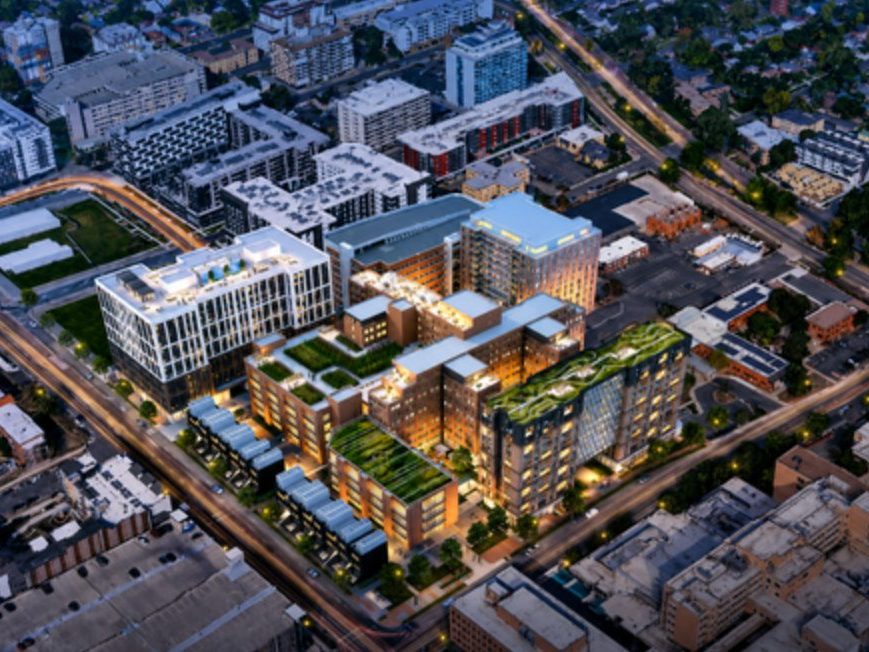
GM Development obtained $130 million in financing for the adaptive reuse of a former Veterans Affairs hospital campus in Denver. The project will transform the property into a Class A, mixed-use community with 493 apartments.
Walker & Dunlop arranged the deal on behalf of the developer. The note is the largest HUD 221(d)(4) construction loan in the company’s history. Historic tax credits were also part of the development’s funding structure.
About 8 percent of the units will be income-restricted for residents earning up to 60 percent of the area median income. Plans call for the transformation of the historic 1950s, 10-story building and the addition of more than 50,000 square feet of retail and medical office space, as well as an eight-level parking structure.
READ ALSO: Why Discipline Is Driving Multifamily Performance
Located at 1055 N. Clermont St., the 8-acre property is adjacent to the 9+CO master-planned district and close to multiple dining options, bus stops and medical centers. A Trader Joe’s is within walking distance, while Downtown Denver is 4 miles west.
Senior Managing Director Chris Rumul, Senior Directors Jason Silva and Cole Parker, alongside Director Mike Valucci comprised Walker & Dunlop’s team.
Conversions boost housing supply
In recent years, residential conversions have become a top priority for larger, denser cities as authorities look to address persistent housing shortages. While older office buildings remain the main source of adaptive-reuse opportunities for new multifamily construction, hospitality, retail and industrial properties are also being repositioned into housing.
In fact, about three-quarters of all office conversions underway in the country involve multifamily, according to Jessica Morin, Americas head of research for CBRE. Cities and states are supporting this activity through tax abatements, direct subsidies, special financing districts, historic tax credits, streamlined approvals and zoning changes.