
Housing Is on the Ballot in California. Here’s What to Watch.
Voters will consider issues ranging from a statewide bond measure to rent control and eviction reforms.
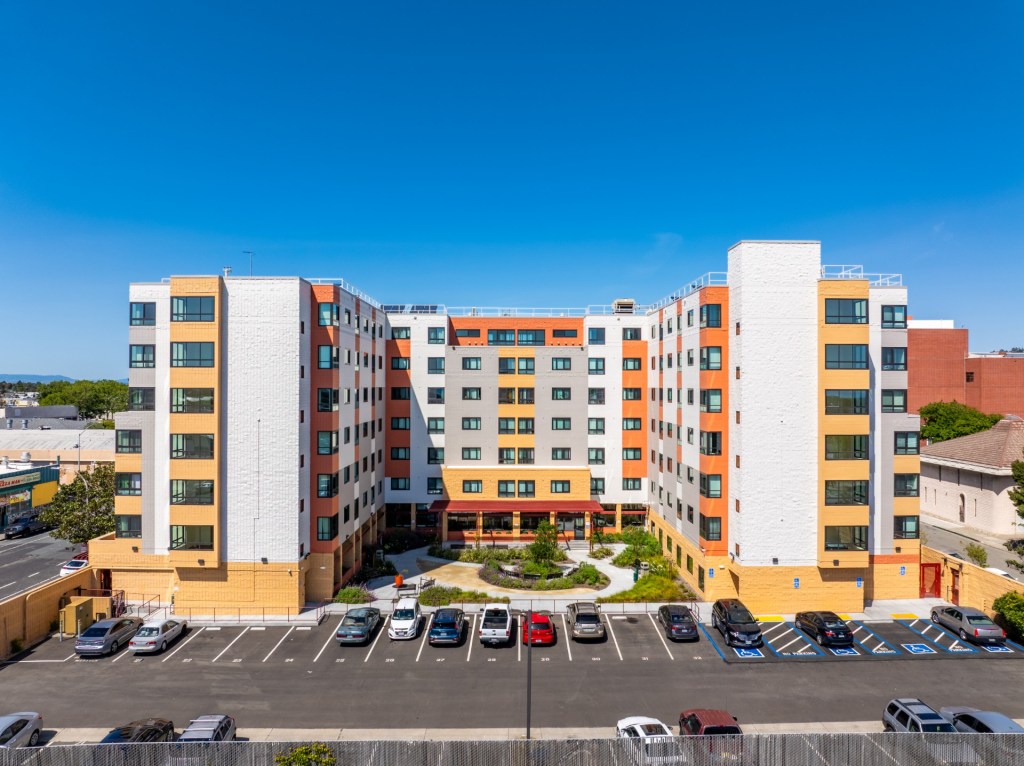
California voters will decide on several statewide housing-related propositions tomorrow. One includes a nearly $11.3 billion bond proposal for affordable programs, and another is a potential amendment to the California Environmental Quality Act that could expedite environmental reviews and set timelines for legal challenges to certain “essential” projects including housing.
Locally, there are at least six ballot measures in the state that would make changes to municipal rent control, eviction laws or both, according to Nicole Upano, associate vice president of housing policy and regulation at the National Apartment Association. Of the six ballot initiatives only one —Measure H in Salinas, Calif.—calls for repealing the city’s four existing rent control and just cause eviction ordinances.
“We’ve been following several ballot measures across the country on a variety of topics,” Upano told Multi-Housing News. We’re thrilled to see places like California that are focusing on making serious investments in affordable housing, much like the federal government did with the 21st Century Road to Housing Act.”
Upano said that in Salinas, the city is already in the process of repealing these ordinances and instead refocusing on things like rental assistance and making significant investments not just to build more apartments but to support renters in the short term with their needs.
Addressing the housing crisis with Proposition 1
Voters are being asked to authorize Proposition 1, an approximately $11.3 billion general obligation bonds, including $10 billion for state housing programs and nearly $1.3 billion for veterans’ home loans. Of that funding, $7.2 billion would support affordable multifamily housing programs. Estimates say it could finance up to 40,000 multifamily units, including apartments for families, seniors, students, farm workers, tribes and homeless Californians.

“I think a lot of what Prop 1 does is refill the coffers of the state’s existing affordable housing program.” said David Garcia, deputy director of housing policy at the Terner Center for Housing Innovation at University of California, Berkeley. “The programs that Prop 1 would fund are really critical for the state to maintain pace in building the types of homes that Californians really need.”
Garcia noted that there’s been important changes recently at the federal level, which could allow developers in California to build even more homes than they were able to before.
He was referring to some of the reforms in the 21st Century Road to Housing Act, which included raising the public-welfare investment caps from community banks from 15 to 20 percent. That change is expected to better capitalize Low-Income Housing Tax Credit-based affordable projects.
“But they can’t do that unless they can leverage the grant dollars that come from the state’s affordable program,” Garcia added.
Welton Jordan, chief real estate development officer at EAH Housing, a nonprofit that develops, preserves and manages affordable homes across California, said that if approved, Proposition 1 will also pair well with the Housing Development Finance Committee, a new state entity launched in July to streamline, centralize and align the state’s multifamily affordable housing finance system and production programs.

Jordan called Proposition 1 “a great opportunity for the citizens of California to say yes to something that you can look and see a tangible benefit in the very near future. They’re going to put this money out on the street right away.”
Nicolle Aube, principal planner and president at Civex, a planning and engineering firm in Newport Beach, Calif., agreed that funding from the bond could help many projects already in the pipeline deliver sooner.
“In the development world, it could be a quick turnaround if a project funded by Prop 1 was completed a year or two later,” she said.
Amending CEQA
Proposition 45 calls for amending CEQA to create strict timelines for certain developments deemed “essential,” such as some housing, infrastructure, telecommunications, water and clean energy. The goal is to speed up permitting by tightening time limits for environmental reviews, public input periods and legal challenges.
“It doesn’t create exemptions per se, but it does create more structure around the projects going through CEQA,” Garcia noted. “They would still have to go through CEQA if Prop 45 passes, but they would have some more certainty in how long that process would take.”
Amelia Matier, who is helping run the vote yes campaign by the proposition sponsor, the California Chamber of Commerce, also stressed that Proposition 45 would not eliminate the CEQA process.

“The whole idea is to create mechanisms so people can have more expectation of regularity in building, which will really bring down the cost,” Matier said. “When these projects drag out, it’s not always the developer paying the fee sometimes it’s the state and thereby the taxpayer.”
Aube called the proposition “one of the more sweeping reforms of CEQA” that she has seen because it would streamline multiple project types. She noted that most of the streamlining options have come from the state Legislature, including Assembly Bill 130 and Senate Bill 131, which created an exemption from CEQA for qualifying infill projects up to 20 acres along with other changes to streamline CEQA procedures.
“All those bills are offered as options or incentives for developers to build these projects to help ease the housing crisis and shortage,” Aube said.
READ ALSO: How California’s CEQA Imperils Infill Development
Upano said NAA members have been very supportive of the statutory exemption and the reforms that the state legislature imposed in 2025. “Prop 45 may be a more controversial approach for all types of qualifying essential projects, but we do see that through line of the benefits for housing projects between Prop 45 and building on what’s already been done through AB 130 and Senate Bill 131,” Upano noted.

But opponents, particularly environmental activists who don’t want to weaken CEQA, believe large projects that could have serious impacts on the communities surrounding them should go through a heightened process rather than a truncated one. Some are also raising concerns that data centers, which have been the subject of pushbacks in recent months including moratoriums in several California towns and cities, could be considered essential projects under Proposition 45.
“The opposition has done their very best to distract voters from the issue at hand, trying to bring in things like data centers, which are absolutely not in the measure,” Matier said.
But Garcia noted the language in the proposition is not clear-cut regarding data centers.
“My sense is that it could be the source of litigation in the future,” he said.
Rent control, tenants’ rights top local measures
While Salinas is looking to eliminate its rent control ordinances, several other communities including Redwood City are doubling down, according to Upano. Redwood City’s Measure E would establish local rent control for a maximum of 5 percent for multifamily units built before Feb. 1, 1995, and impose eviction restrictions and relocation payments up to $12,000 per household.
“This is one of the more egregious housing proposals that we’ve seen. It’s a step in the wrong direction,” Upano stated.
She noted the mayor and City Council oppose Measure E, estimating implementation costs to be roughly $11 million a year.
The NAA is also tracking a measure in Cudahy, Calif., which would require voter approval to increase the current 3 percent maximum ceiling on annual rent increases and require two-thirds approval of the full City Council for amendments or repeal of the law.
Measure S in San Pablo, Calif., would cap annual rent increases at the lesser of three percent of 60 percent of CPI. In Berkeley, Calif., Measure X would establish a 10 percent limit on annual rent increases. In Santa Monica, Calif., voters will consider proposals expanding eviction protections, including adding more just-cause eviction requirements, and modifying the city’s rent control framework.