How to Build a Better Marketing Budget in 2027
Where to invest, where to cut and how to maximize multifamily ROI.

Savvy marketing executives understand that an annual marketing isn’t merely a spending plan—it’s a roadmap to help achieve company goals, whether that’s increasing occupancy, attracting new investors or improving brand recognition in the industry.

Apartment-marketing pros also know that preparing an accurate and effective 2027 budget requires more than just taking last year’s numbers and arbitrarily adjusting them up 10 percent to account for rising costs. Instead, the best marketing plans are created by determining your goals, reviewing the status of your assets and the overall market they’re situated in, evaluating the performance of every marketing channel you’re using—and then allocating marketing spend on the strategies that will achieve measurable results.
“We don’t start with a dollar amount—we start with business objectives,” said Jeff Klotz, CEO of The Klotz Group of Cos. “Before we discuss budgets, we ask what we’re trying to accomplish. Are we leasing a new community, improving occupancy, hiring 150 employees, raising capital? Once those priorities are clear, the budget becomes much easier to build.”

But even with the best analysis and planning, things happen that can blow your budget. For example, within months of The Breeden Co. taking over third-party management of The Collection at American Tobacco Center, a portfolio of five loft-style communities in Richmond, Va., and putting a budget in place, nine rooftop air conditioning units blew. Replacement resulted in nearly $50,000 of unplanned expenses. “This unforeseen expenditure required careful evaluation of other budgeted items and operational priorities and created substantial financial pressure that had not been anticipated,” shared Christine Gustafson, the company’s vice president of marketing and public relations. The moral: Your budget should always account for contingencies, either by having a dedicated line item to cover unexpected costs or price hikes, or by adding a buffer for contingencies to each expected expenditure.
When to start
Don’t wait until the last minute to start your 2027 budget. Kyle Jones, search manager at REACH by RentCafe, said he knows of companies that started the budgeting process during the second quarter of 2026, with plans to have it finalized by the end of the third quarter.

The first step in creating your 2027 marketing budget is to establish your goals. “That’s the most important thing,” according to Kelly Siegal, managing director of marketing for Greystar. “If we understand the goals and objectives of the property, we can recommend the proper marketing mix that allows us to hit those goals and objectives.”
For example, are you trying to lease up a new project, which will require a blitz of marketing and substantially more money than you’d spend on a stabilized asset? Or do you just have a few vacancies to fill? Once you’re clear on the goal, base your expected expenditures on actual numbers. “Talk to your marketing and advertising vendor partners to get 2027 pricing,” Gustafson said. “You need to start gathering proposed price increases (early) so that you can budget appropriately.”
Talk to your marketing and advertising vendor partners to get 2027 pricing. You need to start gathering proposed price increases (early) so that you can budget appropriately.
—Christine Gustafson, Vice President of Marketing and Public Relations, The Breeden Co.

This step is essential, because costs are likely to rise next year. Many apartment executives expect to spend more money in 2027 on artificial intelligence, both for advertising and to optimize their existing websites and content to better catch the attention of platforms like ChatGPT or Microsoft Copilot. Klotz expects to increase spending in 2027 on AI tools, video, content creation, marketing automation, reputation management and data analytics. He also expects to invest more in branding the company as a whole, “because attracting great employees has become just as important as attracting residents.”
With the cost of labor, materials, taxes and insurance on the upswing, apartment marketers are looking to reduce spending as well—and should cut marketing expenditures that don’t yield measurable results. Klotz said that next year he’s reducing spending on generic awareness advertising, print ads and campaigns that generate impressions without conversions.
Jones has another recommendation for apartment marketers to save costs next year: Cut spending on internet listing services. “You don’t need to be on every single ILS,” he asserted. “You have to do a source-by-source performance analysis to see which are sending you the highest number of leads that turn into the lowest number of leases—which means your team is wasting time trying to qualify leads that aren’t really that qualified.”
Review your budget regularly

The process doesn’t end even when your marketing budget for 2027 is finalized. “It’s an ever-moving conversation,” said Siegal. “It’s never a set-it-and-forget-it. There will be channels that perform better in certain time periods or markets, so we always encourage being really agile and shifting funds to where we see the highest and greatest return.”
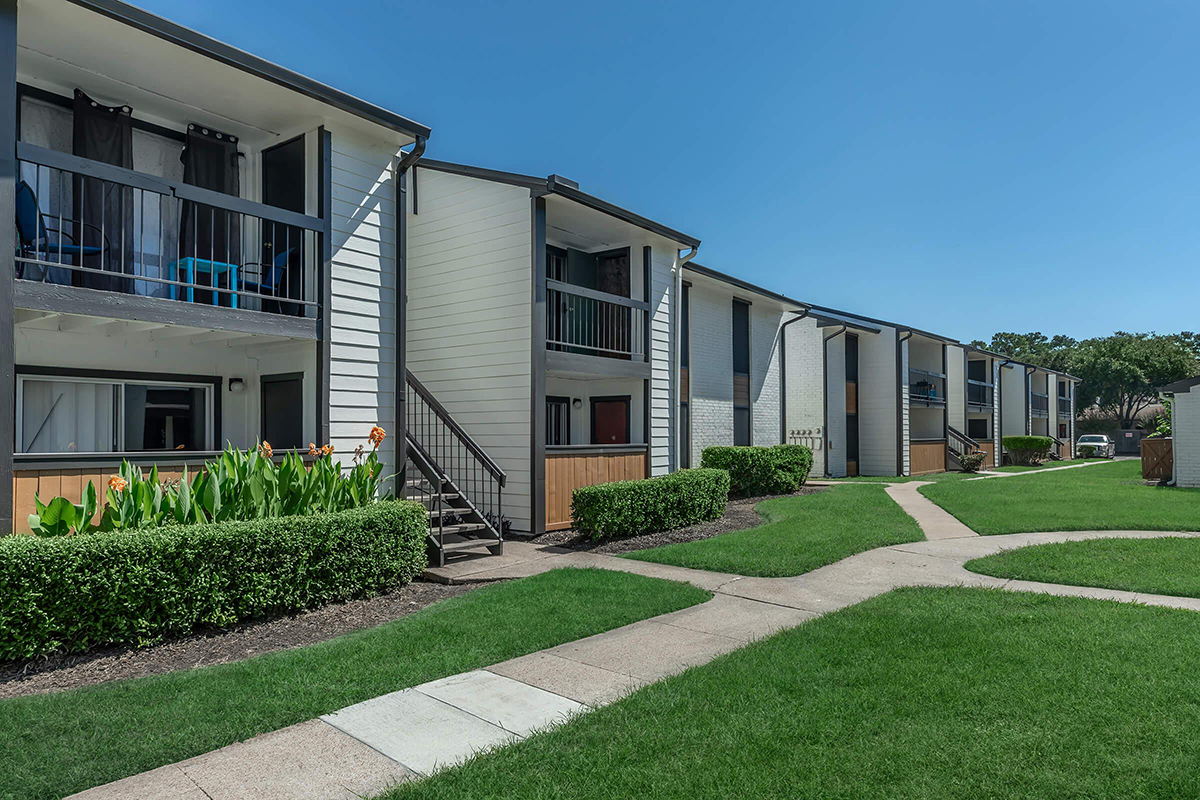
Cali Crossing, a value-add apartment project in Houston by The Klotz Group, is a good example of how marketing budgets need to evolve with the property’s business objectives. Rather than simply rolling over the budget from the previous year, it needed to be updated because the business objectives had changed—from generating more leads to repositioning the community. “That required a very different marketing strategy,” he explained. “Rather than spreading dollars evenly across every advertising channel, we concentrated on the areas we believed would have the greatest impact.” That included professional photography, updated visual branding, community-focused video content, online reputation management and local employer outreach. The result: Occupancy increased by 29 percent in 62 days and is currently sitting at 98 percent.
If we understand the goals and objectives of the property, we can recommend the proper marketing mix that allows us to hit those goals and objectives.
—Kelly Siegal, Managing Director of Marketing, Greystar

Gustafson evaluates both market conditions and the status of her portfolio every week and makes the necessary adjustments. “You have to,” she advised. “It’s a digital world, and if you don’t keep your finger on the pulse, you’ll miss something.”
Jonathan Starzyk, director of marketing for Bonaventure, said he meets with his marketing team once a month to go over key performance indicators to see which marketing strategies and channels are working and which arn’t. His team also does a midyear budget review with the accounting department, to go over the KPIs and make changes if needed.
To be sure you’re not wasting your money on marketing strategies that don’t work, testing is key. “If you can’t measure it, you can’t manage it,” noted Siegal. “Data is everything, and measurement is your directional on where to spend.”