Senior Housing Shines in Its Golden Years
After pandemic doldrums, investor demand is booming and brighter days are ahead.

It wasn’t long ago that senior housing operators were battling to survive amid pandemic restrictions that halted move-ins. But a 180-degree turnaround in fundamentals, favorable supply and demand dynamics and strong demographic tailwinds are positioning senior housing for outsize net operating income growth compared to most other property categories.
The change in fortune for this alternative property type has turbocharged investment activity. While traditional senior housing investors have come off the sidelines, other buyers such as institutions, family offices and private equity are making their first foray into the sector, observers say. At the same time, owners that survived the lean years are hastening disposition activity to recycle capital—including longtime holders as well as developers who opened during the pandemic and extended debt maturities after struggling to perform, they add.
“There has been a shift in sentiment among investors as they think about senior housing’s predictability in terms of NOI growth going forward,” said Jay Wagner, a senior managing director with JLL & leader of its senior housing capital markets group. “Investors and lenders see a stabilized sector that has substantially recovered from Covid, and they feel very comfortable underwriting aggressive rental rate growth with strong occupancy being either maintained or achieved in the near-term.”
New cyclical boom
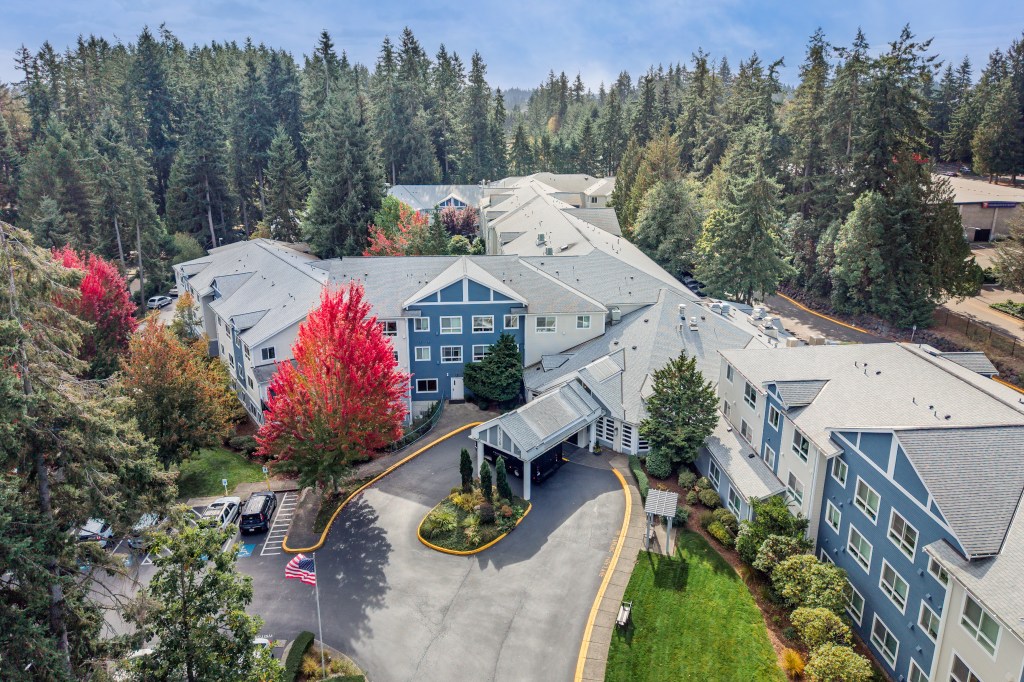
JLL Capital Markets in June brokered the sale of Fairwinds Brighton Court, a 182-unit senior housing community in suburban Seattle. An undisclosed public REIT purchased the property. Image courtesy of Nick Grier Photography
Over the 12 months ending May 31, the senior housing sector recorded some $33.3 billion in investment sales, a monstrous 83 percent increase over the previous 12-month period, according to MSCI Real Assets, which tracks sales of $2.5 million and up. That activity continues a momentum surge in 2025, when buyers and sellers struck senior housing deals valued at $24 billion, the highest dollar volume for any rolling four-quarter period since the second quarter of 2015, according to JLL.
Health-care REIT Ventas, which owns 1,400 senior housing assets in the U.S. and Canada, has been one of the more prolific buyers. It has injected nearly $5.7 billion into U.S. senior housing acquisitions since late 2024, deploying $1.7 billion of that amount this year alone, according to an investor presentation in early June. The REIT also increased its senior housing investment expectations in 2026 to $3 billion from $2.5 billion amid the large pool of deals coming to market, according to comments made by CEO Debra Cafaro during the company’s first-quarter earnings call in April.
Given the sector’s intensive operational nature, however, many senior housing buyers are typically looking for newer stabilized properties in top markets, noted Rob Korslin, co-head of the North America transactions group at Harrison Street Asset Management. Along with stabilized debt markets and a growing number of lenders that want more exposure to the space, this formula is providing the equity investor with fresh opportunities, he added.
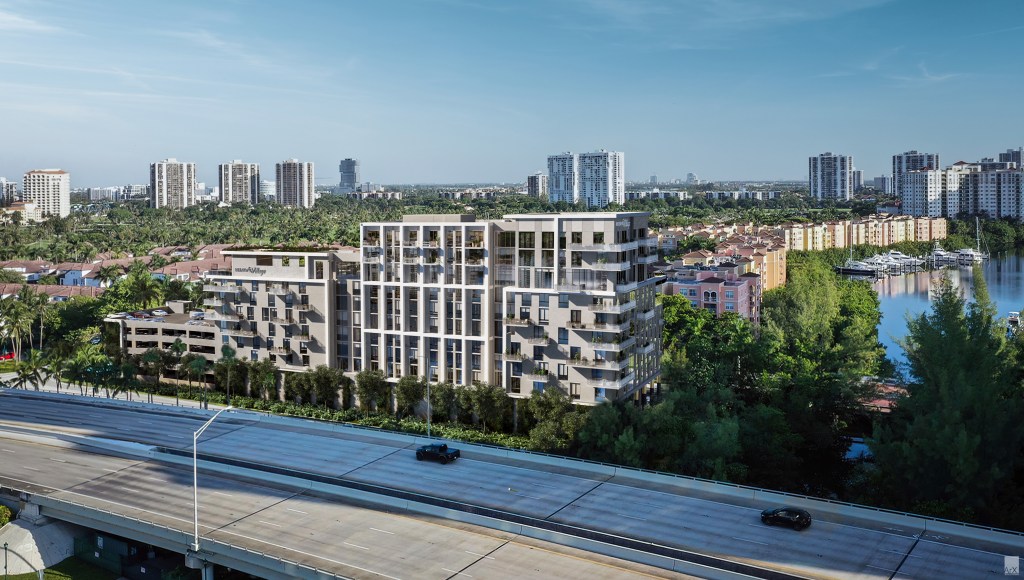
Over the last 15 months, for example, Harrison Street has sold some $2 billion in senior housing properties, recording $800 million of that amount in early spring, via the disposition of nine assets in six states. But the firm also joined with The Springs Living in April to purchase a 160-unit senior housing campus in suburban Portland, Ore., and partnered with operator Belmont Village Senior Living on a South Florida luxury community that opened in March.
“Senior housing is still a very high-conviction sector for us—the supply and demand fundamentals are frankly the best that we’ve seen in our 20-year history,” Korslin said. “Combined with the increased institutional appetite for the sector, it’s created a good opportunity to return capital to investors from properties that we’ve invested in over the previous cycle while also rotating capital into new, compelling projects.”
Road to recovery
Just how much has the senior housing environment improved? In 2020, for example, the Covid response drove down the sector’s occupancy rate roughly 9 percentage points to around 80 percent as absorption collapsed, according to NIC MAP, a strategic data partner of the National Investment Center for Seniors Housing & Care. By the end of 2026, however, occupancy is on track to reach 90 percent, up from 89.5 percent in the first quarter, NIC MAP reported.
Despite the tight conditions, projects under construction and in the pipeline are approaching lows not seen since the financial crisis, according to NIC MAP. Yet the number of people turning 80—roughly the age when seniors first move into these communities—is projected to grow by about 36 percent to 19 million over the next decade, JLL reported.
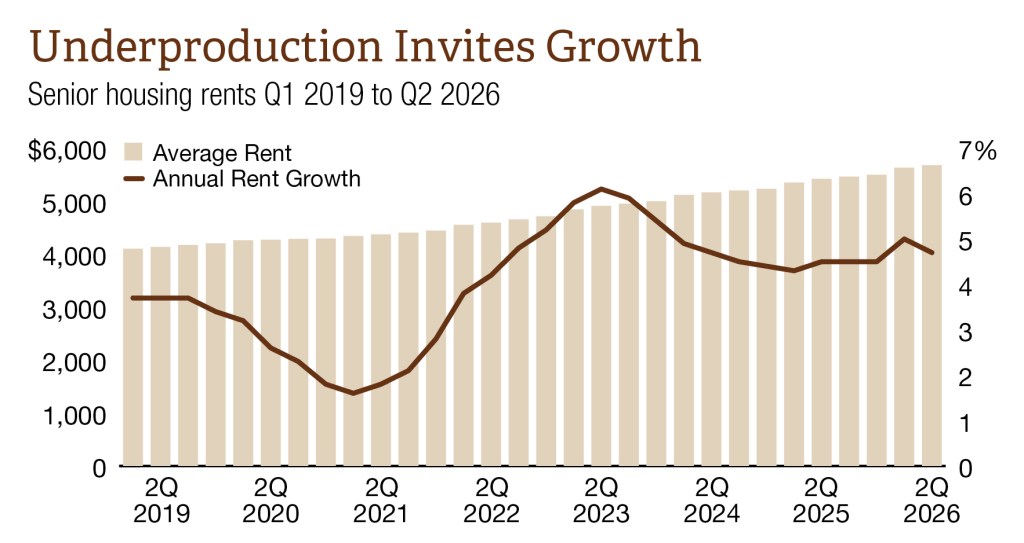
The persistent imbalance of supply and demand has fueled strong annual rent growth of between 4 and 6 percent, on average, since early 2022. That stands in stark contrast to the malaise afflicting market-rate apartments, which are experiencing declining or flat rent growth in most regions of the country while registering small gains in others, according to CBRE.

Additionally, because senior housing residents aren’t affected by artificial intelligence or other job-market dynamics potentially affecting working-age renters, senior housing operators have a layer of economic headwind protection that is typically unavailable in the multifamily space, suggested Dwight Dunton, founder & CEO of Bonaventure, a multifamily and senior housing developer and investor.
Over the last few years, Bonaventure has developed a handful of senior housing properties. But due to the high cost of construction, the firm is focused on acquisitions to take advantage of immediate cash flow and the ability to add value, he said.
“You’ve got an interesting situation, where the fundamentals of senior housing are great while the drivers are somewhat countercyclical to the general multifamily environment,” Dunton noted. “Depending on your senior housing flavor, from active adult to assisted living and memory care, the entire sector is positioned for positive NOI and rent growth.”
Niche development—for now
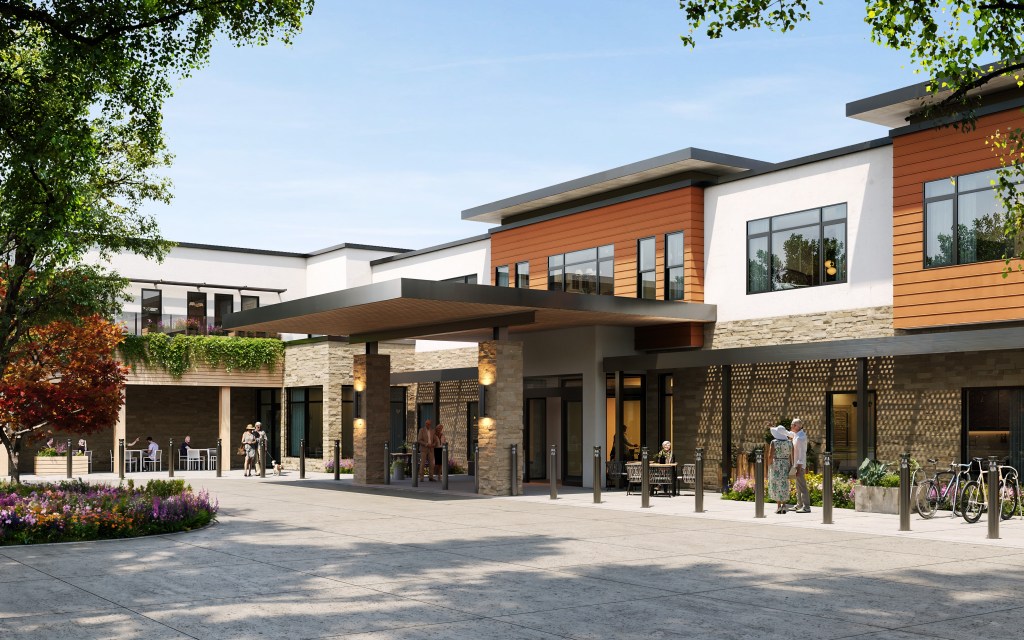
The good news for senior housing investors is that supply should remain constricted for the foreseeable future. During the Ventas earnings calls, executives said that rents remained 20 to 40 percent below the rate needed to justify development in most markets. Still, they noted that some developers were building in submarkets that could support luxury projects.
Investors pursuing such niche senior housing projects and locations include alternative investment manager Harbert Management Corp. Most of the largest cities in the U.S. have one senior housing development underway, if any at all, pointed out Brian Landrum, a senior managing director & co-fund manager overseeing senior housing strategy for HMC.
What’s more, he added, the lion’s share of residents in HMC’s projects are moving from homes that are about a 15-minute drive away, which can open the door to some affluent zip codes. This spring, HMC’s second senior housing fund joined with operator Watercrest Senior Living Group to open a 142-unit luxury assisted living and memory-care community in Fredericksburg, Va. Another HMC luxury project in Dublin, Calif., will open this fall.
“We’ve taken a little bit more of a consistent view toward development rather than trying to decide whether to pull completely out or go 100 percent into it,” Landrum said. “Notwithstanding a pandemic where you can’t move anyone in, if we pick good sites and strong development and operating partners, we think we’re set up for success.”