
National Affordable Housing Report – July 2026
How state and local legislation is influencing rent collection in the sector.
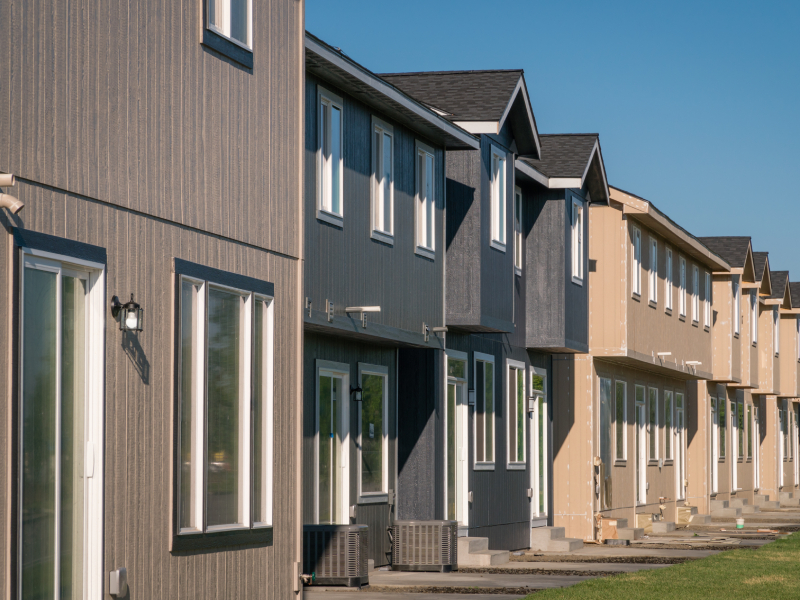
While net operating income growth across affordable properties has retained momentum, performance varied widely at a metro and individual property level. Rent collection was a major influence on this large disparity.
The degree of collection success fluctuated significantly, with realized revenue ranging from 96.8 percent in Miami to 70.9 percent in Washington, D.C., as of May, according to an analysis of Yardi Matrix’s database. The national average scheduled rent collection stood at 88.6 percent.
Judicial responsiveness played a key role in shaping these figures since jurisdictions with fewer rental delinquency evictions tend to produce softer rent collections. Affordable housing programs influence the success rate as well, as subsidies such as Sector 8 can be more reliable compared to initiatives where tenants pay their own rents.
State legislation can impact revenue realization
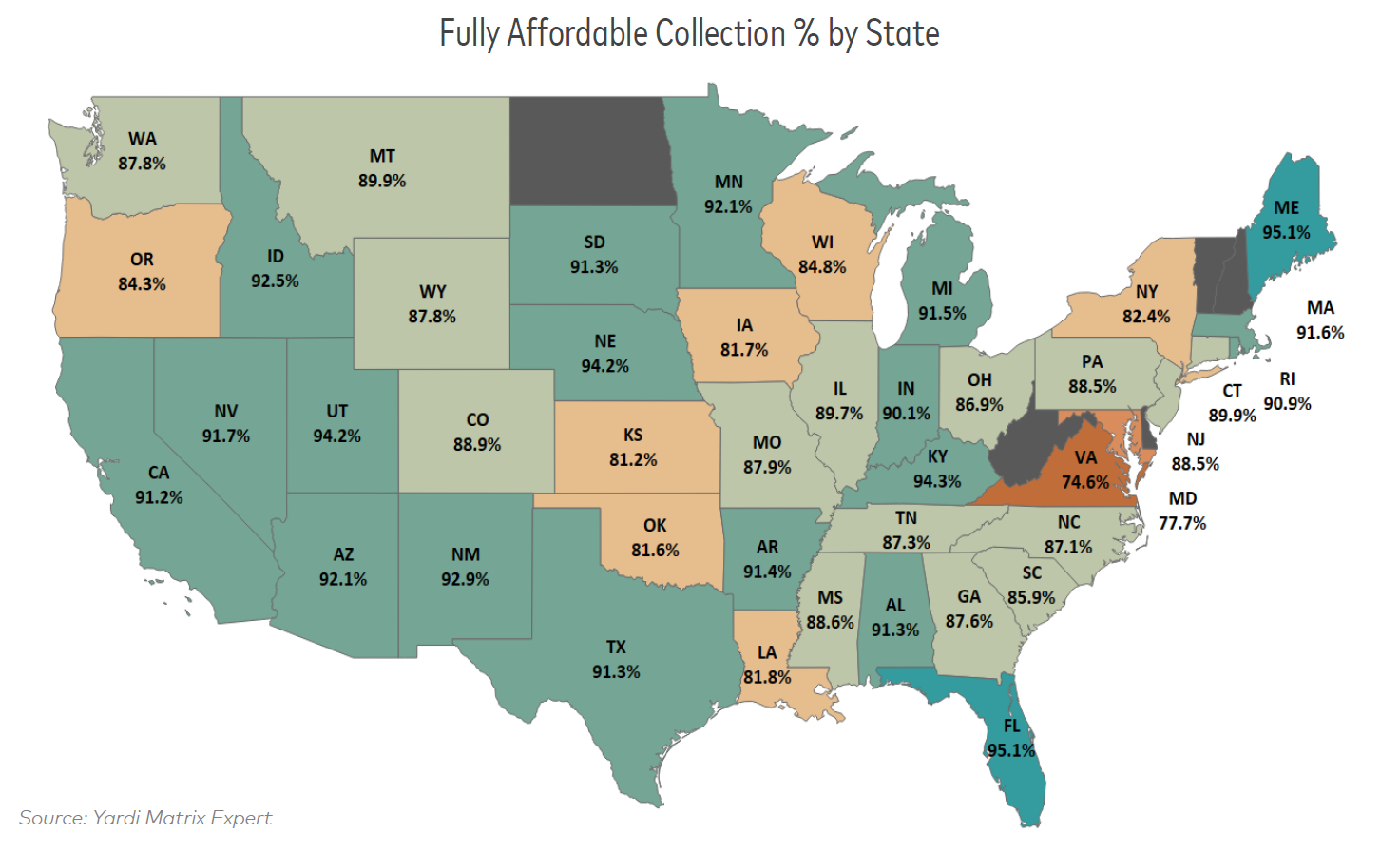
At a state level, Maine and Florida had the highest rate, collecting 95.1 percent of rent each as of May, followed by Kentucky (94.3 percent), Nebraska and Utah (94.2 percent each). Meanwhile, Virginia (74.6 percent), Maryland (77.7 percent), Kansas (81.2 percent), Oklahoma (81.6 percent) and Iowa (81.7 percent) recorded collection rates below the national average.
Metros where policy revolved around procedural protections for rental nonpayment had lower collection rates. This is more significant than a simple ranking might entail, as affordable housing revenue can affect preservation and production of new supply.
Washington, D.C., a market with a 70.9 percent collection rate, the lowest out of Matrix’s top 30, recognized the issue. The district government addressed the problem through legislative changes, such as shortening portions of the nonpayment process, reducing the pre-filing notice period and updating eviction notices, among other policies.
While D.C. policymakers are actively reassessing the operating framework, New York City continues to reflect the outcome of long-term institutional evolution with a collection rate of 76.7 percent in May.
Three-day notices increase collection success
Markets with high collection rates benefit from state laws that have a direct path for addressing nonpayment. In Florida, landlords may issue a three-day notice to pay rent or vacate. Tenants who wish to contest eviction must deposit the disputed rent into court registry as proceedings unfold, tempering prolonged nonpayment without legal consequences.
The Sunshine State’s approach resulted in strong rent collection in May across markets such as Miami (96.8 percent), Orlando, Fla. (96.1 percent) and Tampa (95.8 percent). Texas has a similar three-day notice policy, resulting in above-average collection rates in Houston (93.5 percent), Dallas (91.7 percent) and Austin (90.6 percent).
Rent limits, operating expenses, financing prospects and preservation requirements have been a staple across affordable housing performance metrics. Yet, it is ultimately rent collection that dictates how much revenue translates into operating income.
As operating margins remain constrained, adding collection environment variables to rent limits may aid owners, lenders and investors in determining what they are ultimately able to realize.