Inside Boston’s Top 6 Office-to-Residential Conversions
The city's conversion program is in full swing, with a total of 28 applicants since launch.
Boston launched its office conversions program in 2023, joining the list of major metros that saw this process as a way to mitigate the sector’s economic impact and to add much-needed housing. After the prototype program exceeded initial targets, the administration expanded it to target even larger projects.
We took a closer look at six of these developments that are representative for the city’s conversions program, as they vary in size, scope and complexity. These six projects are set to add 699 units to the market once complete. Leveraging Yardi Matrix data, we also analyzed the assets’ Conversion Feasibility Index (CFI), a tool that assesses the potential of office buildings to be converted into residential use.
The score has three tiers: assets between 90 and 100 are Tier 1, or ideal candidates; Tier 2 is between 75 and 89, which are still great candidates; Tier 3 is everything in the 74 and below range, showing less potential.
Boston’s conversion program has an expedited review process that resulted in cutting the average time it takes for developments to take off by roughly 12 months. As of June, there were a total of 28 conversion projects across Boston’s downtown, which are set to add more than 1,800 units to the market’s inventory.
“We have seen predominantly mixed-income rental housing applying to the program. As new opportunities arise and present themselves, we are open to evaluating them and looking for ways to expand and grow the program. Currently, the program will remove more than 1.5 million square feet of vacant office space from the market, or 20 percent of Class B and C office space in the city, which will help to stabilize the remaining office space in Boston,” a spokesperson from the Boston Planning Department told Multi-Housing News.
These following buildings all ranked high in terms of CFI and are among Boston’s largest office conversion projects.
31 Milk St.
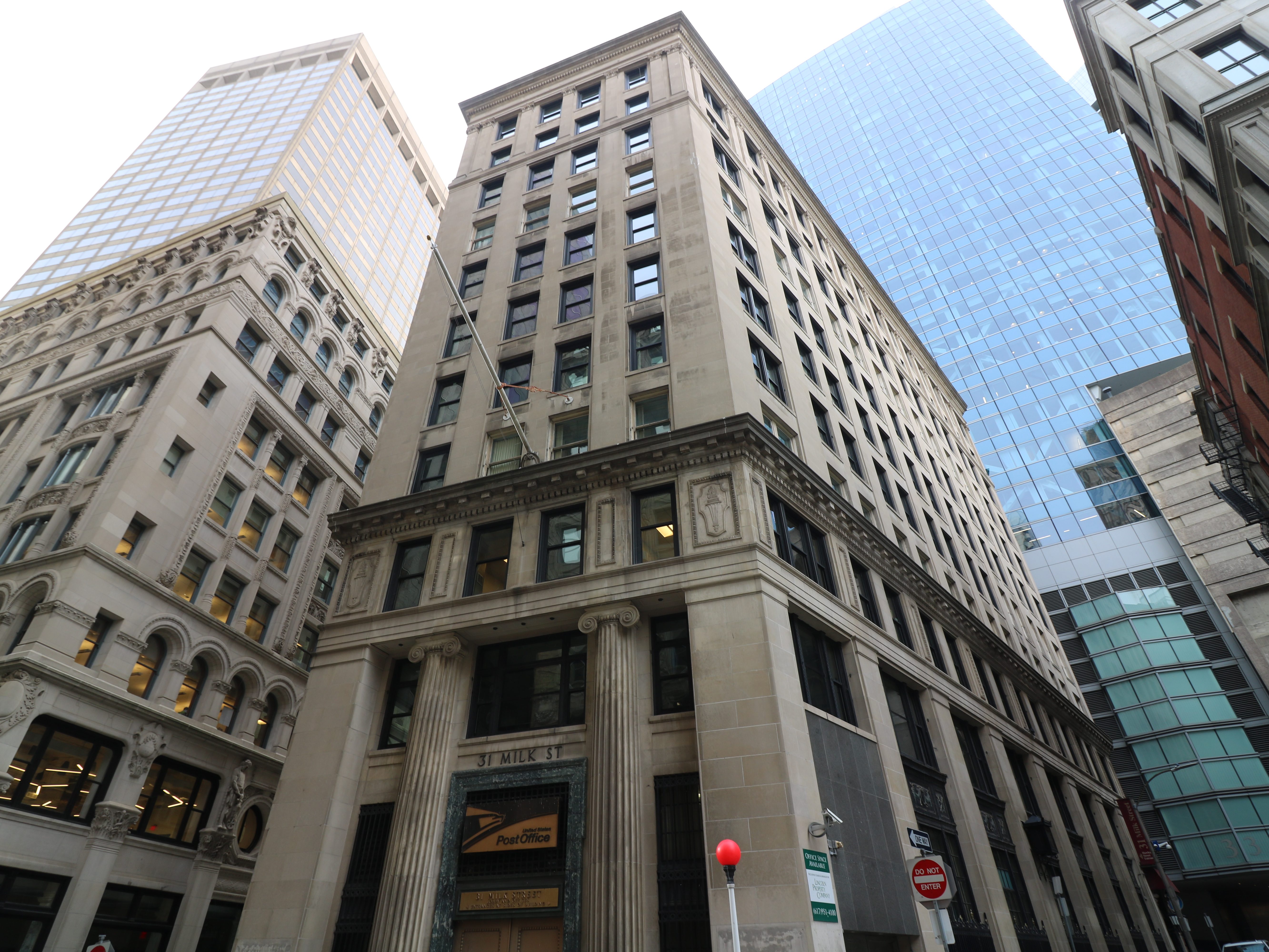
Dinosaur Capital Partners acquired the property at 31 Milk St. in 2025 for $9.6 million, according to Yardi Matrix data, from Liberty Bank. The developer partnered with TOCCI as construction manager for the conversion of the historic 11-story building. ICON Architecture serves as architect. Construction is already underway, with completion scheduled for 2027.
The 95,000-square-foot asset has a CFI score of 94, placing it in the top tier for office-to-residential conversion, and is also one of Boston’s largest projects of its kind. Its development cost is estimated at around $40 million, according to the application submitted to the Boston Planning & Development Agency.
Plans call for 110 apartments, of which 22 will be affordable, serving residents earning up to 60 percent of the area median income. The unit mix includes 40 studio and 52 one-bedroom apartments. The top 10 floors will be converted, while the ground floor will continue to be utilized by the U.S. Postal Service.
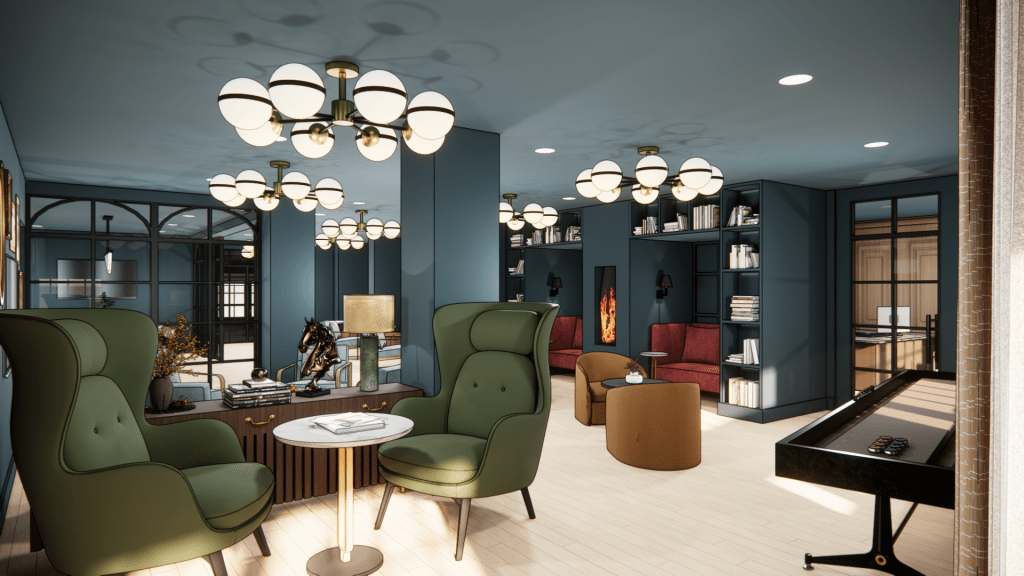
“With a building over 100 years old, you don’t truly know what’s inside the walls until you open them up. There’s a century worth of renovations that you are stripping out,” Bart Tocci, director of marketing at TOCCI, told MHN. “When we pulled up the old flooring, we found something absolutely worth being preserved. People rarely get the chance to live in a building with this much character.”
According to ICON Architecture, the most challenging and exciting aspects of the 31 Milk St. conversion project is protecting the historic lobby. Its narrow and efficient floor plates make it an ideal candidate for adaptive reuse to residential. Unlike most modern office buildings, the footprint will allow natural light to penetrate deep into the building.
12 Post Office Square
Edge Property LLC is the developer behind the conversion of 12 Post Office Square, another historic property on this list. Monte French Design Studio is the architect. The estimated cost of the adaptive reuse is $9.5 million, the application submitted to BPDA shows. Construction is already underway.
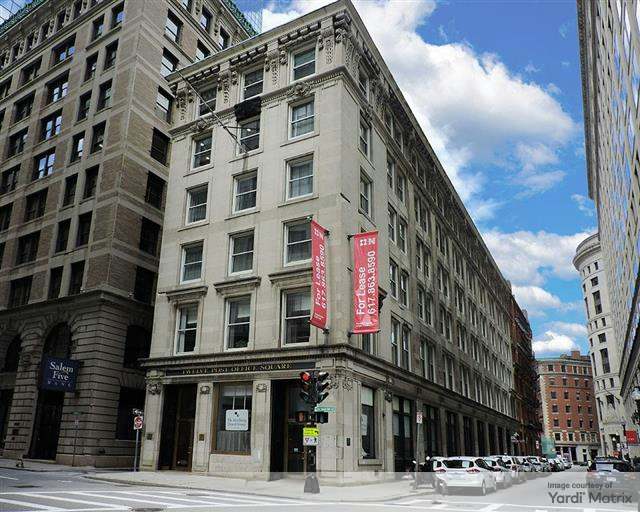
Edge Property acquired the asset two years ago, for $10.4 million from Sagard Real Estate, according to Yardi Matrix data. Its CFI score is 88, placing it in the second tier, or a very good candidate for conversion, the same data provider shows.
The property comprises two interconnected six-story buildings totaling 60,000 square feet, making it the smallest Boston office conversion project on this list. Plans call for 70 units, of which 12 will be affordable. Floors two through six will be turned into apartments, while the 11,237-square-foot ground floor will retain its retail use. Of the total, 55 units will have studio layouts, while the remaining 15 will be one-bedroom apartments.
The project entails adapting the narrow floorplates and generous window openings to create efficient living spaces that have plenty of access to natural light, according to Monte French Design Studio’s website. Amenities such as bike parking and fitness facilities will be shared between the residential and commercial uses.
263 Summer St.
Boston Pinnacle Properties will convert the office building at 263 Summer St., which it owns through its brokerage arm, Burns Realty & Investments, Yardi Matrix data shows. TruNorth Bank provided a $29.5 million construction loan for the project in 2024, according to the same source. The building has a CFI score of 91, placing it in the top tier.
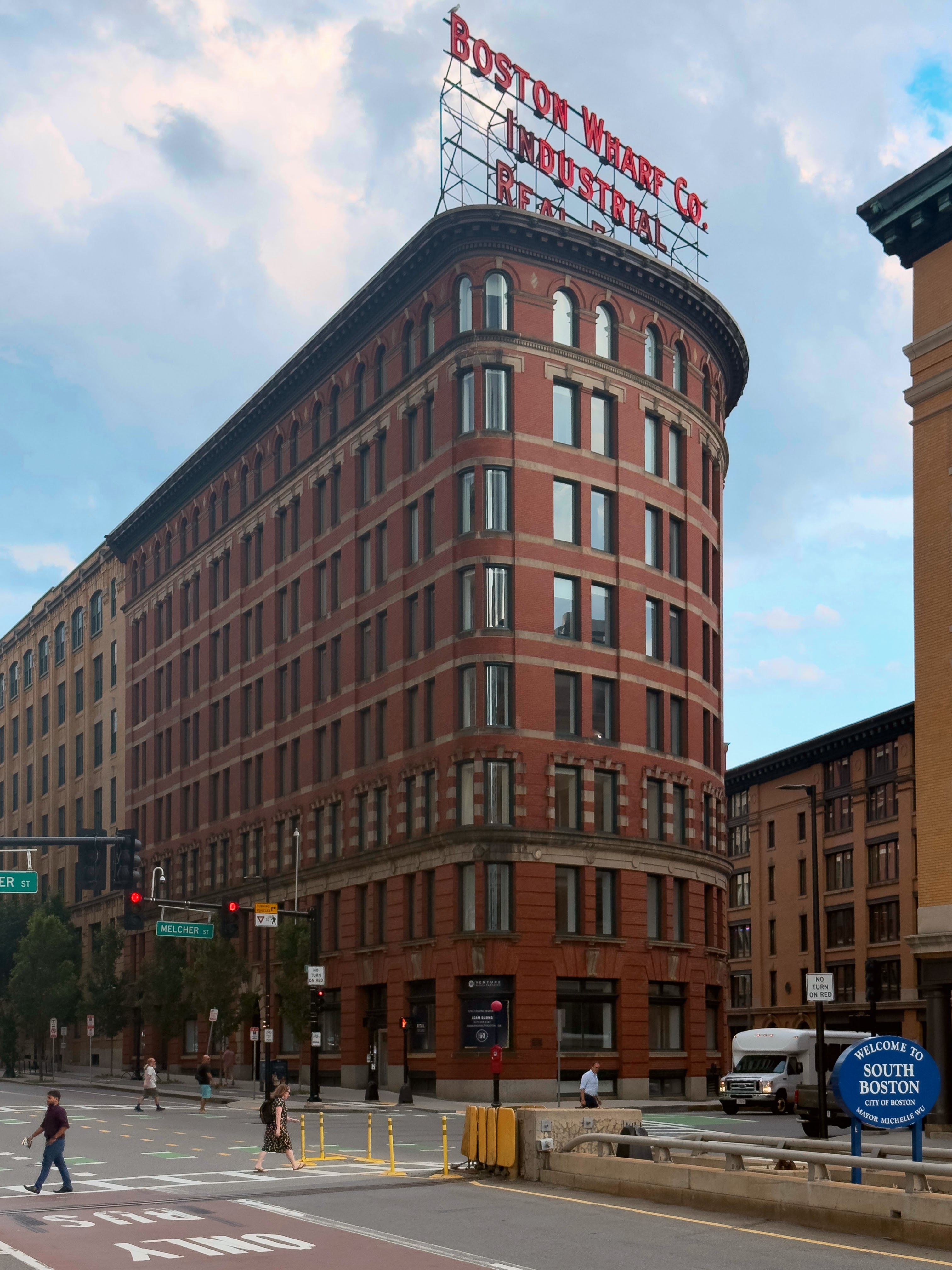
The developer’s website states the cost of the adaptive reuse is $39 million, while it also references additional institutional investment from JP Morgan Chase. Boston Pinnacle Properties also utilized historic tax credits to preserve the building’s Renaissance Revival architecture style.
Philip Sima, founder of Balance Architects, told MHN that his connection to the 263 Summer St. is personal. “My father was part of the Fort Point artist movement and lived and worked in one of the old warehouse buildings on Melcher Street. During college breaks, I’d stay with him there and watch the neighborhood evolve. I used to walk past 263 Summer St. all the time, so having the opportunity to help write the building’s next chapter felt incredibly meaningful,” Sima said.
The developer will transform the 73,000-square-foot, eight-story building into a 77-unit community. In line with the Boston office conversions program requirements, 15 of the units will be set aside for residents earning up to 60 percent of the area median income. The unit mix will include 36 studio, 34 one-bedroom and seven three-bedroom layouts. The ground floor will comprise three retail spaces. Planned amenities will include a roof deck, fitness center and bike room, among others.
“One of the biggest misconceptions about office-to-residential conversions is that they’re simply too risky or too complicated. In reality, so much of the building already exists—the foundation, the structure, the exterior walls, the elevators, the stairs, and often much of the permitting framework. Combined with the strong demand for housing and the various local, state and federal incentives now available, I believe we’re at a unique moment where adaptive reuse makes more sense than ever before,” Sima added.
95 Berkeley St.
CIM Group acquired the 102,000-square-foot property at 95 Berkeley St. in 2016 for $43 million, in partnership with Center Court Mass LLC. The owner listed the property for sale last year, several news outlets reported. CIM Group estimated the costs for adaptive reuse to be around $75 million. It received the green light for conversion from Boston’s Planning Department earlier this year, and construction is currently underway. The developer tapped CBT Architects for the project.
The South End asset has a CFI score of 86, making it a great candidate for office-to-residential conversion. Plans call for approximately 1,700 square feet of retail, 8,800 square feet of office and 76,750 square feet of residential space, which would comprise 41 studio, 42 one-bedroom and nine two-bedroom units, according to the document submitted to the BPDA.
READ ALSO: CIM, Bryant Group Ventures Launch $1B Affordable Housing Fund
“The building’s existing concrete structure provided a strong design identity,” CBT Architects Principal Henry Celli told MHN. “Rather than working against the structure, the project uses it as a defining feature that gives the residences a unique, loft-like quality.” Celli also noted that the prior renovation provided an advantage, as it exposed the building’s structure and systems, allowing the architects to better understand it.
The asset at 95 Berkeley is among the larger office conversions currently underway in Boston, and its prior use also yielded some challenges for the design team, from the floor plates to integrating systems within an exposed concrete structure, to balancing preservation with performance. “Beyond code and systems, the focus was on humanizing the scale and sequence, from entry to interior spaces both at the building level and unit level, through materiality, layering and spatial transitions that create a sense of comfort and retreat,” Celli added.
85 Devonshire St.
In 2023, KS Partners applied for the conversion of three interconnected buildings, 85 Devonshire St., 262 Washington St. and 258 Washington St., proposing to transform the 109,000-square-foot assets into a 95-unit residential community.
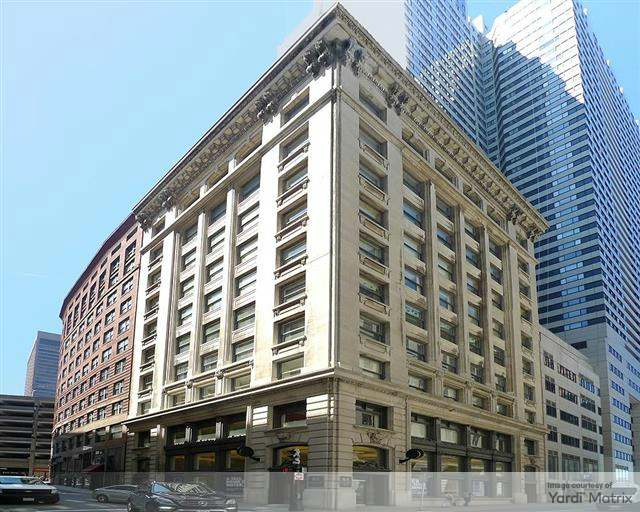
The company acquired the underutilized office in 2007 as an REO, paying $18.1 million to Wells Fargo Bank, Yardi Matrix data shows. The same source shows the owner secured a $44 million permanent loan in 2016, provided by Beacon Bank and Trust.
KS Partners estimated the adaptive reuse costs to be around $36 million when it submitted the project to the BPDA. The building has a CFI score of 99, the highest on this list, making it a near-perfect candidate for conversion. EMBARC Design handles architectural services for the project.
Located in downtown Boston, the conversion project will include 29 studio, 54 one-bedroom and 12 two-bedroom units, according to the developer’s application. Of the total, 19 units will be reserved as affordable, for residents earning up to 60 percent of the area median income. The property has 15,800 square feet of ground-floor retail, which will remain unchanged.
294 Washington St.
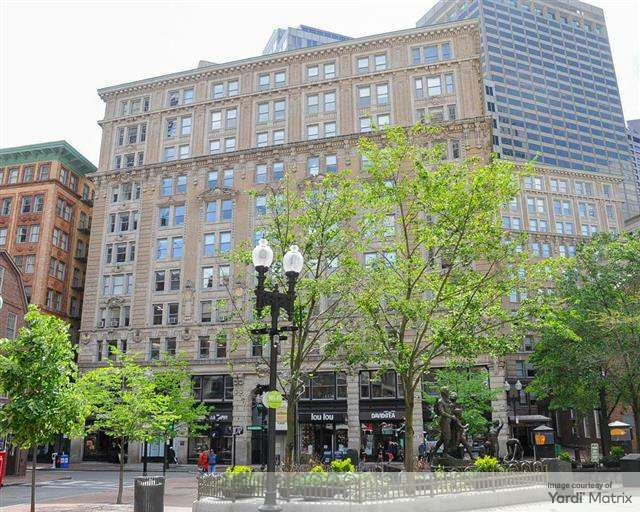
Synergy Investment & Development applied to convert the office building at 280-300 Washington St., also known as 294 Washington St., earlier this year and received approval from the BPDA. Goldman Sachs Asset Management owns the building, having acquired it in 2016 for $95 million from Synergy, Yardi Matrix data shows.
By far the largest of Boston’s office conversions, the 11-story property encompasses more than 230,000 square feet, of which 210,000 square feet is rentable office space and 20,000 square feet is retail.
The building’s CFI score is 94, placing it in the top tier for adaptive reuse to residential. The developer tapped Gensler for the project, which is planned to total 255 units upon completion, of which 52 will be affordable. Costs are estimated to be around $133 million, making it one of the most expensive.
Floorplans will feature a mix of studio, one- and two-bedroom configurations. Plans also include the addition of more bike parking spaces and a new residential lobby and amenities intended to take advantage of the building’s frontage on Washington Street.
Earlier this year, Synergy landed $51 million for another major office-to-residential conversion, in Worcester, Mass. At that time, it was the largest such project in the state, set to transform the 189,076-square-foot asset into a 198-unit multifamily community.