The Hidden Cost of Getting Your Cabinet Program Wrong
As project requirements become more specialized, understanding who is actually manufacturing the cabinet package becomes increasingly important.
Affordable housing developers, mixed-use builders, housing authorities and multifamily owners are facing an increasingly complex procurement environment.
Projects today may involve domestic sourcing requirements, FSC-certified materials, KCMA standards, sustainability initiatives or Build America, Buy America (BABA) compliance. At the same time, budgets remain tight, schedules remain aggressive and project teams are expected to deliver more with less.
The challenge is not simply understanding the requirements.
The challenge is making sure the cabinet program aligns with them before procurement begins.
Not every project needs the same cabinet strategy
A market-rate apartment community may have different priorities than an affordable housing development, HUD rehabilitation, PACT conversion, workforce housing project, or mixed-use development.
Some projects require compliance-driven materials and documentation. Others simply need a durable, attractive cabinet program that delivers maximum value.
The strongest procurement strategy is not always the least expensive option or the most compliant option.
It is the option that best matches the project’s actual requirements.
Paying for compliance programs when they are unnecessary can place avoidable pressure on project budgets. Failing to account for them when they are required can create sourcing challenges, redesigns, and procurement delays later.
Design intent doesn’t have to dictate cost
Many cabinet procurement challenges begin long before bidding.
Designers are hired to create attractive spaces. Manufacturers are responsible for understanding how those ideas translate into materials, sourcing, production realities, compliance requirements and cost. Those perspectives are not always the same.
In today’s design environment, products are often selected because they are visible through sample programs, design libraries, manufacturer representatives, or current design trends. However, the products that are easiest to specify are not always the solutions that are easiest to manufacture, procure, source, or scale across a multifamily development.
A designer may specify a premium decorative surface because it achieves a desired look. Months later, the project team discovers that sourcing requirements, lead times, compliance obligations or budget realities point in a different direction. The issue is not that either decision was wrong. The issue is that the two decisions were made independently.
In many cases, the specified product is not the only way to achieve the intended result. Some manufacturers offer a limited catalog of colors and finishes. Others manufacture to specification and can source from multiple material programs to achieve a desired aesthetic.
A similar appearance can often be achieved through a different decorative surface, construction method, material program or sourcing strategy that better aligns with the project’s budget, schedule, procurement objectives and compliance requirements.
The goal is not to weaken the design. The goal is to preserve the design intent while identifying the most practical manufacturing solution.
For our customers, we guide material, product, and finish selections according to the bigger picture of what the owner is actually trying to accomplish. Sometimes the most effective cost-saving opportunities are not visible on a rendering. They are found within the manufacturing decisions behind it.
Why manufacturing matters
Many multifamily projects are procured through dealers, distributors, or turnkey kitchen providers. As project requirements become more specialized, understanding who is actually manufacturing the cabinet package becomes increasingly important.
Can the manufacturer support compliance-driven programs when required? Can material selections be adjusted without sacrificing design intent? Can the manufacturer provide a highly competitive conventional multifamily program when compliance requirements are not present?
Unlike many participants in the procurement process, manufacturers see the direct relationship between design choices, material availability, sourcing requirements, production realities, and final cost every day.
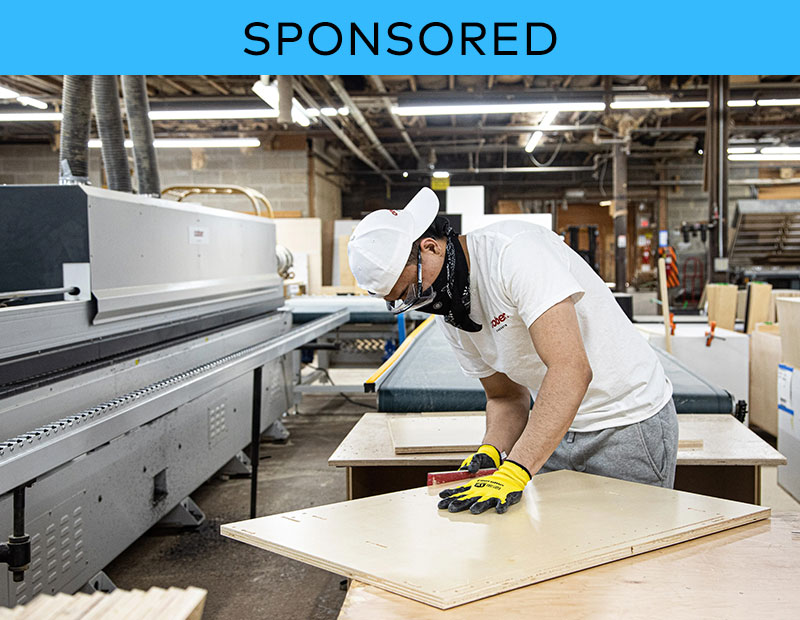
At Cober Cabinets, we manufacture conventional multifamily cabinet programs designed to compete with the true delivered cost of imported cabinetry, while also supporting FSC-certified and domestic sourcing programs when project requirements demand them.
It’s not too late
Many project teams assume cabinet decisions are locked in once drawings are complete or bidding begins.
In reality, opportunities often still exist to evaluate alternative manufacturing programs, material options, sourcing strategies, and budget-saving alternatives before procurement is finalized.
Once purchase orders are released and production begins, options become more limited. Before that point, there is often more flexibility than project teams realize.
If your project is in planning, design, bidding, value engineering, or procurement, it may be worth exploring what manufacturing options are still available.
The right cabinet program starts with the right conversation
Whether you’re planning an affordable housing development, mixed-use project, HUD rehabilitation, PACT conversion, workforce housing community or conventional multifamily project, the right cabinet program starts with understanding the project’s actual requirements.
Cober Cabinets is a KCMA-certified domestic manufacturer specializing in multifamily cabinetry. We manufacture conventional multifamily, FSC-certified, and domestic sourcing programs from our New York facility and support projects throughout the United States.
If you have a project in your pipeline and would like to discuss manufacturing options before final decisions are made, we’d welcome the conversation.
Learn more here: https://cobercabinets.com/multifamily/