Multifamily Marketing’s New Look: From Listings to Infrastructure
Over the past decade, marketing has moved from the margins to the center of the industry.
The evolution of multifamily marketing over the past decade is not just a story about better websites, smarter search, or a longer list of tools. It is the story of a function that moved closer and closer to the machinery of the business itself. In 2016, marketing was still widely understood as the team that drove awareness, generated leads and kept a portfolio’s presentation in order. By 2026, it had become something broader and far more consequential: a discipline tied to leasing performance, resident satisfaction, operational execution, reputation and the increasingly fragmented ways renters discover and evaluate a community.
One of the clearest ways to see that shift is visual. Israel “Izzy” Carunungan, chief marketing officer and industry principal at LCP Media, came into the role with two decades of multifamily experience. When he thinks back to apartment marketing visuals around 2016, what stands out is not that the industry lacked imagery, but that it lacked context. Communities knew how to show the polished version of themselves. What they often could not show was how the property actually lived.
“The properties showed the pretty parts: a pool, a model unit, a clubhouse, maybe a few exterior shots,” he explained. “What they often didn’t show was how the community actually lived. Prospects still had to guess what the units looked like, how the apartment flowed, what the view was, how amenities were connected, or whether the visual media represented the actual experience. There was a lot of inspiration, but not enough verification.”

Flyer-led leasing in 2016 relied on promotional sheets packed with amenity lists, property photos and special-offer messaging. All images courtesy of LCP Media 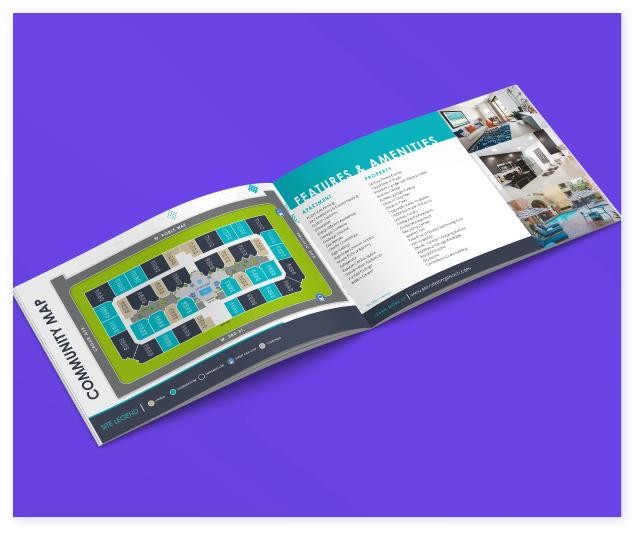
Printed brochures often centered on the basics: site plans, features and amenities, all designed to support in-person leasing tours. 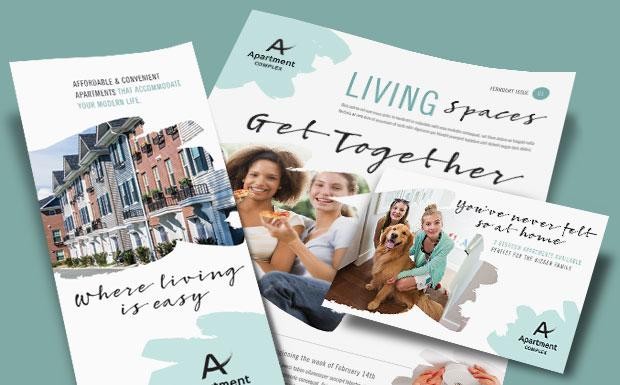
By the mid-2010s, some materials were starting to lean into lifestyle imagery, but the format was still static and print-first. 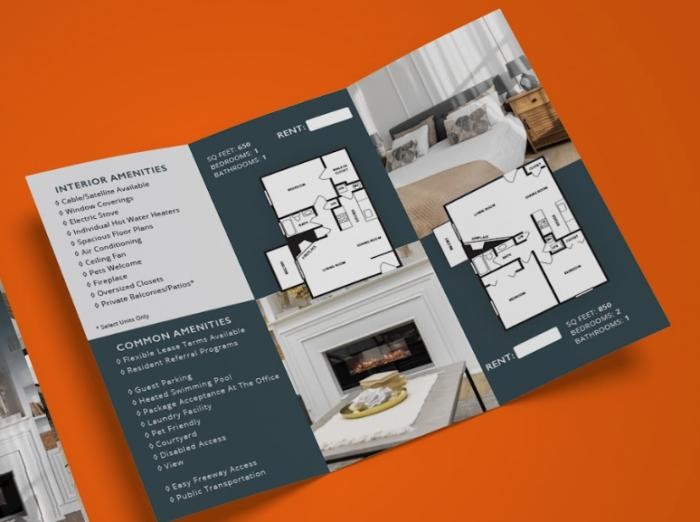
Floor plans and amenity grids were core leasing tools, giving prospects a quick snapshot of layout, features and availability.
Early in the decade, much of multifamily marketing still aimed to attract. Over time, it had to learn how to reassure, qualify and prove. Esther Bonardi, vice president of the RentCafé Marketing Business Unit at Yardi Systems, who has more than 35 years of experience in rental housing marketing, remembers a standard 2016 program as a practical mix: “a great mobile web presence with dynamic number insertion to see how people reached the website, plus a few listing sites for advertising your properties.” On top of that came reviews and reputation, though not yet with the level of investment that would later become common. “The strongest marketers were investing in search engine optimization and a bit of pay-per-click advertising,” she said, “but search marketing for multifamily was just getting socialized and many were hesitant to try it.”
The hesitation mattered because the tools were beginning to mature faster than the function itself. Kelley Shannon, managing director of marketing, customer experience and revenue optimization at Bozzuto, describes a strong 2016 marketing organization as one measured largely by leads, leasing support and brand consistency. According to Shannon, “marketing wasn’t expected to fully own the resident experience in the way it is today. There was still a clearer line between marketing and operations. Marketing drove awareness and demand, but we weren’t yet looked at as a core partner in shaping the entire customer journey from first impression through renewal.”
Alexis Murrell, now executive vice president of community marketing and revenue strategy at Arqline, remembers the same period as one in which onsite teams were often handling social media, reviews and local marketing with very little governance or strategic consistency. “If traffic slowed,” she said, “the response was often simply to add another internet listing service rather than analyze conversion data or understand where breakdowns were happening in the funnel.”
From promotion to proof
The late 2010s are where the ground starts to move. Some of that movement came through channels. Bonardi said mobile-first websites, search engine optimization, pay-per-click and reputation management all grew from promising tactics into pillars. “Reputation management was just being taken seriously in the 2010s, but it became transformational,” she explained. “A property cannot truly succeed without it today.”
But the more meaningful shift was behavioral. Renters started using digital touchpoints differently, and that forced marketers to think differently about the job itself. Shannon feels the role became much more integrated into the actual resident experience. “It was no longer enough to create awareness or generate leads,” she said. “The expectation became that marketing should help create consistency across every touchpoint. That meant paying closer attention to reviews, communication, service recovery, digital experience and the emotional side of the renter journey. We started thinking less about a traditional marketing funnel and more about the full lifecycle, from awareness and leasing to retention, advocacy and referrals.”
Murrell saw the same change through the arrival of review culture and the growing visibility of resident sentiment. Prospective renters were no longer relying only on listings or advertising. They were evaluating communities through reviews, social channels, resident feedback and whatever else the internet had to say about a place. “Operators began recognizing that resident experience and customer service are not separate from marketing,” Murrell said. “They are part of the brand. The onsite experience, responsiveness, maintenance interactions, and renewal journey all became critical drivers of reputation and long-term performance.”
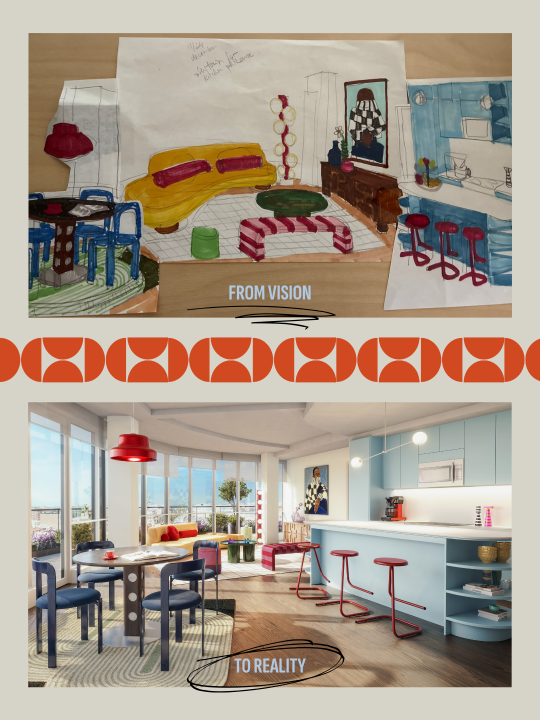
Multifamily marketing now often begins with a fuller brand world, linking design, storytelling and place from the outset. All images courtesy of Bozzuto 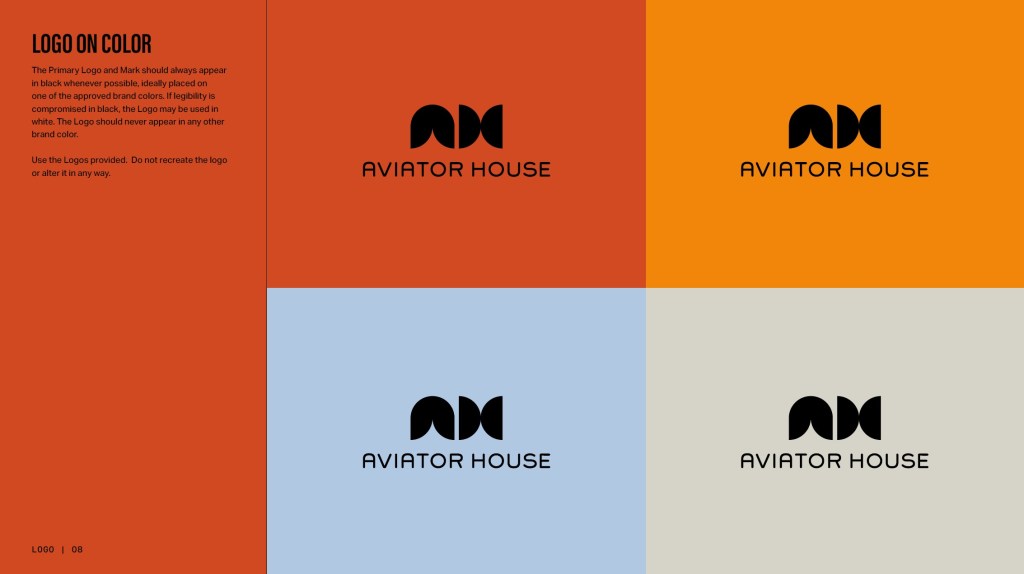
Today’s operators increasingly build flexible visual systems rather than relying only on brochures and static ad templates. 
Brand identity now stretches across digital and physical touchpoints, creating a more cohesive experience. 
Contemporary multifamily marketing often blends merchandise, campaign thinking and lifestyle cues into a single branded ecosystem. 
Original photography is increasingly used to replace generic lifestyle imagery and root marketing in a specific place.
Visuals changed for the same reason. Carunungan argues that visual content became a trust-building tool once renters started using it to qualify communities before they ever contacted the leasing team. “Prospects were no longer treating photos and videos as nice-to-have marketing asset,” he clarified. “They were using them to answer, ‘Is this worth my time?’ Once that behavior became normal, visuals had to do more than attract attention. They had to reduce uncertainty.” And once that happened, the older logic of apartment imagery began to work against itself. “Polished visuals were actually eroding trust, not building it.”
That is where the evolution of multifamily marketing becomes visible. The change was no longer just technical. It had become experiential.
2020 as accelerant
Then came 2020, the accelerant. Not the origin of the story, but the force that made the industry rely on everything it had been building unevenly for years. The groundwork for today’s renter journey existed before the pandemic. What changed was urgency and adoption. Bonardi explains that many available tools were simply not being fully used. Carunungan put it more forcefully: “The pandemic didn’t invent immersive marketing. It forced the industry to rely on it. What changed was urgency. Visual media tools that had been viewed as premium or innovative suddenly became operationally necessary.”
From the operator side, the first shock was not just digital but organizational. Shannon said what shifted first was “the need for speed and alignment.” Marketing and operations had to work together much more closely because the renter journey had changed almost overnight.
“Communication became critical,” Shannon asserted. “We had to quickly adapt messaging, digital experiences and leasing workflows while also supporting onsite teams that were navigating constant change. The pandemic accelerated the idea that marketing couldn’t operate independently from operations.”
Murrell described the same moment in similarly practical terms: “One of the first major shifts was the sudden acceleration of digital leasing and self-guided touring. […] Marketing was no longer just focused on driving leads. It became deeply tied to operational communication, resident trust, and leasing execution.”
Infrastructure, not ornament
By the early 2020s, the old idea of marketing sitting upstream from operations was much harder to defend. In Murrell’s telling, the renter journey had stopped being linear, and the industry had become data-rich enough to prove it. “We moved beyond simply focusing on top-of-funnel lead generation. Marketing teams were expected to understand the entire renter journey, from digital discovery and website engagement to touring experience, follow-up communication, move-in, and ultimately renewal sentiment.”
Bonardi pointed to the same period as the moment when financially focused marketing data became much more visible. “We began to gain access to more financially focused marketing data in the early 2020s,” she said. “Now, metrics like Return on Ad Spend by source and rental income by source are readily available. Marketers can see the financial impact of every source they use.” For the first time, marketing could show not just activity, but financial consequences.
That shift changed what teams looked like and what they were expected to know. At Bozzuto, Shannon explained that the pandemic heightened the importance of customer experience and accelerated the need for a dedicated and empowered customer experience function. “We made the decision for customer experience to sit alongside the traditional marketing teams because we believed, and still believe, that they share a common purpose: understanding the customer and using those insights to create better strategies for both attracting and retaining them,” she said.
READ ALSO: From Side Tool to Infrastructure: AI in Multifamily Marketing
Murrell described a similar evolution at the portfolio and asset level. “Owners and operators began recognizing marketing was no longer just a support function focused on flyers, events, or brand visibility,” she said. “It is a critical driver of occupancy performance, reputation, resident experience, and revenue outcomes.”

Multifamily marketing now often extends into on-site programming, helping shape the resident experience as well as the prospect journey. All images courtesy of Arqline 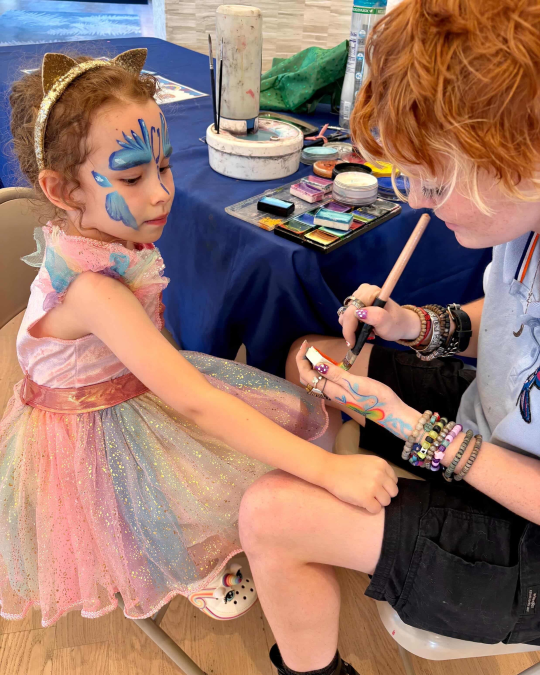
Community events have become part of the brand itself, reflecting how marketing increasingly overlaps with retention and resident engagement. 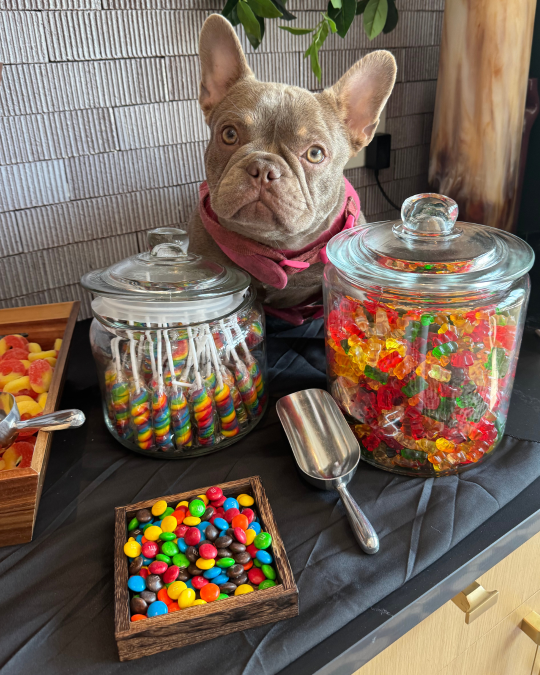
Resident-facing experiences now often appear in marketing strategy, reinforcing community identity through small but memorable moments. 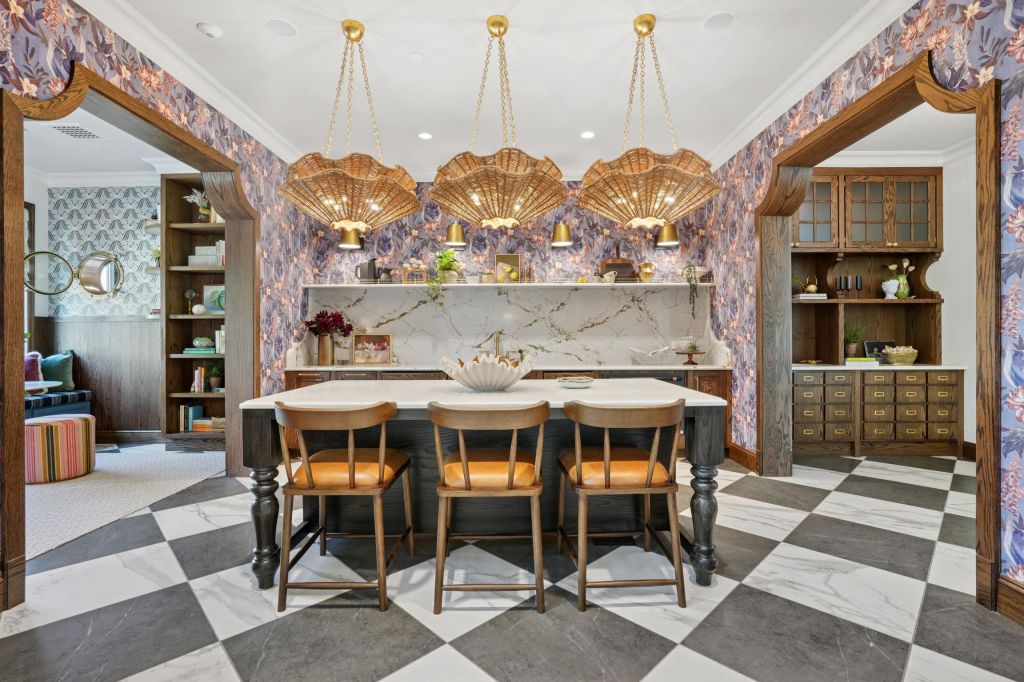
Amenity spaces still matter, but they are now more often framed as lived environments rather than static feature lists. 
Property imagery remains central, but it now supports a broader story about lifestyle, service and day-to-day experience. 
Visual marketing today often aims to convey a fuller sense of place, not just a catalog of amenities. 
Exterior amenity photography continues to anchor multifamily marketing, now paired more closely with experience-driven messaging. 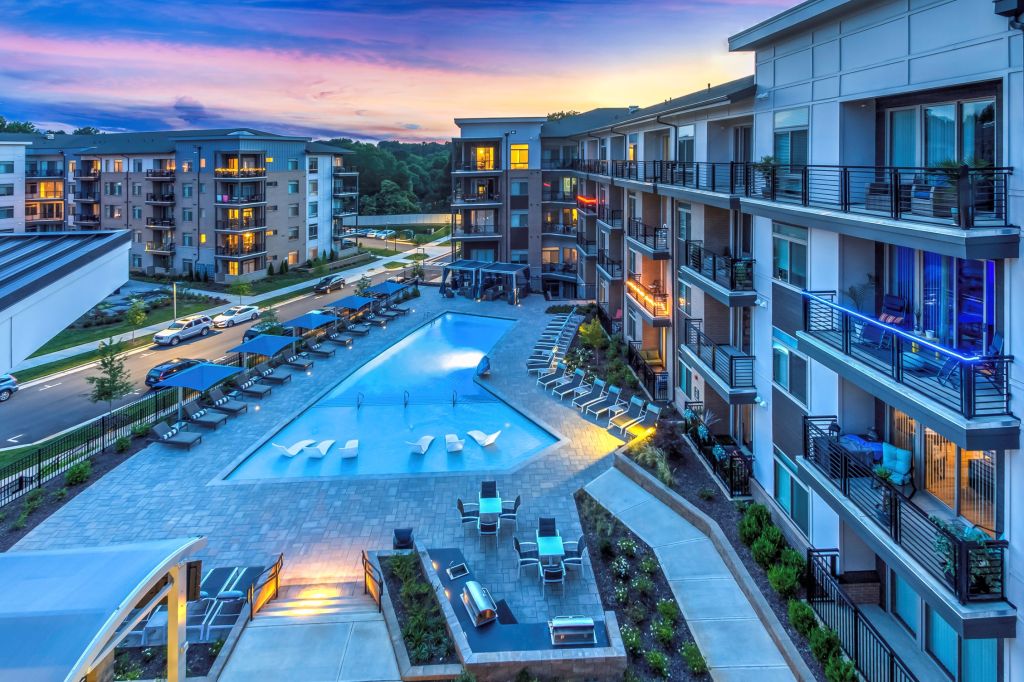
Community imagery still plays a major role, but it now works alongside programming, service and resident engagement.
Perhaps nowhere is the evolution of multifamily marketing easier to see than in visual media. In 2016, visuals often worked as atmosphere. By the mid-2020s, they had become something closer to leasing infrastructure. Carunungan traces that progression through LCP’s own evolution, from its early Google-related work through Panoskin to TourBuilder. “TourBuilder became the industry’s hub for creation, organization, storage, management, and performance-tracking of digital and visual marketing assets, from one unit to an entire community,” he explained. “That’s not a media product anymore; that’s a leasing infrastructure product. […] The role moved from ‘make this listing look better’ to ‘help this renter understand, trust and choose this community.’”
The next test: consistency and credibility
Apartment marketing trends change and this is the context marketers are working in now: more surfaces to manage, more data to interpret and more pressure to keep the brand coherent wherever a renter encounters it. Bonardi said one of the biggest challenges today is not simply creating content but creating good content and distributing it consistently across all the places it needs to live. “A website without optimization is like a car without gas,” she said. “It can’t do much for you.”
Murrell extended that point into the current search landscape. “Traditional search engine optimization is no longer the only focus,” she said. “We are seeing the rise of answer engine optimization and generative engine optimization, as consumers increasingly rely on AI-powered search experiences, conversational discovery, voice search, and generated recommendations instead of simply clicking through traditional search results.” That means rethinking not only content strategy but website structure, frequently asked questions, authority signals, reputation management and how information appears across the web.
And if artificial intelligence raises the stakes for content consistency, Carunungan argued that it raises them even more for trust. Asked whether the next visual challenge is scale, measurement or credibility, he didn’t hesitate: “Credibility, and it’s not particularly close.” Scale, he argued, is largely solved. Measurement is improving. But as AI-generated imagery becomes more photorealistic, renters are going to grow more skeptical, not less. “The properties that win are going to be the ones that can prove their content is real and current,” he added. “If renters start suspecting that what they’re seeing is AI-generated or doesn’t reflect reality, we’ll have taken a decade of trust-building and undone it very quickly.”
Shannon brought the story back to something more human. The operators that stand out will not necessarily be the ones with the flashiest stack, but the ones that understand what matters to customers and use technology accordingly. “The most important thing will be understanding what truly matters to customers and then creating experiences that feel seamless, responsive, personalized and human,” she said. “The companies that succeed will be the ones that protect and leverage their data, operationalize customer insights at scale and use technology in ways that supercharge site teams.”
That may be the cleanest way to understand the evolution of multifamily marketing from 2016 to 2026. It did not simply accumulate more channels. It learned, slowly and then all at once, that the brand lives wherever the renter meets the business: in the search result, the review, the website, the visual tour, the leasing interaction, the follow-up, the move-in and everything after. What began as a support function now sits much closer to the real work of shaping how a community is understood, chosen and experienced.