How LEED Certifications Fared in the Multifamily Sector in 2025
A roundup of last year’s top 10 states for certification, plus standout projects.
Sustainability has become a baseline expectation in multifamily and mixed-use development, not just for climate goals, but for day-to-day performance. Beyond reducing operating costs, high-performance buildings help owners manage regulatory and utility risk, strengthen long-term asset resilience and deliver healthier indoor environments—factors that increasingly influence financing, leasing velocity and resident satisfaction.
Using data provided by the U.S. Green Building Council (USGBC), we have summarized LEED certification records for multifamily-related certifications registered in 2025. Importantly, these are certification records, not necessarily one-to-one with unique developments. The dataset contains 117 certifications across 98 distinct project names, and some communities are certified building by building, which affects state totals. Certified gross area totaled nearly 25 million square feet across 24 states.
LEED Gold certifications dominate by count, suggesting many teams are targeting a “high-but-achievable” threshold, often the sweet spot for cost/benefit, incentives and investor expectations. LEED Silver accounts for the largest share of certified square footage, reflecting several very large Silver-certified properties.
Certifications are split primarily between BD+C (59) and Homes (56), with a small presence of O+M (2), signaling that most activity reflects new delivery and major redevelopment over operational recertification. Certification volume is concentrated in a handful of large, high-development states, led by California and the District of Columbia.
Notable 2025 LEED certifications
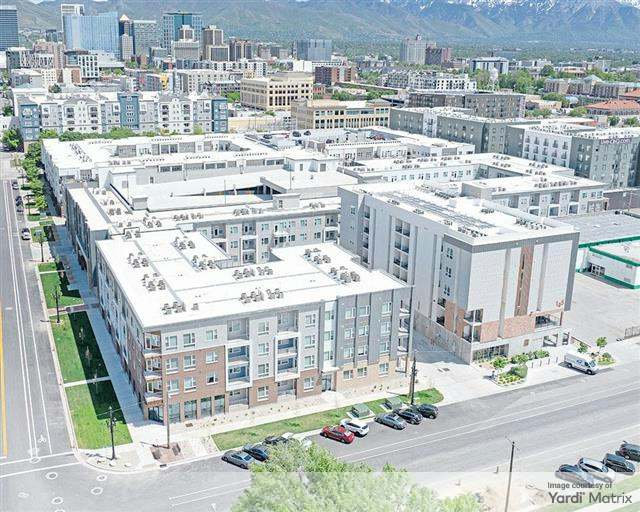
The largest multifamily property to receive USGBC’s highest designation in 2025 was Alta Stone at the Gateway, a transit-oriented property located in an Opportunity Zone in Salt Lake City. Wood Partners’ asset was LEED Platinum certified in November under LEED-Homes v2008, scoring 85 points.
The Platinum certification for the 288-unit Lifestyle community was driven by features such as a high-efficiency envelope, ENERGY STAR-rated appliances throughout all units and HVAC systems. These were complemented by water management, enabled by integration of low-flow hot water fixtures, xeriscaping and stormwater management. Moreover, materials and site innovations played a significant role, as the underground parking structure is conveniently located within walking distance of three light rail stations. Additionally, dedicated EV charging stations are included, and a mid-block pedestrian walkway has been integrated to enhance access.
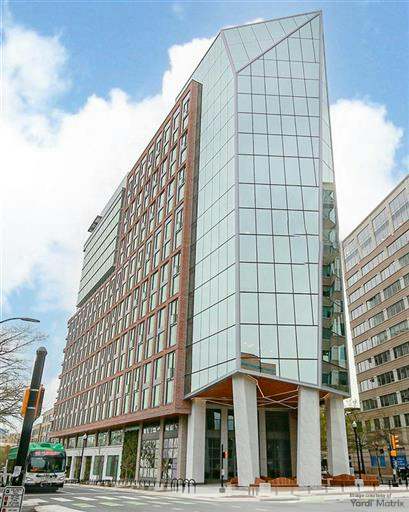
Greystar’s 16-story, 231-unit, mixed-use property in Arlington, Va., dubbed The Wendy, achieved LEED v4 BD+C: Multifamily Midrise Platinum in April 2025, with a scorecard of 83 points.
The Wendy earned LEED Platinum certification through the integration of high-performance engineering and eco-conscious design, resulting in 26 percent energy cost savings and a 45 percent reduction in total water usage. This level of sustainability is achieved with Energy Star appliances, WaterSense fixtures, a 5,000-gallon rainwater cistern, low-carbon concrete that reduced the carbon footprint by 20 percent, bird-friendly fritted glass, photosensor-controlled lighting, EV-ready parking and a public plaza with biophilic landscaping.
The 2025 USGBC records reveal a multifamily market strongly oriented toward Gold outcomes, with certification activity concentrated in a handful of high-development states and metros. Looking ahead, the next step for many owners and project teams is likely to be greater transparency and “stacking” (pairing LEED with operational performance metrics and health-focused standards where relevant), especially as lenders, insurers and residents increasingly reward verifiable outcomes, not just intent.