
Fed Cuts Rates as Economy Weakens, Signals More Action
Despite the long-awaited cut, the central bank's dual mandates remain at odds.
For the first time this year, the Federal Reserve Open Markets Committee decided to lower interest rates by 25 basis points, the first cut since December of last year. The federal funds rate’s target range now sits at 4 to 4.25 percent, the lowest since November of 2022.
The shift came despite a slowing labor market and a less-than-ideal inflation rate, which rose to 2.9 percent in July. Last week, the labor market was shocked by an underreporting of 911,000 added jobs in 2024 and the first few months of 2025. From June through August of this year, a net of 29,000 workers were hired monthly, a nearly fivefold decrease from the same period in 2024.
No easy outs
Despite earlier rate cuts in other inflationary economies, the issue of tariffs further complicates the Fed’s ability to keep employment high and inflation low, as the bulk of the costs are borne by consumers. If the import taxes prove to have significant longer-term effects on inflation, the Fed may have less cause to lower rates in the future. Still, FOMC participants projected a 3.6 percent federal funds rate by the end of this year, 3.4 percent at the end of next year and 3.1 percent by the end of 2027, rates that are a quarter percentage point lower than what was projected in June. Current Fed projections call for two more rate cuts by the end of the year.
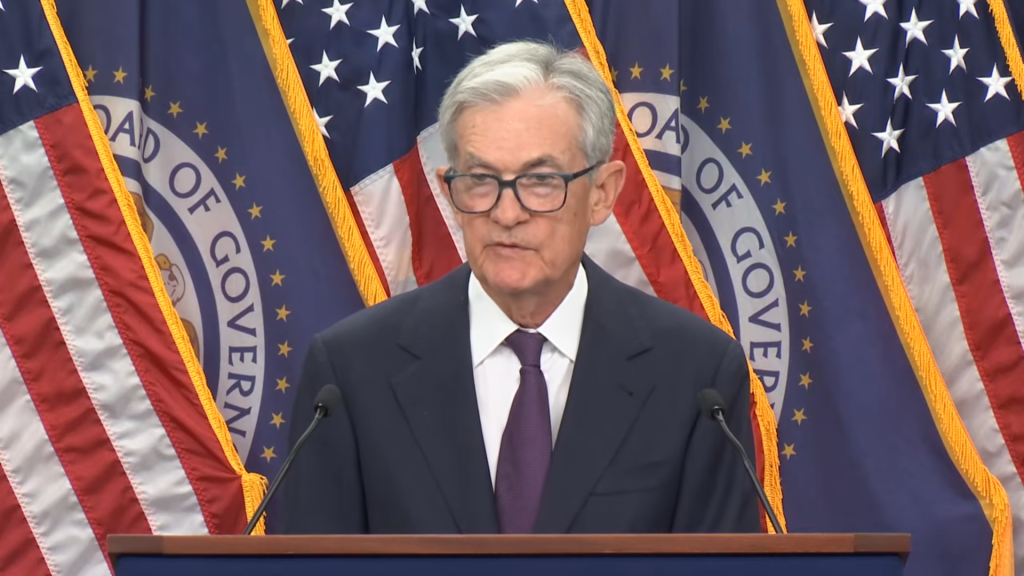
Acknowledging these stumbling blocks and the Fed’s often conflicting dual mandates at a press conference on Wednesday, Federal Reserve Chair Jerome Powell said that in the near term, “risks to inflation are tilted to the upside, and risks to employment are tilted to the downside.”
A game of sentiments
The 25-basis-point cut was widely anticipated by multifamily industry experts, but most see more value in the optics of the Fed’s actions than in its actual decisions on rates. “The look for today’s meeting is less about the cut, (because) the market has completely baked in a 25-basis-point reduction—and more about the longer-term dots,” said Josh Bodin, Berkadia’s senior vice president of capital markets strategy and trading.
READ ALSO: Discount Deals Signal a New Cycle
Consequently, the actual effects on capital markets depend quite a bit on the Fed’s signaling alongside its decisions. “If the Fed can help capital markets continue to recover, then both drivers of the CRE market could be pulling together for the first time in years,” predicted Ryan Severino, BGO’s chief economist & head of U.S. research. “When that happens, the (real estate) market performs well, usually for prolonged periods,” Severino told Multi-Housing News.
On the ground, a less restrictive monetary policy could lead to reduced borrowing costs and an “increase in capital flows and transaction activity, which in turn will bolster commercial real estate values,” said Kyle Early, managing director of portfolio management at investment firm PEG. “Rate cuts are likely to stimulate business expansion, hiring and consumer spending leading resulting in increased demand for rental housing,” he added.