IREM Special Report: Adapting to Change, Driving Revenue
At the 2024 IREM Global Summit, industry leaders shared insights on staying ahead of change and adapting to meet residents' needs.
Technological evolutions, changing policies and a competitive market mean operators must continue to evolve and navigate change to stay ahead. And at this year’s IREM Global Summit in Indianapolis, several sessions highlighted the impact of change and the key areas where businesses need to adapt to remain successful.
In the session titled, “Navigating Affordable Housing Challenges: Insights from Industry Experts,” panelists shared best practices for affordable housing property owners and operators to balance compliance and regulatory challenges while delivering value to residents in need.
What you need to know about the affordable sector today
- Maintaining income limits and rent restrictions is critical to stay compliant for tax credits.
“You can fix anything, but you can’t fix bringing in somebody who’s over income; it’s called recapture, and it’s painful.”—Eileen Wirth, president & CEO, Mend Inc.
- Regulations are changing in real time, so you have to be adaptable and stay abreast of the changes. It’s important to know what your state is doing, because compliance requirements vary.
- Each source within the capital stack has its own recording and monitoring requirements.

“You can’t just check the box, and one thing applies to everything.”—Toni Harris, founder & CEO, KAT Professional Development, and vice president of operations, Fairstead Management
- Some operators are still waiting for the Housing Opportunity Through Modernization Act to be implemented in their state. States including Texas and North Carolina have already implemented the legislation, while other states are taking a “wait-and-see approach.”
“This is the biggest change to affordable housing in several decades.”—Wirth
- HUD’s National Standards for the Physical Inspection of Real Estate program introduced stricter inspection protocols for federally assisted properties. NSPIRE focuses on health, safety and functional standards, requiring property owners to ensure that units and common areas meet higher-quality benchmarks and that operators are conducting regular and proactive maintenance. Issues discovered during property inspections are being evaluated based on their severity rather than simply the existence of the issue. High-risk properties can expect more frequent inspections, and the inspections can also be renter-initiated.
“We’re going from focusing on the aesthetics of the asset to the health and safety of the asset, so no more lipstick-on-a-pig approach.”—Harris
How to think about ancillary revenue sources
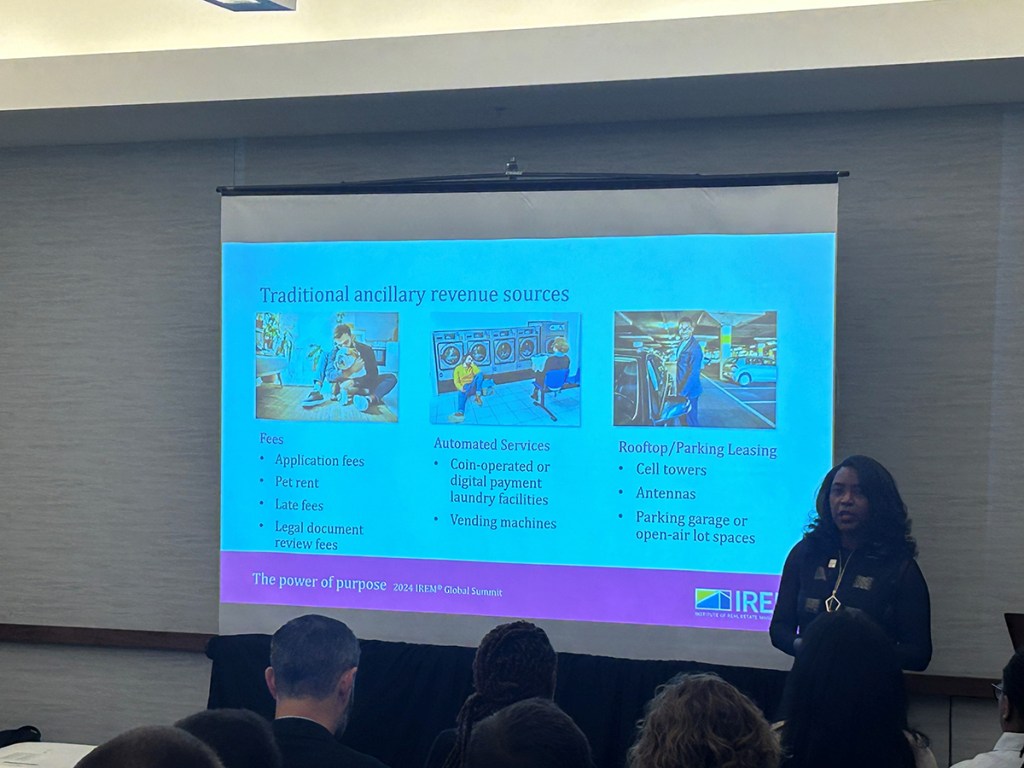
According to Jae Roe, founder of SOVA Real Estate Solutions and vice president of property management at Chicago Trend Corp., owners and operators have several traditional and innovative options for generating ancillary income.
“You’re really only constrained by your imagination,” Roe told IREM attendees.
In the session, “Drive Ancillary Income for Any Type of Property,” Roe emphasized that a key step before choosing a revenue stream is to assess the potential for its impact on your property.
Conducting the proper checks and balances, which includes researching your local market, will help you maximize the potential of additional sources of revenue.
“You have to think through the operational impact, the logistics and the tenant experience,” she noted. More of her tips included:
- Offer vending machines where residents can rent items such as vacuum cleaners or ironing boards.
- If you’re renting out your clubhouse or amenity spaces, think carefully about what you’re charging and compare your cost to competitors’ buildings to ensure your rates are correctly priced.
- When it comes to underused or underutilized units at a multifamily property, owners can convert a unit that doesn’t lease well to guest suites. Whether it’s the size of the unit or where it’s located on the property that makes it more difficult to lease, turning it into a guest suite can be a benefit to your residents because their visitors can stay right on the property rather than pay for a hotel room.
- Charging a fee when your residents don’t pick up their pet waste can bring in additional revenue and cut down on your maintenance costs. Offering services such as grooming or pet care can also provide a good return depending on the number of pet owners at your community.
- Before exploring new revenue strategies, you have to take regulatory considerations into account. Particularly for REITS, certain revenue sources could potentially risk your status as a REIT if they generate too much “bad income.” Involving your tax advisory group or your tax accountant before you implement a revenue strategy and thinking beyond the property management side is important to avoid long-term implications.