Valor Residential Secures $46M for Southeast Portfolio
KeyBank issued the bridge loan.
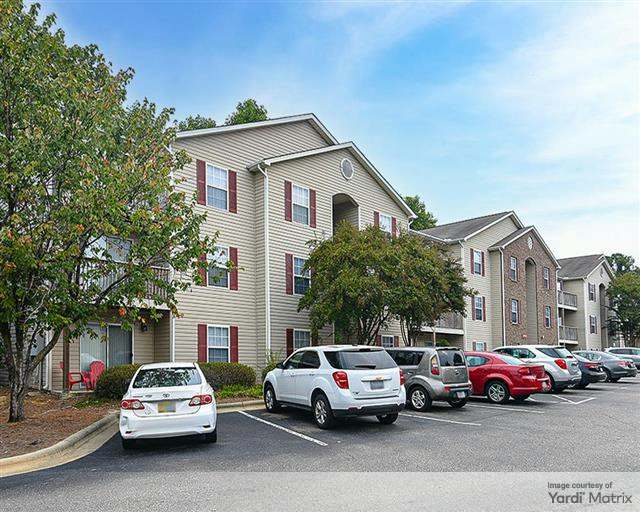
Valor Residential Group has closed on a $46.2 million refinancing loan for Brant Portfolio, which consists of three Class B communities in Fayetteville, N.C. KeyBank Real Estate Capital’s Income Property Group issued the one-year bridge financing.
The loan retires a previous $51.5 million permanent note issued by Franklin BSP Realty Trust in 2022.
Valor Residential acquired all three assets in 2022, in a portfolio deal with Brant Point Properties, for a total of $54 million, according to Yardi Matrix information.
KeyBank Real Estate Capital Senior Vice President Pranav Sarda and Regional Executive Alan Isenstadt arranged the financing package.
The Brant Portfolio, up close
The Brant Portfolio comprises a total of 508 residences with one- to three-bedroom layouts ranging from 500 and 1,200 square feet. The communities came online in the early 2000s and are as follows:
- Carlson Bay, a 15-building, 214-unit property at 3500 Carlson Bay Circle;
- Meadowbrook, a 12-building, 186-unit property at 6707 Water Trail Drive;
- Stoney Ridge, a three-building, 108-unit property at 5441 Basking Ridge Drive.
READ ALSO: Top 10 Markets for Multifamily Transactions
Shared amenities include fitness centers, business centers, playgrounds, on-site management and on-site laundry facilities. Each property includes a grade-level parking area with 390, 352 and 182 spots.
All assets are located along major thoroughfares, including U.S. Route 401, Interstate 295 and North Carolina state routes 24 and 201, as well as the All American Freeway.
The refinancing risk persists
Last year recorded $310 billion in multifamily debt, accounting for 32.4 percent of all maturing CRE debt, making up the largest share among property types. A report by The Kaplan Group on the State of U.S. Business Debt shows that loans in 2025 tended to be extended rather than refinanced, while only 50 to 55 percent of maturing notes were paid off.
Clocking in between 5.4 and 5.7 percent, multifamily cap rates appear unable to keep up with borrowing costs, causing negative leverage scenarios and laying the groundwork for refinancing risk to remain elevated over the next two years, the same source stated.