Related Cos. JV Obtains $137M for Queens Affordable Property
New York City Housing Development Corp. provided the financing.
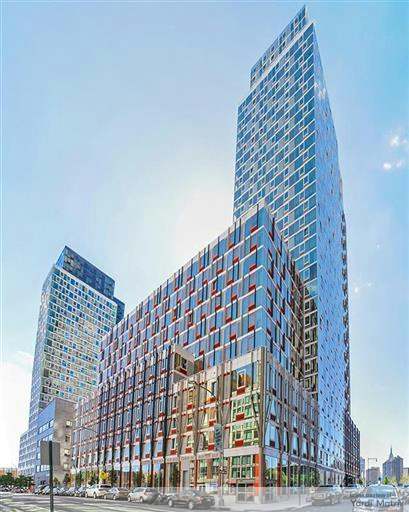
A joint venture of Related Cos., Phipps Houses and Monadnock Construction has secured $136.5 million in Fannie Mae bonds for Hunter’s Point South Commons, a 619-unit affordable housing community in Long Island, N.Y., Yardi Matrix data shows.
The financing from New York City Housing Development Corp. retires a previous identical loan.
This community, part of the larger Hunter’s Point South neighborhood, comprises studio, and one- to three-bedroom floorplans, as well as 13,739 square feet of retail space across the 37-story tower.
The trio broke ground on the community in 2013, together with a neighboring 306-unit property. Construction on the first phase wrapped up in 2015, yet development continued on the banks of the East River, resulting in the completion of a waterfront park in 2018.
The entire Hunter’s Point South endeavour marked the then-largest affordable multifamily development to be built across the Big Apple since the 1970s. As of now, five of the seven parcels in the neighborhood have been developed, with plans calling for the transformation of another vacant site into a multi-building, mixed-use development.
Located at 1-50 50th Ave., the property is within walking distance of the Queens-Midtown Tunnel and about 5 miles from downtown Manhattan.
READ ALSO: Affordable Housing’s Always Been Hard. Now It’s Getting Harder
At groundbreaking, about 20 percent of the total unit count across both properties combined was reserved for families earning between 40 and 50 percent of the area median income, while the remaining 80 percent of apartments were set aside for middle-income households earning up to 165 and 230 percent AMI.
LIHTC supports the units reserved for low-income families and is subject to an extended-use period of 30 years. Additionally, the project is bound by an agreement with the City of New York, enforcing permanent affordability.
The looming affordability restriction loss
However, the affordability status of other properties might not benefit from the same arrangements. Last year alone, nearly 29,000 private LIHTC units reached their initial compliance period’s end and 15,000 apartments hit the end of their extended-use period, according to a Yardi Matrix report.
Yet, that might not spell the end of affordability restrictions as 4 percent LIHTC resyndication could drive attainability for longer, especially as the One Big Beautiful Bill Act facilitates private-activity bond financing, which in turn aids in LIHTC capturing.