
Office-to-Residential Conversions: Making the Choice
How to evaluate whether your project will work.
The apartment supply gap is attracting renewed attention from the multifamily industry and policymakers alike. A watershed 2022 study commissioned by the National Multifamily Housing Council and the National Apartment Association found the U.S. needs to build 4.3 million more apartments by 2035 to meet projected demand.
That daunting challenge coincides with another much-discussed trend: the generational change accelerated by a shift in occupancy strategies and work patterns. By the end of this decade, 1.1 billion square feet of office space will be vacant, including some 330 million square feet resulting from hybrid work strategies, according to Cushman & Wakefield estimates (see “Office’s Challenges Equal Redevelopment Opportunities” chart).
The work-from-home trend isn’t the only factor impacting office demand. “A lot of these buildings were built between 1950 and 1990, and they’re just not really great places to work anymore,” observed Kelly Farrell, a Gensler managing director and a global leader of its residential practice.

Kastle Systems’ Back to Work Barometer, which measures office utilization in 10 major office markets, indicates a considerable variation in office occupancy. During one two-week stretch of January 2024, the index hovered between 46.3 and 51.8 percent. While some high-profile corporate office users—Amazon, Zoom and BlackRock notably among them—have mandated strict return-to-office policies, an office recovery is unlikely to occur anytime soon. Owners of older office properties from earlier generations face an even greater challenge, as tenants often gravitate toward newer, more efficient properties.
Cities Step It Up
Some major cities are working to encourage office-to-multifamily conversions, as is the federal government. Benefits include tax incentives, financing and rezoning.
■ A proposal on San Francisco’s March 2024 ballot would waive the 6 percent transfer tax for buildings after they are converted from commercial to residential use. The proposal’s backers contend that the tax discourages the investment necessary for conversions. The waiver would apply to transactions of at least $25 million, with a limit of 5 million square feet of converted space. Project sponsors would be required to obtain city planning approval by Dec. 31, 2029.
■ In October 2023, the Boston Planning & Development Agency launched a payment-in-lieu-of-taxes program that offers developers of conversion projects as much as a 75 percent reduction in standard property tax rates for 29 years. The agency authorized a demonstration program that covers several downtown neighborhoods. Applications will be accepted through June 2025, and candidates will be expected to start construction by October 2025.
■ A plan unveiled in August 2023 by New York City officials calls for converting 136 million square feet of vacant Manhattan office space to 20,000 new housing units over the next decade. A 42-block area of Midtown South now primarily zoned for office and industrial would become a neighborhood that provides permanently affordable housing.
■ The federal government is taking action, as well. In October 2023, the Biden Administration announced that it would provide $45 million through low-interest loans and other sources to advance the effort.
These intersecting trends in the multifamily and office sectors are spurring stepped-up interest in repurposing obsolete office space as multifamily communities. Advocates point to adaptive reuse as a strategy to help expand housing stock, revitalize urban centers, foster historic preservation and boost tax bases. Compared with ground-up development, conversions can cut construction time by as much as 10 months, according to a report from NMHC and the Urban Land Institute.
But while office conversions offer potential, they are also complex and difficult endeavors. Developers must consider a host of issues: building configurations, local codes, mechanical systems, fire and safety, windows, plumbing, zoning, and availability of nearby neighborhood amenities. Those factors further complicate finance-related questions of cost, public-sector incentives, debt availability, and whether rent price points can generate adequate returns.
When I look for a conversion candidate, I have to have three sides of glass, a maximum depth of 100 feet and at minimum two elevators.
—Jordan Tampien, 4 Degrees Real Estate

Laying the Groundwork
On the positive side, office-to-residential conversion is attracting plenty of support from the public sector. A steady stream of initiatives from supply-challenged cities is encouraging developers to repurpose more obsolete office inventory as multifamily communities (see “Cities Step It Up” chart).
In many cases, cities want to see conversions as quickly as possible, Farrell noted, because property tax incentives generally apply to the value created above the building’s current assessed value. The cities want to lock in today’s value—and current tax receipts—to avoid losing more revenue as the buildings depreciate.
The incentives appear to have helped spark activity. In September 2023, CBRE reported that developers were on track to complete roughly 100 office conversion projects by the end of the year, with about 66 percent dedicated to multifamily or mixed-use renovations. Those projects amount to 60 million square feet, representing 1.4 percent of U.S. office inventory.
At first glance, those numbers suggest plenty of remaining low-hanging fruit. But the first step to executing a conversion—finding a suitable candidate—is one of the most challenging. Office-to-apartment makeovers generally have several built-in practical barriers. “Most offices are typically laid out differently than apartments or residential condos,” observed Craig Tomlinson, a senior vice president with Northmarq. “Developers will have to almost completely demolish floor plans in order to accommodate residential preferences.”
Analyzing a candidate for conversion also requires a team of structural engineers, environmental engineers, architects, and fire and safety experts. Before making their first move in the field, developers should secure the building’s final as-built drawings, so they’re aware of changes made during construction, advised Thomas Cox, founder & managing principal of TCA Architects.
“Structural, mechanical, electrical and plumbing are all big considerations, and if you have a team on board early enough, you can do a quick analysis of that,” he pointed out. “But if you have to make drawings of the building, it can significantly prolong the process. And most architects won’t touch the job because of liability.”
Conversion Checklist
Though office buildings are widely touted these days for potential reinvention as apartment communities, developers must carefully consider whether a building has the right bones for adaptive reuse. Here are four key factors to consider:
■ Building shape and structure. These elements should be explored early because they determine whether a property’s layout lends itself to reconfiguration and has adequate structural integrity. If a century-old, timber-frame office building is being considered, for example, an engineer should analyze its structural system.
■ Floorplates. When it comes to turning office into residential, smaller is usually better. Deep, cavernous floorplans that accommodate large numbers of cubicles are especially common among office buildings developed from the 1980s on, and these designs make it difficult to bring natural light to the building’s core. Window-to-wall ratios and whether windows can open to bring in fresh air—or must be replaced—are additional variables.
■ Plumbing. Office occupants’ water use typically focuses on relatively limited areas, particularly restrooms, kitchens and breakrooms. Is it feasible to add capacity to meet the much higher household needs of multifamily communities? That depends on the building.
■ Mechanical and electrical systems. Any renovation brings a high probability of discovering surprise wiring problems during demolition. Developers will likely need to modernize HVAC systems and revamp ductwork, as well, so residents can control their own thermostats.
Age Matters
Because floorplates in office buildings from the past 40 years are sized for cubicle farms and may span an entire block, older buildings often make better candidates for repurposing as multifamily communities. After evaluating older, lower-quality office buildings in 105 markets for physical attributes, current tenants and greenhouse gas emissions, the National Bureau of Economic Research estimated that 11 percent of all downtown office properties are plausible for conversion.

“When I look for a conversion candidate, I have to have three sides of glass, a maximum depth of 100 feet and at minimum two elevators—this one has (all) three,” remarked Jordan Tampien, whose 4 Degrees Real Estate is converting a 126-year-old office building in Spokane, Wash. (see “Reinventing 19th-Century Office as 21st-Century Multifamily”). Before starting construction in September 2023, Tampien made “a checklist of about 10 requirements that had to be right on to make this building work.”
While older buildings often offer distinctive characteristics that better lend them to residential conversion than newer properties, they by no means have an exclusive claim on the concept. Gensler estimates that about three of every 10 North American office buildings are viable candidates for conversion, based on a broad model that assigns varying weights to building shape, floorplates and other key characteristics. A less-than-ideal building that’s near to retail, transit, jobs and parks may deliver better value than a perfect building in no-man’s land, Farrell suggested.
She calls three key questions the “trifecta” of the decision-making process: “What is its form, where is it located and what is the cost basis in the building?” The preferred candidate, she said, is a residential property that needs a redo. “You’re never going to be perfectly aligned with an office building,” she noted. “But if the location is great, the right design team can make it work.”
Structural, mechanical, electrical and plumbing are all big considerations, and if you have a team on board early enough, you can do a quick analysis of that.
—Thomas Cox, TCA Architects
Risk Assessment
Even attractive candidates won’t make sense for residential conversion unless developers can also answer “yes” to this question: At the end of the process, can the asset command rents that justify acquisition and redevelopment costs—and the cost of financing them—and still compete in the market? Given today’s still-elevated interest rates, developers typically need to seek greater discounts when purchasing conversion candidates.
As Deloitte points out in a recent study of office-to-residential conversion, the average U.S. office rent of $37.38 per square foot is still 41 percent higher than the average asking rent for apartments. Even offices operating at below-average occupancy may still perform better than an office property turned to multifamily, the study concludes.

Reinventing 19th-Century Office As 21st-Century Multifamily
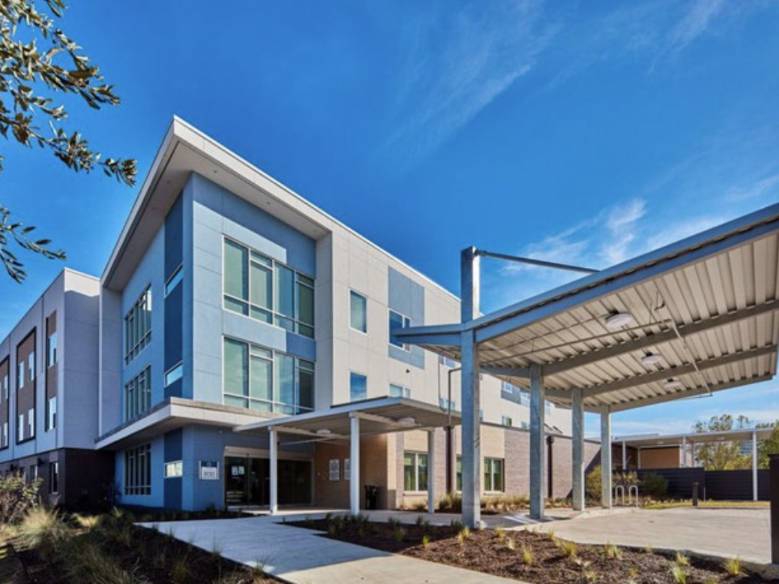
In downtown Spokane, Wash., developer Jordan Tampien of 4 Degrees Real Estate is spearheading a $34 million conversion of the timber-frame Peyton Building to 96 apartments. The 98,000-square-foot building is located on a major transit line and features lightwells that provide ample interior light. The building also includes relatively new windows and well-located elevators and exits. Another plus: No exterior improvements are needed.
Office tenants previously occupied about 85 percent of the building, and Tampien considered maintaining it as office space. “It really became a question of whether office rents justified the investment in the tenant improvements needed to keep those tenants for the next 10 years and to keep the building at a healthy occupancy level,” recalled Michael Sharapata, a JLL senior managing director. When it became clear that operating the property as offices wouldn’t pencil out, “the backup plan was to convert it to residential,” he noted.
Tampien is spending some $250 per square foot on the conversion. That breaks out to $110 per square foot for the land and asset plus $140 per square foot for improvements, including upgrades to HVAC, plumbing, electrical and fire suppression systems. Ground-up construction of a seven-story project in the same location would cost about twice as much, he estimated. Tampien plans to set monthly rents at about $2.50 per square foot, or roughly 50 cents less than Spokane’s top downtown rates.
To finance the project, he is tapping $19 million in debt and potentially $3.8 million in historic tax credits. While Spokane doesn’t offer specific incentives for office-to-residential conversions, it does provide property tax exemptions to encourage market-rate and affordable multifamily housing in designated areas. The program exempts some $1,166 on every $100,000 in assessed value based on the total construction budget for the Improvements. It also applies only to the housing portion of a property. That will reduce the Peyton Building’s tax bill by as much as 70 percent for 12 years.
“The Peyton Building really caters to a very good conversion,” Tampien asserted. “It sets up well and is in an area where we could use more housing development.” In downtown Spokane, Wash., developer Jordan Tampien of 4 Degrees Real Estate is spearheading a $34 million conversion of the timber-frame Peyton Building to 96 apartments. The 98,000-square-foot building is located on a major transit line and features lightwells that provide ample interior light. The building also includes relatively new windows and well-located elevators and exits. Another plus: No exterior improvements are needed.
Office tenants previously occupied about 85 percent of the building, and Tampien considered maintaining it as office space. “It really became a question of whether office rents justified the investment in the tenant improvements needed to keep those tenants for the next 10 years and to keep the building at a healthy occupancy level,” recalled Michael Sharapata, a JLL senior managing director. When it became clear that operating the property as offices wouldn’t pencil out, “the backup plan was to convert it to residential,” he noted.
Tampien is spending some $250 per square foot on the conversion. That breaks out to $110 per square foot for the land and asset plus $140 per square foot for improvements, including upgrades to HVAC, plumbing, electrical and fire suppression systems. Ground-up construction of a seven-story project in the same location would cost about twice as much, he estimated. Tampien plans to set monthly rents at about $2.50 per square foot, or roughly 50 cents less than Spokane’s top downtown rates.
To finance the project, he is tapping $19 million in debt and potentially $3.8 million in historic tax credits. While Spokane doesn’t offer specific incentives for office-to-residential conversions, it does provide property tax exemptions to encourage market-rate and affordable multifamily housing in designated areas. The program exempts some $1,166 on every $100,000 in assessed value based on the total construction budget for the Improvements. It also applies only to the housing portion of a property. That will reduce the Peyton Building’s tax bill by as much as 70 percent for 12 years.
“The Peyton Building really caters to a very good conversion,” Tampien asserted. “It sets up well and is in an area where we could use more housing development.”
Numbers Game
How much a conversion costs varies depending on the market, material and labor prices, incentives, and how much work the building requires. All else being equal, converting an office property that needs every window replaced will cost more than one that doesn’t, but it nevertheless may fill a niche for luxury product that can command sufficient rents in its market.
Richard Jantz, an executive managing director with Cushman & Wakefield in New York City, told CPE in 2023 that developers should plan on spending $500 to $600 per square foot on turning office spaces into residential. Others suggest the price tag could be a lot lower. Deloitte estimated average conversion costs could drop to $150 per square foot by 2027 from $213 per square foot at the end of 2021, assuming office values continue to decline and incentives to expand.
You’re never going to be perfectly aligned with an office building. But if the location is great, the right design team can make it work.
—Kelly Farrell, Gensler
Download the pdf “Office-to-Residential Conversions: Making the Choice”