Why Insurance Costs Are No Longer High All Over
As carriers reapproach the market, some multifamily investors are being rewarded.

Some multifamily owners will see their insurance rates drop this year, while others will see premiums increase.
Even in California’s high-risk environment, some large insurers that were approved to increase their rates by about 7 percent in 2026 are actually decreasing rates by 9 percent across the board and Southern counties may see decreases of nearly 15 percent, said Veronika Torarp, a principal at PwC.
The difference is not just location, but more about the type of new construction or whether significant capex improvements have been made to “harden” older buildings, stressed Grant Allen, senior vice president for real estate practice at Hub International.
“We’re actually seeing a softening in the insurance marketplace, anywhere from 10 to upwards of 30 percent, for property premiums because of quality construction or the steps that they’ve (owners) taken to mitigate future losses at their buildings,” he said.
A Hub International client with a large multifamily portfolio that suffered a loss from the Pacific Palisades fire, Allen noted, achieved a 25 percent reduction on its entire portfolio post-fire due to quality construction.
The reason insurers are decreasing rates involves both lower risk and increased financial capacity. “What we’ve actually seen is the market has absorbed losses and continued to chug on from a commercial property standpoint,” Allen added.
LIKE THIS CONTENT? Subscribe to MHN’s Finance & Investment Newsletter
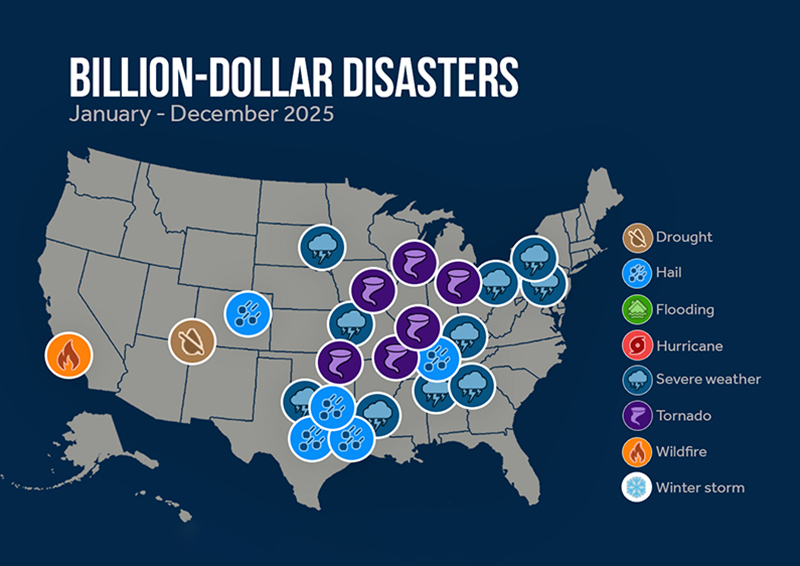
Concerns about insurance availability and sustainability led states, especially in high-risk regions, to adopt new building codes and standards that require quality in both new construction and building upgrades, including fortified roofs that are fire- and hail-resistant and anchored down, copper wiring and installation of high-performance building systems .
Insurers not only increased premiums and deductibles and decreased coverage limits following natural disasters. They also revalued properties to today’s valuations. In Florida, for example, some properties were valued 20 to 30 percent below replacement cost, so revaluations increased insurance costs even more, Allen explained. But a combination of these costs recapitalized insurers, making them profitable again.
“We actually saw many carriers return to Florida when rates were peaking to take advantage of the high premiums, and now those same carriers are cutting rates to stay competitive and gain market share,” said Newmark Vice Chairman Hampton Beebe.
Additionally, the U.S. excess and surplus-lines market (London) provides capital to this space, which in turn lowers pricing and increases options for multifamily that would traditionally be harder to write in certain geographic areas, he added.
“When premiums peaked, savvy owners and operators turned to alternative “captive” policies (in-house subsidiaries), or complex layered policies that often require principals to travel to London and pitch their portfolio to carriers willing to take tranches of policy based on risk,” Beebe said, noting that these alternative strategies are typically used until rates decline.
While insurance premiums are decreasing, Allen stressed, underwriting today is more disciplined than ever before, with underwriters using all available technology to reveal property details.
“They’re looking at wildfire scores, they’re looking at construction, they’re looking at age of roofs, they’re looking at the wiring—all those things,” Allen said, noting that owners with “hardened” buildings see the advantages of the softening market.
“And underwriters are talking to us at the same time that they’re talking to the banks because that insurance premium can be a key driver in what the bottom line on an investment is going to look like,” Allen added.
On the flip side, older Class B and C assets that haven’t seen substantial improvements over the years and may still have unremediated aluminum wiring or stab-lock breakers or aged-out roofs, are going to continue to see significant pressure from underwriters because the losses on those properties are inevitable.
Premiums are down and deductibles are up
Insurance premiums peaked for multifamily properties in 2023 and then came down. “But even with the declines over the past two years, rates remain well above where they were seven years ago,” said Beebe.
For example, Newmark sold a 1988 vintage property in 2017 when insurance premiums were $500 per unit. Premiums peaked in 2023 at $2,000 per unit, then dropped in half to about $1000, while rents rose 55 percent, Beebe noted.
Natural disasters, such as wildfires and hurricanes drove both premiums and deductibles significantly higher over the last year, rising on average 20 percent, but up to 40 percent in high-risk markets and doubled or tripled in markets that had experienced a major weather event, according to Marc Gordon, prinicpal, co-president & CFO at Investors Management Group. He noted the impact of higher deductibles alone could translate to hundreds of thousands of dollars in additional out-of-pocket exposure for owners.
“We saw average deductibles increase 22 percent in ’25, and that means that homeowners and property owners are getting less coverage for the same cost,” said Torarp. “So that’s something else to keep an eye on besides premiums.”
In addition to rising premiums and deductibles, Allen noted, many insurers lowered their limits of liability, so property owners may now need multiple insurers to cover a property’s 100-percent replacement cost.
How insurance costs affect values and investment
Over the last several years, insurance costs became one of the most significant expense pressures on multifamily underwriting, noted Gordon. Premiums more than doubled, reinsurance rates spiked, and some carriers exited high-risk markets, leaving markets less competitive.
“These dynamics reduced values because higher insurance expenses directly impact net operating income,” Gordon said.
In recent years, a clear cost delineation has existed between coastal and non-coastal locations. “From a valuation standpoint, rising insurance costs have compressed NOI in underwritings and even priced out certain markets for developers and owners where yields have not penciled,” said Barrett Lowell, who heads asset management at Bonaventure. “A 20 to 30 percent increase in cost can quickly add up to millions in exit value impact.”
Insurers diversify risk across a portfolio, which means catastrophic losses in higher-risk markets can influence pricing impact across the country, Lowell continued, noting that all-in insurance costs now can average thousands of dollars per unit, even before you get into the most catastrophe-exposed geographies.
According to PwC research, the average monthly cost for multifamily property insurance increased from $39 per unit in 2019 to $68 per unit in 2024. But across California the per unit costs during that time period rose from $300 to $500 per unit annually to $1,800 to $2,400 per unit in high-risk areas, adding potentially hundreds of thousands of dollars to operating budgets and millions to development costs, Torarp pointed out.
“The primary impact is what I call the feasibility ceiling,” said Brian Connolly, founder & CEO of Feasibly, an AI-powered platform that delivers market and financial feasibility analyses for real estate projects.
With a combination of high impact fees, labor costs, and now astronomical insurance premiums, many projects, for example, do not pencil in California, Connolly added, noting that if insurance premiums move from $500 per unit to $1,500 per unit, that difference wipes out a massive chunk of borrowing power.
”For a two-hundred-unit project, that is $200,000 in additional annual expense, which at a 5.5 percent cap rate, strips nearly $3.6 million dollars in valuation off the project before you have even broken ground,” Connolly projected.
Developers in California are responding by shifting to hardened construction using more expensive, non-combustible materials not just for safety but as a mandatory prerequisite to even get an insurance quote.Since coverage is required before you put a shovel in the ground, insurance has to be built into an underwriting, and the margin for error is small given this pricing pressure,” said Lowell.
Affordable housing developers and operators have been hit hardest by insurance increases, with costs escalating between 50 percent and 500 percent over the last two years.

“As a result, we are seeing clear capital migration that is less about avoiding specific states and more about avoiding risk that simply cannot be underwritten,” Connolly said. “Investors are not just looking at the current premium —they are looking at the volatility of that expense.
In high-risk pockets of Florida and California in particular, institutional capital is pausing because they cannot accurately project a five-year exit cap rate when insurance is “a wild card,” he added. “If you cannot predict your net operating income because insurance might jump 30 percent in year three, the deal becomes a gamble rather than an investment,” he said.
Meanwhile, there is a strategic shift toward inland versions of these states or the stable markets in the Midwest and Northeast where insurance is still a predictable, single-digit percentage of effective gross income.
Light at the end of the tunnel
The key takeaway is that there is an increased supply of insurance capacity now available for multifamily owners across the United States, and the ones that are going to see the biggest reduction in premiums are the ones with high-quality, newer assets and older assets that have seen significant investment to mitigate risk.
“Price is only part of the equation,” noted Gordon, pointing out that deductibles, coverage scope, carrier underwriting appetite, and loss prevention protocols now have a direct influence on value and financing.

“After historically high premiums and total insurable value resets that significantly increased costs, many insurers are attempting to regain business and compete again after a period of retrenchment,” said Lowell. “What has also helped is the broader markets (Lloyd’s of London) bringing in their reinsurance rates, since many of these carriers offload balance-sheet risk in the secondary markets.”
Concerns about insurance affordability also caused states to offer incentives, such as low-cost financing or grants to make improvements that mitigate risk. Louisiana, for example, offers grants of about $10,000 to replace building roofs, noted Torarp.
Additionally, Florida enacted “My Safe Florida Home,” which provides grants for hurricane hardening upgrades, like impact windows and reinforcing roofs, and free wind mitigation inspections that make homes less risky for insurers and trigger mandatory discounts for proven wind-loss features. As a result, homeowners are reporting up to 50 percent in savings on premiums for hurricane coverage, noted Lowell.
Further, with insurer competition growing, some of the insurers who left high-risk markets, like California and Florida, are back in play, and insurance costs are likely to continue a downward trajectory. “We’re seeing underwriters proactively reach out to us now with decreased (premium) options pre-renewal to try and lock in their renewals so they don’t lose business,” Allen said.
The most significant investor exodus from high-risk markets occurred early in the cycle when catastrophic events caused rates to rise rapidly, Gordon pointed out, noting that owners without meaningful scale were the most challenged, as they lack the ability to spread risk across a broader portfolio.