How Foreign Investors Are Driving Miami’s Boom
Latin American buyers and developers are currently leading the charge.
Financial incentives, abundant opportunities and a business-friendly culture have made Miami one of the three most attractive U.S. commercial real estate markets for foreign investors.
“Not only do we have the domestic investors from New York, Chicago and California but we also have investors from other markets bringing their wealth here because they see that Miami is still a value compared to other markets,” said Alfredo Pujol, a team leader at Compass Real Estate and the 2026 chairman of the Miami Association of REALTORS.
Miami-Dade County commercial sales volume has risen 30 percent in 2025, with the largest increase in the multifamily sector, and foreign investors are playing a significant role in the region’s activity.
“The past few years have seen an uptick in foreign capital investment directly in ‘institutional-size’ increments,” said Roberto Pesant, executive managing director in Miami for Cushman & Wakefield’s institutional multifamily advisory team. “This has taken form in a number of ways.”
LIKE THIS CONTENT? Subscribe to MHN’s Finance & Investment Newsletter
Foreign developers are also setting up shop in Miami, buying a stake in local operating companies and acquiring large multifamily projects.
Swiss developers Empira Group and Partners Group, for example, opened Miami offices to expand activity into Florida, and Brazilian investor Opportunity Fundo de Investimento Imobiliário partnered with local developer the Leste Group, investing $1 billion to finance projects.
The biggest multifamily transaction in Southeast Florida this year was by Pontegadea, Spanish billionaire Amancio Ortega’s real estate firm, when it acquired the luxury Veneto Las Olas apartment tower in Ft. Lauderdale for $165 million in June. The all-cash deal involved the purchase of a newly built, 43-story, 259-unit project from Related Group.

“While high interest rates and tighter lending have slowed construction starts in many U.S. metros, South Florida’s appeal remains unmatched, particularly among international investors seeking stability, income, and lifestyle upside,” said Alyssa Soto co-founder of New York City-based Powered by DMT: Real Estate Marketing & Brokerage.
While European and Asian capital has moderated due to currency fluctuations and geopolitical uncertainty, inbound demand from Latin America continues to grow. Political and economic turbulence in those countries has intensified interest in South Florida, where these investors view real estate as a reliable hedge against inflation and instability.
What’s attracting foreign investors to Miami
Some global investors have adopted a cautious stance amid uncertainty, geopolitical tensions and higher borrowing costs, but foreign capital remains a defining force in Miami’s multifamily and condo landscape, said Soto.
Several factors underpin Miami’s enduring appeal among global investors. “The city’s gateway status and cultural ties to Latin America make it a natural investment destination for buyers from Colombia, Brazil, Venezuela, Mexico and Argentina seeking financial stability,” Soto said.
Also, the region’s strong rent growth and resilient occupancy support yield expectations that outperform many other Sun Belt metros. And Florida’s favorable tax and regulatory climates add further incentive for high-net-worth foreign buyers seeking lifestyle and legacy investments, Soto noted.
Meanwhile, high-net-worth buyers from Latin America are acquiring new condominium product and holding units as income-producing assets and seasonal residences.
The desire by foreign investors for a Miami residence appears to be heating up, especially among Latin Americans. The Miami Association of REALTORS reported in June that 49 percent of all condominium sales over the last 18 months were by international buyers. In previous years, foreign buyers only represented about 10 percent of residential sales. Latin American buyers represented 86 percent of sales, according to Pujol.
Miami’s allure also lies in its potent combination of economic strength, global visibility and lifestyle appeal, noted Jon Gitman, a partner at BridgeInvest. Last year, a record-breaking 28 million visitors added roughly $22 billion to the city’s economy. Miami consistently ranks among the top U.S. hotel markets, and the city’s culinary scene is thriving, with 16 restaurants earning Michelin Stars this year alone, he continued.
Developers are also augmenting and improving upon previous strategies to lure foreign capital, Gitman said. “We see this on the financing side, where EB-5 visa structures have become prevalent,” he explained. “In this structure, a foreign investor either invests equity or debt to a project to help finance the construction. In return, the investor expects to ultimately obtain U.S. residency.”
Meanwhile, the rise of branded condo-hotels and experiential real estate that blend private residences with high-end hospitality experiences has captured attention of foreign buyers desiring luxury and lifestyle, Gitman said. “Miami’s tax advantages, tourism strength, and global reach have made it an epicenter for such developments.”
For example, Gitman noted, local developers 13th Floor Investments and Forse Holdings have partnered with Dubai-based Kerzner International to launch the first U.S. location of Kerzner’s SIRO brand, a luxury condo-hotel concept with locations in Montenegro and Dubai.
Who’s buying what
According to a 3Q 2025 report from MMG Equity Partners, a Miami-based real estate investment firm, about two-thirds (63 percent) of capital investment in the South Florida market is from private sources. Gitman suggested that this reflects a shift towards more personalized, hands-on investment strategies.
Foreign buyer activity has held strong, and in certain asset classes, such as new-construction condos and trophy multifamily properties, it has even increased, noted Soto. Private and high-net-worth buyers from Latin America are the most active, particularly those from politically or economically unstable countries, who are seeking a reliable hedge against inflation and financial stability in the U.S. dollar.
At the institutional level, Middle East sovereign wealth funds from UAE, Qatar and Saudi Arabia and private European and Canadian funds are maintaining exposure to Miami’s market fundamentals, buoyed by high occupancy, steady rent growth and long-term demographic tailwinds, continued Soto.
Middle Eastern sovereign and private funds have expanded their presence in institutional office, hospitality and mixed-use assets. And while North American and European funds remain active, they are increasingly selective, favoring core and core-plus opportunities with strong sponsorship and visibility, she said.
Some European and Asian capital has moderated due to currency fluctuations and geopolitical uncertainty. Still, major international players like Swire Properties, a Hong Kong-based developer with British roots, remain active, Gitman noted. Swire delivered the “transformative” 5-million-square-foot Brickell City Centre and is now redeveloping the iconic Mandarin Oriental Hotel into an ultra-luxury hotel and residences.
Miami market dynamics
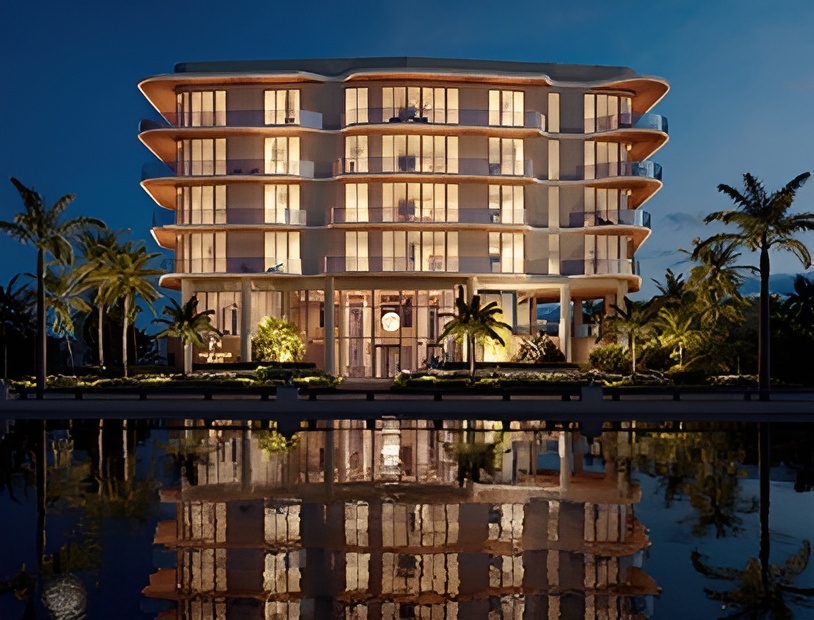
Despite the exceptional amount of new multifamily construction in the Miami region, new supply is barely keeping up with demand. According to the MMG report 9,802 units were completed so far in 2025, 9,219 units were absorbed, and vacancy in the third quarter was under 5 percent. Additionally, rents continue to grow and now average $2,385 monthly, the second highest in the nation after the San Francisco Bay area. But rent growth has slowed slightly due to the high number of new units delivered and is expected to remain under 2 percent until the supply of new units are absorbed in 2026 or 2027.
But the Miami residential market remains resilient, bucking the slowdown nationally in multifamily development and acquisitions, with 100 projects totaling about 30,500 units currently under construction across the region, of which 16,100 units are in Miami.
This represents a 20 percent dip from the peak in early 2023, but the current pipeline still equals 7 percent of existing inventory, positioning South Florida in second place for most active multifamily construction market nationally after Charlotte (8.1 percent).
Tariffs have not had much of an impact on real estate activity in the region, and Pujol believes that will continue. “We have relationships with these countries, so I feel Miami will remain the place they want to do business and live,” he noted. “The data from the new construction report, along with commercial developments, show a strong desire by these countries to continue building in Miami.”
Foreign buyers’ share in South Florida residential real estate is five times greater than the U.S. average of 2 percent, Pujol noted. “Foreign buyers accounted for 10 percent of sales volume in South Florida in 2024, he said. “Miami right now is the best in the world for bringing equity and investors from all segments together. This is not going to slow down anytime soon.”