SWTCH Energy Launches New EV Charging Optimization Product
The product could reduce installation times and costs by 70 percent.

SWTCH Energy, a provider of electric vehicle charging solutions including chargers, metering devices, usage and energy-management software, has launched Cortex, a microcomputer that simplifies the installation and operation of chargers at existing multifamily properties and new developments.
Through an on-site, local area-wired microcomputer connected to SWTCH’s cloud-based network and software, Cortex allows owners and operators to manage energy consumption and optimize vehicle charging without the need for extensive ethernet infrastructure at their properties.
Through real-time and predictive monitoring alongside the ability to tap into spare capacity on a property’s electrical panels, both multifamily developers and owners of existing properties can install as many chargers as they want, without the need for additional capacity or a hit to their utility bills. Cortex also eliminates the need for spools of ethernet cables to link up the chargers, and is resilient to internet outages that could otherwise disrupt service. According to SWTCH, this reduces installation time and costs by 70 percent.
A do-it-all solution?
In the mind of Carter Li, SWTCH Energy’s CEO, Cortex solves many problems that otherwise preclude property owners from installing chargers in the first place. Chief among these are property age and electrical capacity. According to the American Housing Survey, the average age of an apartment building is 44 years. “These buildings were never designed for these chargers to put in place. The electrical infrastructure is very limited, and space in general is very constrained,” Li said.
Historically, these challenges left owners and operators with two solutions: either a cloud-based, internet-connected charger management solution that is reliable to use yet cost prohibitive to install by way of expensive labor, or a turnkey local solution that is vulnerable to outages.
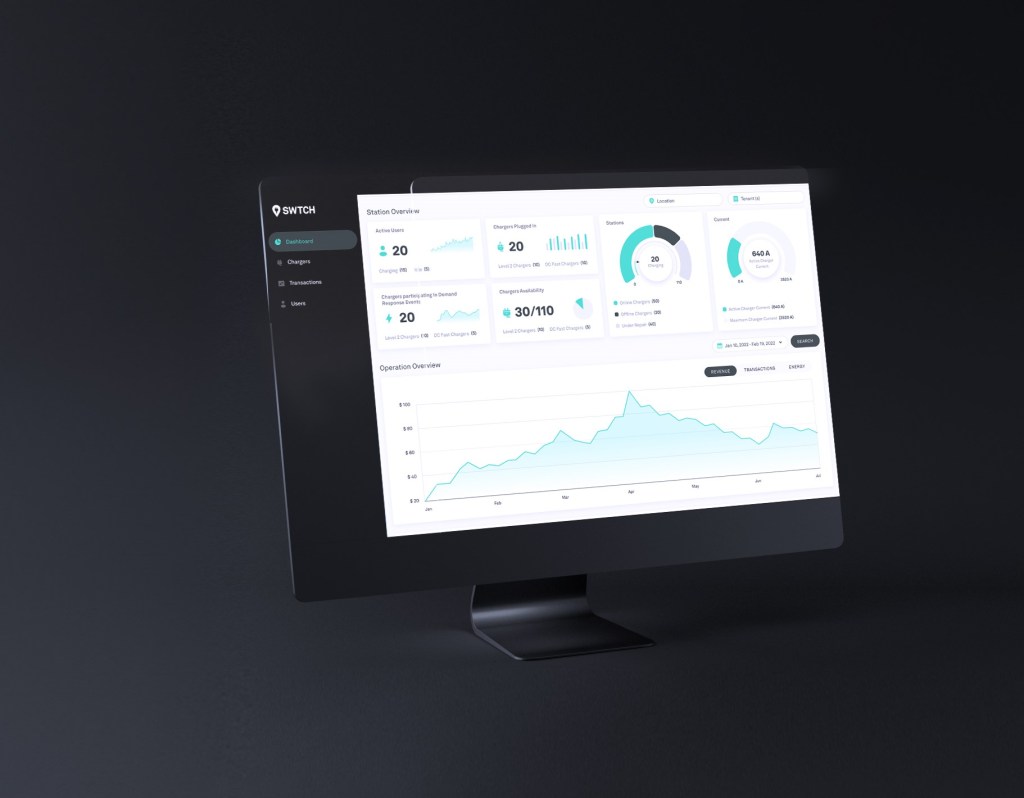
With Cortex’s cloud connections via local controllers that operate under a sub-gigahertz frequency, however, owners get the reliability of a traditional internet-connected charging network with the integrations of a local system. Part of the appeal lies in the devices operating a slower signal that travels farther over fewer devices.
“You’re not sacrificing (the) benefits of all the great integrations that you’re doing from a cloud-based solution, but you’re not having to deal with all the costs implicated with providing connectivity and infrastructure within the local environment,” Li said. At the same time, it’s cost effective. “You only need one or two of these devices to connect all these chargers to the internet,” Li detailed.
Problems of perception
In addition to surmounting physical issues that property owners face with the chargers’ installation and usage, Li believes that Cortex will alleviate some of the problems of perception, namely with electrical capacity and cost. “The cost implications of having to electrify every single parking stall is staggering, if you don’t do it correctly,” he said.
But a lot of these problems are more the case with unoptimized energy usage. Through Cortex’s ability to access spare capacity on a property’s electrical panels, more cost-strapped owners can prioritize drivers who may need to charge more energy faster over those with more capacity in their vehicles. Now, a driver at 20 percent battery capacity in need of a fast charge can be prioritized over a driver at 70 percent who may want to replenish some juice overnight.
LISTEN TO: Mission Success: Green Building in Focus
Additionally, through its real-time and predictive monitoring capabilities, a property using Cortex won’t have its energy consumption weighed down by electrified heating and cooling systems.
“You can really get a lot out of the existing infrastructure without these massive electrical infrastructure upgrades that are just probably not feasible, especially for low- to moderate-income communities,” Li said. “You could easily spend $40,000 to install two Level Two chargers, or you could install 10-15 chargers for $40,000 because the hardware and chargers only account for a fraction of the cost; the labor, the conduits and infrastructure are the majority.”
It’s not like the owners have a choice, either. According to Cox Automotive, electric vehicle sales increased by 29 percent year-over-year through January, reflecting continuously elevated demand.